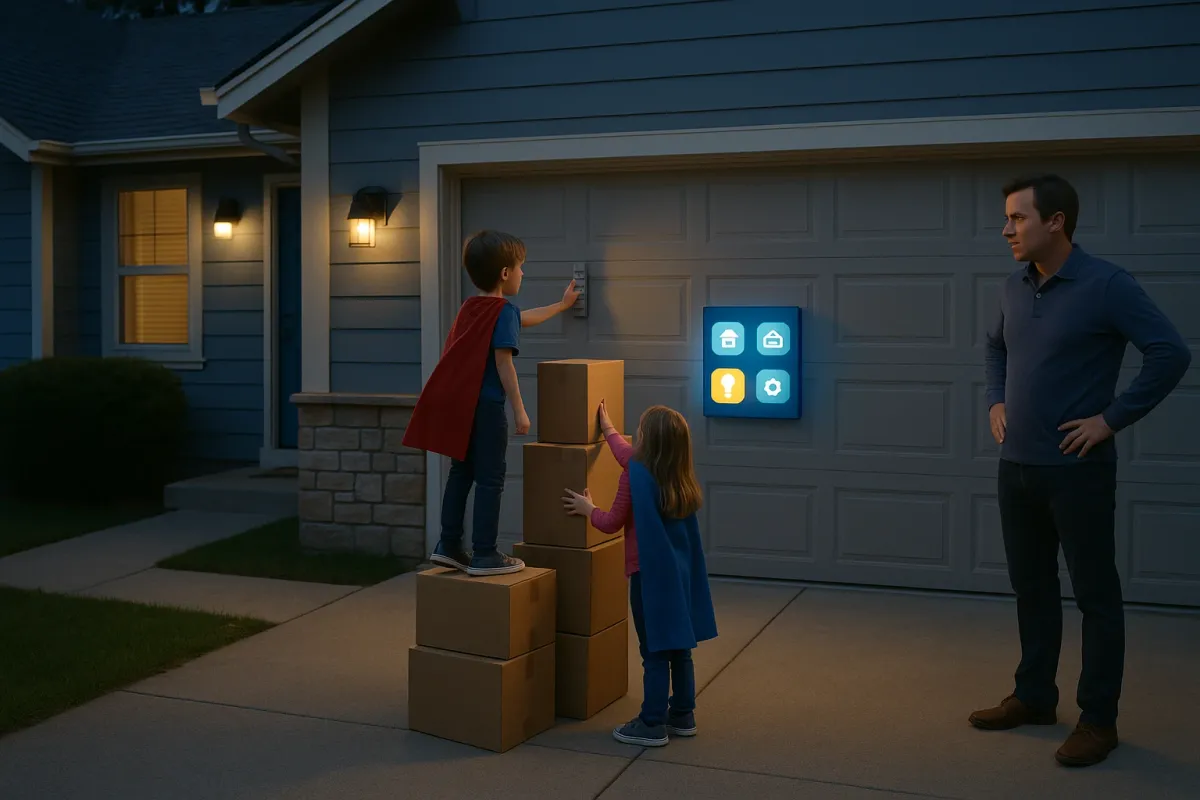
Parenting threads are exploding this week with stories of “criminal mastermind” kids—tiny strategists who can bypass phone restrictions, outwit Wi‑Fi controls, and generally break any boundary that isn’t exquisitely designed. That viral theme, captured in pieces like “26 Moments When Parents On Twitter Realized Their Kids Were Criminal Masterminds,” has a quiet, unsettling parallel in our homes: if a tech‑savvy eight‑year‑old can outsmart a phone lock, what could they (or someone with far less innocent intentions) do with a poorly secured, outdated garage door?
At Garage Fix Guide, we see the garage not as an afterthought, but as a critical access point—often the largest operable opening in your home, and frequently the weakest in terms of security, technology, and attention. As children grow more fluent in digital shortcuts, and as smart homes proliferate, the garage door is rapidly becoming the soft target in an otherwise “locked‑down” lifestyle.
Below are five exclusive, premium‑grade insights that bring together this week’s “kid mastermind” energy and the realities of modern garage ownership—so your driveway never becomes the weak link in your home’s story.
The New Reality: Your Garage Remote Is Just Another “Hackable Toy”
The same ingenuity that lets kids bypass parental controls can, in subtler ways, work against your garage. Children quickly learn that a visor remote, a keypad code, or a smart‑home app is simply another puzzle to solve. The true risk emerges when convenience is layered without intention: a cloud‑connected opener here, a hand‑me‑down keypad code there, and a shared family login that never gets changed.
Refined garage security today begins with treating the opener as a digital device, not a dumb button. That means enabling rolling‑code technology (standard on all modern openers), retiring any opener older than the late 1990s, and disabling “doorbell style” fixed‑code remotes. Just as you wouldn’t hand an unlocked smartphone to a curious pre‑teen, avoid leaving clip‑on remotes in unlocked cars, and resist the temptation to share app logins casually with neighbors or household staff. Create individual user profiles where your system allows it, and revoke digital access as cleanly as you would a high‑value subscription. In a world of mini‑masterminds, luxury is no longer about more gadgets—it’s about thoughtful digital boundaries.
Keypads, Codes, and Clever Kids: Designing Access That Respects Curiosity
That viral “kids as criminal masterminds” narrative is largely about one thing: curiosity meeting weak rules. Nowhere is that more evident than in the humble garage keypad. Children memorize patterns frighteningly fast; neighbors notice repeated code entries; delivery drivers log mental shortcuts. A four‑digit code that never changes is not a security feature—it’s a suggestion.
A premium approach treats code access as a living system, not a one‑and‑done setup. Start by abandoning birthdays, street numbers, or simple sequences like 1‑2‑3‑4. Use at least six digits where your system allows, and establish a quiet calendar reminder to rotate codes quarterly—or faster if you’ve recently given access to contractors, cleaners, or house‑sitters. Many high‑end openers now support temporary “guest codes” that self‑expire; use them the way luxury hotels use keycards: elegant, frictionless, and deliberately short‑lived. If your current system can’t do this, upgrading your wall keypad and opener logic board is one of the most cost‑effective security enhancements you can make, and it instantly elevates your garage from “back entrance” to controlled access point.
Silent Operators, Loud Vulnerabilities: Why the Quiet Door Isn’t Always the Smart Door
In households where kids push boundaries, silence can be more worrying than noise. The same principle applies to your garage door. Ultra‑quiet belt‑drive openers—popular in premium homes because they spare bedrooms overhead from rumble—can also quietly mask early warning signs of mechanical failure. A door that glides almost silently may still be straining springs, fatigued cables, or misaligned tracks far beyond safe tolerances.
The refined solution is not to abandon quiet—but to pair it with discipline. Schedule an annual or biannual professional inspection once your door is more than five years old, or immediately if you notice any of these subtle cues: the door hesitates in mid‑travel, the opener light flickers slightly as the door lifts, the bottom seal crushes more on one side than the other, or your opener’s force setting has been increased at any point to “help” a heavy door. A sophisticated homeowner treats the opener’s safety reversal test (placing a 2x4 on the floor under the closing door, as recommended by manufacturers) the way a pilot treats a pre‑flight checklist: routine, non‑negotiable, and quietly lifesaving. In a home where kids are nimble and quick, you want a door that is mechanically over‑engineered for safety, not just acoustically refined.
Climate, Comfort, and Control: Elevating the Garage from Bonus Space to Protected Envelope
As families become more tech‑centric, garages are morphing from mere storage bays into hybrid zones—home gym, maker space, gaming annex, or drop‑zone for deliveries. Meanwhile, internet culture reminds us daily that kids are ruthlessly inventive: if there’s a semi‑private corner, they’ll claim it. An uninsulated, leaky garage door in this context is both an energy drain and a comfort failure.
Premium performance starts with recognizing your door as part of your home’s thermal envelope. Look for high‑R‑value insulated doors with continuous thermal breaks and robust weatherstripping around the perimeter, not just a token bottom seal. Insulation isn’t just about winter; in hot climates, it helps prevent your garage from becoming a punishing heat trap that warps stored items and stresses refrigerators, freezers, and EV charging equipment. Pair the door with a subtle ventilation strategy—quiet wall fans, a louvered side vent, or even a smart sensor that triggers airflow when temperature or humidity exceed set thresholds. The aesthetic payoff is understated but profound: a garage space that feels composed, temperate, and intentionally designed, rather than a forgotten buffer between elegance and chaos.
From Afterthought to Architecture: Treating the Door as a Statement, Not a Necessity
In most suburban homes, the garage door quietly commands more visual real estate than the front door itself. Yet too often, it’s specified as a purely functional panel, devoid of the design nuance lavished on kitchens, baths, or landscaping. The result is familiar: a beautifully curated interior, and a driveway dominated by a builder‑basic slab.
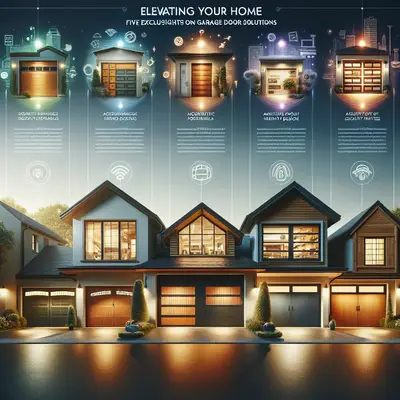
Consider how the current cultural obsession with “tiny masterminds”—kids who treat every object as a tool—can guide a more intentional design choice. Children notice patterns and symmetry instinctively; a thoughtfully designed garage door subtly reinforces order, proportion, and care. Opt for carriage‑style or modern flush panels that echo your home’s window proportions, select hardware in finishes that correspond to your entry set and exterior lighting, and choose glazing that admits light without compromising privacy (obscured, frosted, or high clerestory lites). For true refinement, coordinate the door color with the body of the house rather than defaulting to bright white; a tone‑on‑tone scheme often feels more architectural and less industrial. The message to your family—and to anyone approaching—is clear: every element here has been considered.
Conclusion
This week’s fascination with “criminal mastermind” kids is more than entertainment; it’s a reminder that curiosity and ingenuity are woven into modern family life. In that context, a garage door that relies on outdated codes, neglected mechanics, and accidental design is no longer acceptable, especially for homeowners who expect their spaces to perform at a higher standard.
By treating your garage door as both a digital device and a structural aperture, by curating access with intention, and by aligning quiet performance with robust safety and design, you transform a vulnerable back‑of‑house utility into a secure, elegant extension of your home. The most luxurious homes today do not merely look composed on the inside—they extend that composure right down the driveway, to the very edge of the street.
Key Takeaway
The most important thing to remember from this article is that this information can change how you think about Garage Doors.