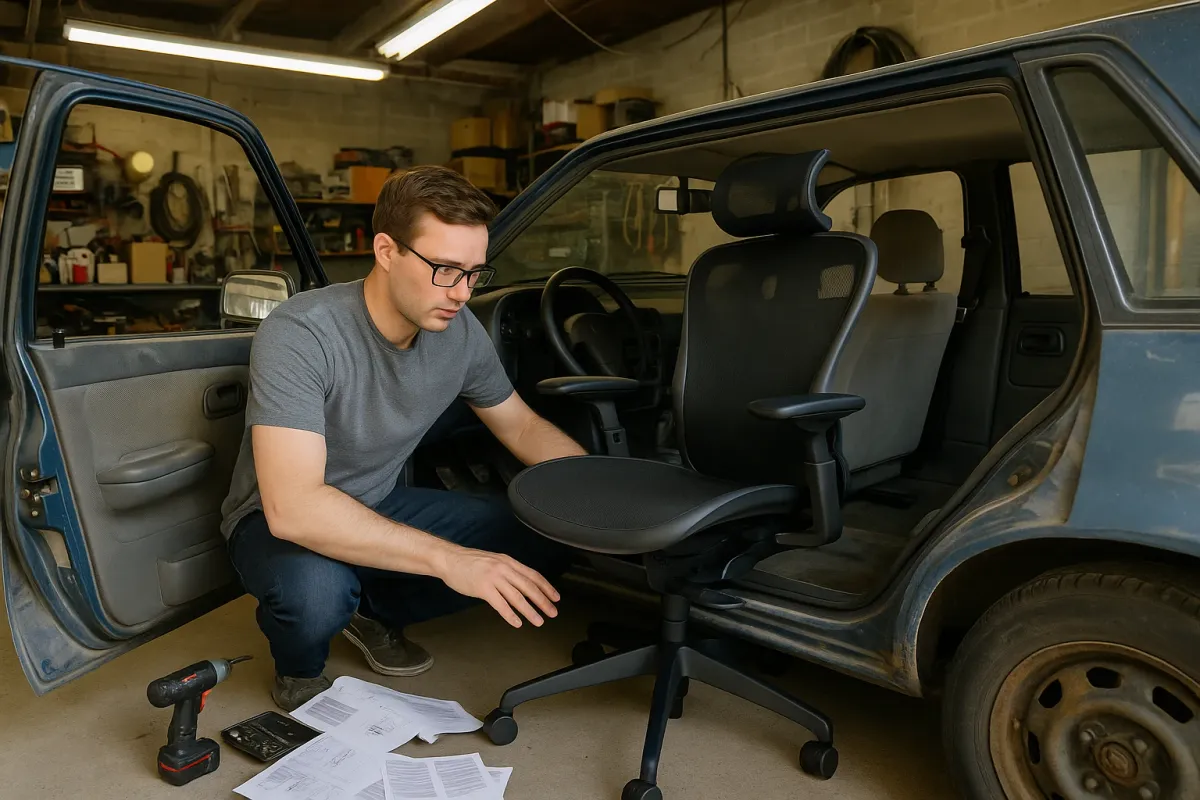
The internet is still buzzing about the $1,800 Herman Miller Aeron office chair that sparked a workplace showdown and ended with an arrest. Beyond the drama, that headline reveals something quietly fascinating: people are now willing to invest more in a single chair than many spend on an entire garage. In a world where ergonomic seating can command luxury‑car prices, the garage can no longer remain an afterthought furnished with folding chairs and a flickering bulb.
Today’s discerning homeowners are beginning to treat the garage less like a storage closet and more like a hybrid atelier, workshop, and retreat—deserving of the same ergonomic sophistication as a premium home office. If someone will fight for the right to their $1.8K chair, it’s time to ask: what would it look like to bring that level of refinement, comfort, and intention into your garage?
Below are five exclusive insights for upgrading your garage with the same respect we now reserve for high‑end workspaces—without turning the space into a cluttered showroom or a soulless man‑cave.
Elevating Ergonomics: From Cubicle Chair Wars to Garage Workstations
The Aeron incident underscored a simple truth: comfort now has status. In the garage, that translates into an ergonomic ecosystem anchored not by a random stool, but by a well‑considered work zone that respects your body as much as your tools. Start by defining a primary work position—standing at a bench, seated at a detailing station, or leaning into a tool wall—and build around it. An adjustable‑height workbench paired with a quality task chair (yes, even a used Herman Miller or Steelcase) turns every project from a strain into a pleasure. Position frequently used tools within a natural arm sweep—roughly from your hip to just above your shoulder—to minimize unnecessary bending and twisting. Introduce anti‑fatigue flooring or modular tiles where you stand most. This is how you convert the garage from a place you endure into a space where hours pass effortlessly because the environment quietly supports every movement.
Acoustics and Atmosphere: Tuning the Room Like a High‑End Studio
While social media fixates on luxury chairs, a more discreet luxury has been reshaping premium interiors: sound. Influenced by quiet office design and podcast studios, homeowners are discovering how profoundly acoustics shape experience. In the garage, harsh echoes from concrete floors and bare drywall make every tool drop sound like a cymbal crash. Upgrading begins with subtle sound moderation—insulated garage doors, insulated walls, and acoustic panels or wood slat treatments in key reflection areas. Even high‑density rubber flooring softens both sound and impact. Combine this with a modern, low‑profile sound system—discreet in‑ceiling speakers or a slim soundbar—that delivers rich audio for podcasts, manuals read aloud, or music during late‑night detailing sessions. The result is a garage that no longer feels like a warehouse but like a private studio, where sound is controlled, intentional, and quietly luxurious.
Lighting as Craft, Not Afterthought: Beyond the Single Bulb Tradition
The era of the lone, bare bulb is over—especially when retail spaces, offices, and high‑end workshops now use layered lighting as a design statement. For a truly upgraded garage, lighting must move from functional to curated. Begin with high‑CRI (color rendering index) LED fixtures that reveal true paint tones and material textures; this is essential for anyone who cares about automotive detailing, finishing wood, or color‑matching parts. Add focused task lighting over work surfaces, under cabinets, and above the primary vehicle bay. Consider sleek, linear LED strips that wash cabinets or walls in soft, even light, transforming clutter into composition. Smart controls—dimmers, scenes, and app‑based presets—allow you to switch from “precision work” brightness to “evening arrival” ambiance with a single tap. When your garage lighting feels like a luxury boutique instead of a storage hall, the entire space invites more thoughtful use.
Storage as Architecture: Designing a System, Not Just Adding Cabinets
The $1.8K chair story went viral partly because it revealed how people now view furniture as personal territory. That mindset, applied intelligently, can unlock a more disciplined approach to garage storage. Instead of accumulating mismatched cabinets and plastic bins, treat storage as architecture—planned, measured, and integrated. Begin by zoning: a defined area for automotive care, one for tools and hardware, another for seasonal items, and a final zone for household overflow. Within each zone, opt for built‑in or modular systems that reach from floor to ceiling, eliminating wasted vertical space. Drawer inserts, labeled compartments, and clear‑front bins avoid the “mystery tub” problem that plagues most garages. Then introduce one refined focal element—a glass‑front cabinet for your most prized tools, a wall‑mounted display for specialty equipment, or a concealed charging station for cordless systems. The upgrade is not just visual; when every item has a dignified, deliberate place, the garage stops feeling like storage and starts functioning like a well‑run workshop.
Climate and Quiet Luxury: Insulating for Comfort, Protecting What You Own
The modern office chair has become a symbol of how seriously we now take our daily environment. The same logic extends to temperature and climate control in the garage, especially as more homeowners store high‑value items—vehicles, tools, e‑bikes, and hobby equipment—that suffer in uncontrolled conditions. A premium upgrade begins with the envelope: an insulated, well‑sealed garage door, weatherstripping around openings, and strategic insulation in walls and ceilings. This not only stabilizes temperature but also softens external noise, making the space feel more private and composed. From there, consider a dedicated mini‑split system or a subtle radiant panel heater for year‑round comfort without the noise and inefficiency of portable units. The true luxury is twofold: you step into a garage that feels as considered as your living room, and your equipment, finishes, and vehicle are quietly protected from the extremes that shorten their lifespan.
Conclusion
As workplaces debate the ethics of “borrowing” $1,800 chairs, homeowners have a rare opportunity: to apply that same obsession with comfort, performance, and personal territory to the most overlooked room in the house. An upgraded garage is no longer defined by neon signs and oversized tool chests, but by ergonomics, acoustics, lighting, storage architecture, and climate control—executed with the quiet confidence of a well‑appointed studio.
When the garage evolves from a chaotic holding area into a refined, purpose‑built environment, it does more than look impressive on social media. It changes how you feel every time that door rises: not like you’re entering a leftover space, but like you’re stepping into a carefully crafted extension of your home—and of your standards.
Key Takeaway
The most important thing to remember from this article is that this information can change how you think about Upgrades.