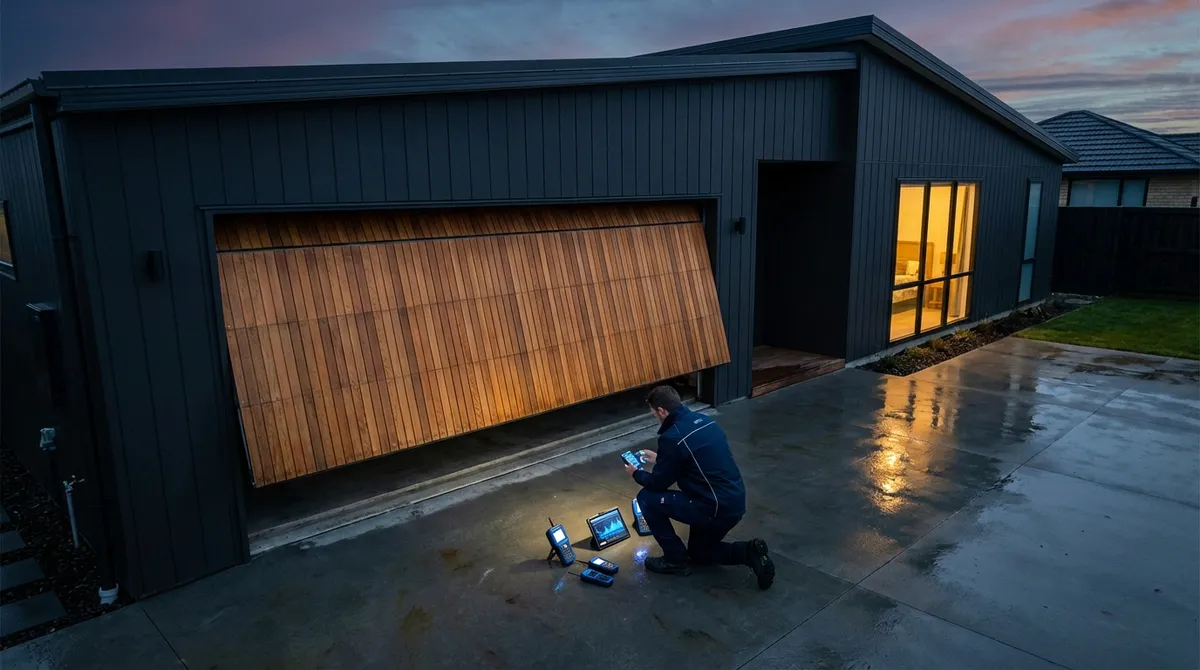
A well‑appointed home can be quietly undermined by a garage that sticks, rattles, leaks, or fails at the moment you need it most. For discerning homeowners, a garage is not a utility space; it is a controlled threshold between the public world and the private residence. Repair decisions, therefore, should be deliberate, data‑driven, and executed with the same care you would bring to any other fine‑tuned system in your home.
This guide explores refined, problem‑solving strategies for garage repair—moving beyond quick fixes and into calibrated, long‑horizon solutions. The focus is not on doing more, but on doing the right things with precision.
Rethinking “Repair”: From Patchwork to System Calibration
Most garages are treated as a collection of unrelated issues: a noisy opener here, a cracked seal there, a misaligned track next season. This piecemeal view encourages patchwork repairs that never quite resolve the underlying problem. A more sophisticated approach treats the garage as a single integrated system: structural envelope, mechanical components, electrical and safety devices, and environmental controls.
When you treat every repair as an opportunity to recalibrate the system, your technician’s checklist changes. Instead of only addressing the visible failure (for example, a broken spring), a refined repair plan includes a brief structural review, track geometry verification, torque and balance assessment, and opener force recalibration. The result is not only a working door, but a quieter, smoother, and safer operation that places less stress on every other component.
This systems‑based mindset tends to reveal subtle mismatches—like an opener that is oversized for a lightweight door, or aging rollers that are accelerating wear on perfectly good tracks. By resolving the mismatch, you’re not merely fixing today’s fault; you’re slowing the degradation of the entire assembly.
Exclusive Insight #1: Treat Door Balance as the “Vital Sign” of Your System
In a sophisticated garage, door balance is the foundational measurement—much like blood pressure in medicine. A perfectly balanced door, when disengaged from the opener, should stay in place when lifted halfway, not dropping heavily or shooting upward. This balance indicates that the spring system is correctly countering the door’s weight.
Why this matters: an unbalanced door silently ruins hardware. The opener is forced to work harder, the motor heats more, gear assemblies fatigue faster, and the force settings are often raised to mask the imbalance. Over time, this introduces safety risks, especially if the door has inadequate reversal settings or aging photo‑eyes.
When a repair technician is engaged to address any major issue—springs, opener failures, or track concerns—insist that dynamic balance testing is part of the service. If springs are replaced, the adjustment should continue until balance is correct across multiple positions, not merely “good enough to close.” This alone can extend the life of your opener and reduce mechanical noise significantly.
An elevated approach also documents balance metrics. Ask for a brief post‑service summary: door weight, spring type, and final balance results. Over future service calls, these records help identify whether structural changes (door swelling, warping, or water damage) are altering the effective load over time.
Exclusive Insight #2: Specify Performance Hardware, Not Just “Replacement Parts”
The difference between commodity hardware and performance‑grade components is rarely discussed, yet it defines how your garage behaves every day. Many service calls default to whatever the technician has on the truck; a more intentional strategy specifies hardware that aligns with your expectations for noise, longevity, and feel.
Consider these refined choices:
- High‑cycle springs rather than standard torsion springs for doors that see frequent daily use. Where a typical spring may be rated for 10,000 cycles, high‑cycle options can dramatically extend service intervals, especially for multi‑vehicle households.
- Nylon or sealed precision rollers instead of basic steel rollers. These drastically reduce operational noise and vibration and can improve the door’s glide, changing the entire character of opening and closing.
- Heavier‑gauge hinges and brackets for larger or insulated doors. Stiffer hardware reduces flex, preserving door alignment and minimizing track stress over time.
- Quiet drive systems (belt or direct drive openers) paired with appropriately tuned force and speed settings for a composed, controlled motion.
When a repair is necessary, it becomes an ideal moment to elevate the specification of your components. You are not merely “replacing a worn roller”; you are curating the mechanical personality of your garage—the sound, smoothness, and reliability that you experience every single day.
Exclusive Insight #3: Diagnose Vibration Paths, Not Just Noise Sources
Many homeowners complain about a “noisy garage door,” but the true problem is often vibration transmission through the structure rather than the door mechanism itself. A more advanced repair strategy understands and interrupts these vibration paths.
Instead of only lubricating metal parts or replacing an opener, have your technician evaluate:
- Mounting interfaces: Rigidly fixed opener brackets on ceiling joists can turn your entire upper floor into a resonating surface. Anti‑vibration mounting pads or isolation brackets can dramatically reduce transferred noise.
- Track anchoring: Loose or overly rigid track mounting can both cause rattling. Properly tightened fasteners with the correct hardware, plus strategic shimming, can eliminate low‑frequency rumble.
- Door panel resonance: Thin or older panels sometimes “drum” during operation. Strategic panel insulation or reinforcement can calm this resonance while improving thermal performance.
- Opener settings: Excessive speed or force can create needless shock loading at start and stop points. A refined configuration slightly slows the motion and softens transitions for both longevity and acoustic comfort.
This approach treats sound as data. Rather than tolerating bangs, squeaks, or resonance as “character,” you are shaping the acoustic profile of an important mechanical system in your home. The result feels closer to the experience of a premium vehicle door: decisive, quiet, and controlled.
Exclusive Insight #4: Protect the Threshold: Water, Air, and Structural Integrity
The lower edge of your garage—the slab, weather seal, and jambs—is where minor neglect quietly becomes costly repair. This threshold is the front line against water intrusion, pests, and seasonal air exchange that can affect not only the garage but adjoining interior spaces.
Advanced repair thinking treats every door or seal repair as a threshold audit:
- Weather seal profiling: Instead of a generic bottom seal, match the seal type to the slab condition. For uneven concrete, a larger or specially profiled seal may be required to create a true barrier without excessive closing force.
- Side and top seals: Properly installed perimeter seals reduce drafts, humidity swings, and particulate infiltration. For attached garages, this contributes directly to better indoor air quality and energy performance.
- Jamb and frame evaluation: Look for early signs of rot, delamination, or insect damage in wooden jambs, especially near the floor. Addressing these early with repairs or composite replacements prevents misalignment and future binding of the door.
- Drainage and grade: If repetitive water pooling is noted near the door, explore subtle concrete regrading, trench drains, or adjusted landscaping before water compromises the slab edge or corrodes hardware.
By treating the threshold as a critical interface instead of an afterthought, you protect both the mechanical reliability of the door and the broader building envelope. Repairs here are not cosmetic—they are structural risk management.
Exclusive Insight #5: Insist on Measured Safety, Not Assumed Compliance
Modern garage systems incorporate several safety features—photo‑eye sensors, auto‑reverse mechanisms, emergency release hardware—but these are often assumed functional rather than regularly tested and documented. A sophisticated homeowner does not rely on assumption.
During any repair visit involving the opener, tracks, or springs, request:
- Formal safety testing of the auto‑reverse system using an appropriate test object (not a person’s hand or improvised item), confirming both downward and upward force reversal.
- Photo‑eye alignment verification, ensuring beams are at correct height and are clean, secure, and unobstructed. Misalignment is one of the most common causes of erratic door behavior.
- Emergency release demonstration, confirming the door can be safely disengaged and manually operated without uncontrolled motion or binding.
- Force and travel calibration, so the opener neither slams the door into the ground nor strains to pull it tighter than necessary.
Consider maintaining a simple, written annual checklist—either self‑performed or handled during recurring service visits—that includes visual inspection of cables, springs, rollers, and seals, plus explicit testing of all safety functions. This is not redundancy; it is stewardship. The threshold your family moves through every day should be verified safe, not presumed safe.
Conclusion
A refined approach to garage repair sees every service event as an opportunity to recalibrate the entire system, not just banish a single annoyance. By focusing on balance as a vital sign, specifying performance hardware, interrupting vibration paths, protecting the threshold, and demanding measured safety, you transform garage repairs from occasional emergencies into a quiet, strategic practice.
For the modern home, the garage is no longer a neglected annex. It is a mechanically sophisticated gateway that deserves the same level of attention, foresight, and precision you apply elsewhere in your residence. When repairs are executed with that standard in mind, the result is not only reliability—it is a daily experience of subdued, confident performance every time the door moves.
Sources
- U.S. Consumer Product Safety Commission – Garage Door Safety - Federal guidance on garage door safety features, testing, and injury prevention
- International Association of Certified Home Inspectors – Garage Door Inspection - Technical overview of garage door components, balance testing, and common defects
- U.S. Department of Energy – Attached Garages and Indoor Air Quality - Explains how garage sealing and thresholds affect air quality and energy performance in homes
- Clopay Garage Doors – Torsion Spring and Cycle Life Basics - Manufacturer information on spring types, cycle ratings, and replacement considerations
- UL Solutions – Door, Drapery, Gate, Louver, and Window Operators and Systems - Details safety standards and certification criteria for automated door operators
Key Takeaway
The most important thing to remember from this article is that this information can change how you think about Repair Solutions.