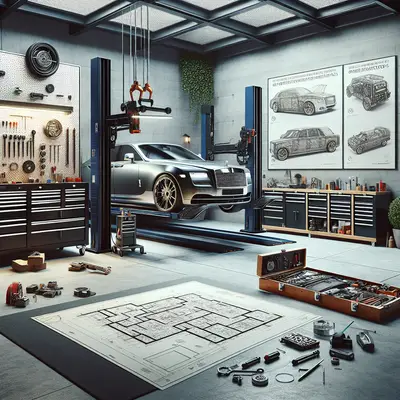
A well‑kept home can be undone by a single, misbehaving garage door. The grinding opener, the door that shudders mid‑travel, the faint scent of exhaust that shouldn’t be there—these are not merely inconveniences; they are signals that your home’s most overlooked interface is asking for attention. Thoughtful repair is not about emergency fixes; it is about restoring quiet confidence, structural integrity, and effortless daily use.
This guide explores refined, practical repair strategies that respect both the engineering and the aesthetics of a modern, high‑standard home—featuring five exclusive insights that discerning homeowners rarely hear from basic how‑to manuals.
Rethinking “Repair”: From Crisis Response to System Restoration
Too many garage repairs are treated as isolated events: a broken spring, a misaligned sensor, a noisy roller. In a demanding home, this piecemeal mentality almost guarantees recurring issues. Instead, the garage should be approached as an integrated system—door, track, opener, structure, ventilation, power, and safety working in concert.
When a failure appears, the immediate component is rarely the only concern. A broken torsion spring may hint at door imbalance, under‑spec’d hardware, or years of improper lubrication. A stalling opener may be compensating for friction in the tracks or warping in the door sections. The refined approach is to treat each repair as an opportunity for a quiet audit of the entire system: correcting root causes, not just visible symptoms.
This mindset doesn’t simply avoid future repairs; it restores the kind of effortless operation you notice only in its absence.
Exclusive Insight #1: Balance Before Power—The Silent Foundation of Every Repair
Most homeowners assume that a stronger opener is the answer to a sluggish or heavy door. In reality, a properly balanced door should require surprisingly little force to move—often light enough to lift by hand with two fingers when disconnected from the opener.
An unbalanced door accelerates wear on every component: springs fatigue early, openers strain and overheat, and brackets begin to loosen from repeated stress. A sophisticated repair begins with a balance check before any motor replacement is considered.
A qualified technician will:
- Disengage the opener and test how easily the door moves manually.
- Observe whether the door stays in place when left half‑open, instead of dropping or shooting upward.
- Inspect torsion or extension springs for correct rating relative to door weight.
- Look for asymmetry—one spring carrying more load than the other, or cables wound unevenly on the drums.
Only when balance is corrected do motor choices become meaningful. This sequence is subtle, but it’s the difference between a repair that lasts a season and one that quietly performs for years.
Exclusive Insight #2: Hardware Quietness Is Engineered, Not Accidental
The difference between a harsh, rattling door and a composed, whisper‑quiet system often comes down to the hardware choices that most repair jobs overlook. High‑end homes deserve more than basic commodity parts; thoughtful substitutions in a few key areas can transform daily operation.
Consider these refined upgrades during any repair:
- Nylon rollers with ball bearings instead of inexpensive metal rollers. They dramatically reduce noise and rolling resistance.
- Heavy‑gauge, properly braced hinges that stabilize the door sections and minimize flex, especially on wide doors.
- Reinforcement struts on larger or insulated doors to prevent bowing that can cause binding in the tracks.
- Proper fastener selection—self‑tapping screws into thin‑gauge track brackets often loosen over time; switching to through‑bolted hardware with locknuts elevates strength and longevity.
By specifying premium components during a spring or roller replacement, you quietly elevate the entire system. The result is not only silence, but stability: hardware that resists vibration, stays aligned, and preserves the door’s structural refinement.
Exclusive Insight #3: Sensor and Control Issues Are Often Wiring Problems in Disguise
When safety sensors misbehave—blinking lights, unpredictable reversals, doors that refuse to close—most homeowners assume the sensors themselves have failed. Frequently, the true culprit is less obvious: aging wiring, poor terminations, or subtle electromagnetic interference.
A meticulous repair looks beyond the device:
- Inspect the full sensor cable run, not just the connection points. Staples over‑driven into drywall can pinch low‑voltage wire, causing intermittent faults.
- Check polarity and terminal clamping at the opener head; reversed leads or loose screws can mimic sensor failure.
- Separate low‑voltage lines from high‑voltage cabling where possible. Running sensor wires parallel and tightly bundled with 120‑volt lines invites interference and erratic operation.
- Evaluate environmental factors—direct sun glare on sensors, reflective flooring, or poorly aligned brackets can all trigger false readings that look like electronic failure.
Replacing sensors without addressing wiring is a common shortcut. A premium repair ensures that the entire safety circuit—devices, alignment, and cabling—is robust, reliable, and professionally routed.
Exclusive Insight #4: Exhaust, Moisture, and Airflow—The Invisible Side of “Repair”
Garage repair is not only mechanical. For homes with attached garages, the way air, fumes, and moisture move in and out of the space has direct implications for indoor air quality and structural health.
Refined repair work acknowledges three quiet risks:
Exhaust Infiltration
Poor door sealing, negative pressure inside the home, and gaps into living spaces can allow exhaust gases, including carbon monoxide, to drift indoors. Ensuring weatherstripping is intact, thresholds seal correctly, and any shared walls or penetrations are properly sealed is as much a “repair” as fixing a broken hinge.
Moisture Management
A mis‑sloped garage floor, compromised door seal, or chronic condensation around cold concrete can lead to mold, corrosion, and even delamination of epoxy or specialty floor coatings. During door or opener repairs, it is wise to evaluate whether water trails, salt deposits, or rust staining suggest drainage or sealing deficiencies.
Ventilation as Preventive Repair
Mechanical ventilation in garages is often minimal or absent. For homes storing vehicles, lawn equipment, and chemical products, a simple, code‑compliant exhaust fan—properly ducted and interlocked with usage patterns—can quietly protect both health and finishes.
Treating air quality and moisture control as part of the repair conversation elevates the garage from “storage area” to a well‑considered extension of the home.
Exclusive Insight #5: The Hidden Value of Door Weight and Construction Matching
Over time, many garages inherit a mismatch: a premium, insulated steel or composite door driven by an opener and spring set that was originally specified for a much lighter panel. Or conversely, an older, heavy wood door is handed off from one opener to the next, each motor prematurely worn out by the same underlying issue.
Sophisticated repair work begins with a simple but often neglected question: Does the hardware match the door it is actually lifting today?
Refined technicians will:
- Verify the door’s actual weight (sometimes by using a scale with springs safely released) rather than assuming based on size alone.
- Confirm that spring sizing (wire gauge, coil count, and inside diameter) aligns with that measured weight, not a generic chart.
- Check that opener horsepower and drive type are appropriate for both weight and usage frequency; a high‑cycle household or carriage‑style door may justify a more robust commercial‑grade unit.
- Ensure reinforcement brackets are correctly installed at the opener attachment point to prevent panel deformation over time.
This careful matching prevents the “cascade failure” of overloaded components and protects the door’s visual and structural integrity, particularly important for architecturally significant façades.
When to Insist on Professional Expertise
While many homeowners are comfortable with basic lubrication, sensor cleaning, or battery replacement, certain repairs are unequivocally not DIY territory—no matter how capable the homeowner elsewhere in the house.
You should insist on professional intervention when:
- Torsion springs are broken, fatigued, or visibly deformed.
- The door has jumped the track, is hanging unevenly, or appears to be under tension in a twisted position.
- Structural supports (header, jambs, or track anchor points) show signs of cracking, separation, or movement.
- The opener exhibits burning smells, tripped breakers, or visible scorching on circuit boards.
In these cases, expert handling is not merely a matter of convenience; it is a matter of personal safety and the protection of adjacent finishes and equipment.
The most capable garage specialists will not only repair but also educate—offering a clear explanation of what failed, why, and how the solution protects the home long‑term. That partnership is part of what distinguishes a premium repair experience.
Conclusion
In a refined home, the garage is not a back‑of‑house afterthought; it is a primary point of daily interaction between architecture, engineering, and habit. Thoughtful repair solutions go beyond stopping a noise or replacing a part. They restore balance before power, upgrade hardware for quiet strength, trace wiring issues to their source, protect air quality and structure, and ensure every component is correctly matched to the door it serves.
When approached with this level of care, garage repairs become something more enduring: a quiet assurance that one of the home’s most complex moving assemblies is aligned with the standards of the rest of the property—reliable, composed, and ready for whatever the day requires.
Sources
- U.S. Consumer Product Safety Commission – Garage Door Safety - Guidance on safe operation, sensors, and entrapment protection requirements
- International Association of Certified Home Inspectors – Garage Inspection Standards - Technical overview of structural, mechanical, and safety considerations in garage spaces
- U.S. Environmental Protection Agency – Carbon Monoxide in Homes - Explains risks of exhaust infiltration from attached garages and mitigation strategies
- Occupational Safety and Health Administration (OSHA) – Overhead Doors Safety Bulletin - Discusses hazards related to overhead doors, springs, and proper maintenance practices
- Cornell University – Building Ventilation and Indoor Air Quality - Provides principles of ventilation that apply to garages and other enclosed spaces
Key Takeaway
The most important thing to remember from this article is that this information can change how you think about Repair Solutions.