A well‑kept garage door should operate with the quiet assurance of a finely tuned mechanism—unobtrusive, reliable, and almost forgettable. The moment it begins to “announce” itself with noise, hesitation, or erratic behavior, it is sending signals that deserve serious attention. Understanding these subtle indicators allows a homeowner to act with precision rather than panic, preserving both safety and the refined character of the home’s primary moving façade.
This guide explores five exclusive, often-overlooked insights into garage door behavior, performance, and repair. Each one is designed to help you move beyond quick fixes toward truly elevated, long‑term solutions.
Reading the Door’s Rhythm: Subtle Changes in Motion Matter
Most homeowners notice only two states: the door either opens, or it does not. Yet the most telling warnings live in the in-between—the rhythm of movement, the brief pauses, the micro‑hesitations.
A well-calibrated garage door travels in a smooth, uninterrupted line. Small stutters, sudden changes in speed, or a visible shudder as it reaches mid‑span often point to deeper issues: misaligned tracks, fatigued springs, or a struggling opener. Treat these as early symptoms, not annoyances.
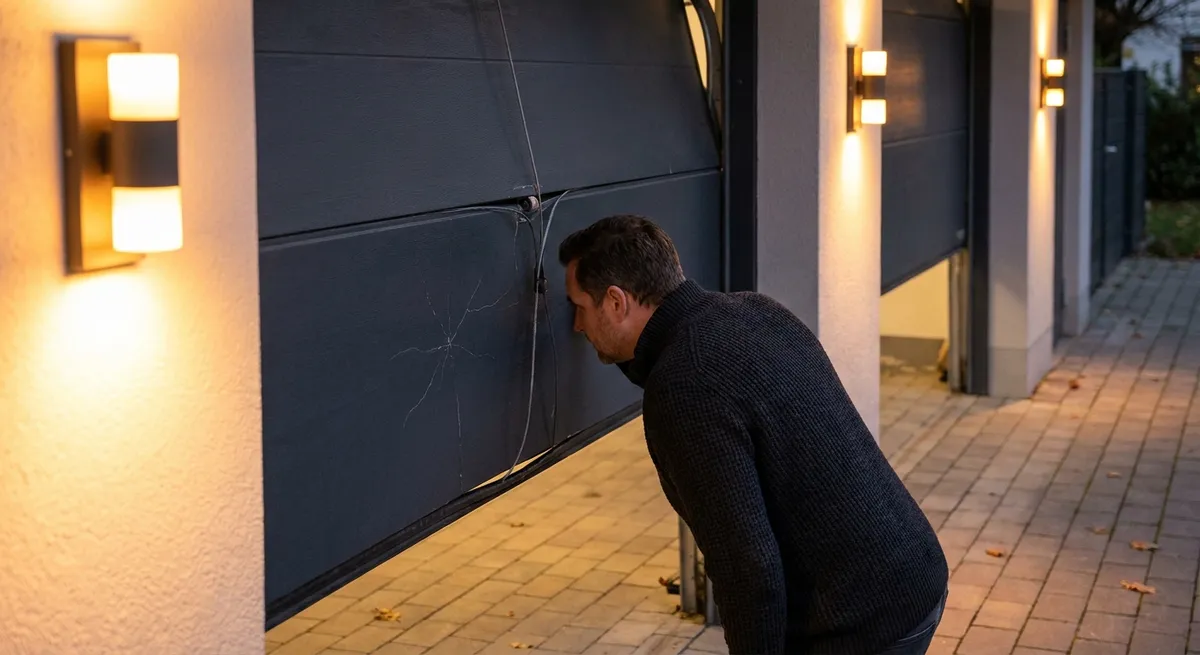
Observing the door from inside the garage while it operates can be revealing. Watch the top, middle, and bottom sections individually. If one panel flexes more than the others, or if the door bows slightly as it rises, you may be seeing the first signs of structural fatigue or uneven tension across the springs and cables. Addressing these early is not cosmetic—it’s preventative safety and cost control.
Professional technicians will often conduct what is essentially a “motion audit”: timing the open/close cycles, watching for deflection of the panels, and listening for subtle changes in strain. Homeowners can mirror this mindset with a simple habit—periodically time your door. If an opener that once lifted your door in roughly 8–10 seconds is now taking several seconds longer or occasionally stops and restarts, this is your cue to call for a refined diagnostic, not wait for a full breakdown.
Sound as a Diagnostic Tool: What the Door’s Noise Is Actually Telling You
Not all garage door noise is equal. The quality of the sound—its pitch, location, and pattern—offers a surprisingly accurate map of where the problem resides.
A grinding or scraping note usually suggests metal-to-metal contact, often in the tracks or hinges, possibly from misalignment or insufficient lubrication. A sharp, singular pop when the door starts or stops can hint at torsion springs or anchor hardware under excessive stress. Rhythmic clacking as the door moves may point to loose roller stems, worn hinge knuckles, or sections shifting under load.
Refined maintenance distinguishes between simply “making it quieter” and solving the underlying cause. Over-lubricating everything to muffle noise can actually mask developing failures. A premium approach starts with localization: stand near each track, then near the opener, then near the springs, listening as the door cycles. Note where the sound is most pronounced.
Once localized, the remedy should be specific: high‑quality, manufacturer‑approved lubricant for steel rollers and hinges; properly rated nylon rollers to reduce harsh contact noise; track realignment to eliminate rubbing; and, when needed, spring replacement by a professional rather than repeated adjustment. Instead of tolerating incremental noise increases year after year, treat sound as an intelligent, real‑time diagnostic tool.
Weight, Balance, and Safety: The Hidden Physics Behind a “Simple” Door
A garage door is often the heaviest moving component in a home—sometimes upwards of 150–300 pounds. When properly balanced, it does not “feel” this heavy, even to a small opener. When balance is off, every component pays the price.
A simple balance test, performed with the opener disengaged (using the emergency release cord), can reveal much. Gently lift the door by hand to about halfway and release. A well-balanced door should hold roughly in place. If it slams shut or drifts rapidly upward, the springs are improperly tensioned or worn. Ignoring this imbalance accelerates wear on the opener’s motor, gears, and drive system—eventually forcing premature replacement.
There is also a safety dimension. Springs under improper tension or operating beyond their service life are more prone to catastrophic failure. While modern systems incorporate safety cables and containment mechanisms, a snapped spring under full tension still represents a serious hazard. A measured, proactive replacement schedule for torsion or extension springs—based on cycle rating, door weight, and usage—is far more elegant than waiting for an emergency visit and a disabled vehicle trapped inside.
For homeowners who travel frequently or rely on remote access, confirming balance and spring integrity before a long trip is a small but highly strategic step. It turns the garage door from a potential single point of failure into a reliably choreographed element of the home’s overall security posture.
Intelligent Upgrades: When Repair Alone Is No Longer the Most Refined Option
There comes a point where continued repair is less sophisticated than a targeted upgrade. The most discerning homeowners recognize when components are not merely broken, but functionally outdated.
An older opener lacking modern safety sensors, rolling-code technology, or battery backup may technically still work—but at a standard well below what the rest of the home delivers. Likewise, decades-old, uninsulated steel doors can transmit noise, allow temperature fluctuations, and visually date an otherwise updated property.
Strategic upgrading focuses on three areas:
- Opener Intelligence – Modern openers offer smartphone integration, real‑time alerts, remote access management, and built‑in security features. For households receiving frequent deliveries or service providers, controlled digital access to the garage can be more secure and convenient than keypads alone.
- Thermal and Acoustic Performance – Upgrading to an insulated, well‑sealed door can meaningfully improve the thermal envelope of the home, particularly if the garage shares walls with living spaces. The result is not only comfort but potentially reduced energy costs and a perceptibly quieter interior.
- Hardware Ecosystem – High‑grade rollers, precision‑aligned tracks, and corrosion‑resistant hardware produce a door that behaves as a unified system rather than a loose collection of parts. This produces that nearly silent, assured motion that characterizes a truly refined installation.
The key insight: an elegant garage door strategy does not cling to aging components out of habit. It balances the cost of ongoing incremental fixes against the enduring, multi‑dimensional benefits of well‑chosen upgrades.
Precision in Service Calls: How to Speak the Technician’s Language
The most effective repair outcomes begin before the technician arrives. How you describe the issue often shapes the quality and efficiency of the solution.
Instead of saying, “The door is acting weird,” provide observations framed in specifics: “The door hesitates at about one‑third open and hums before continuing,” or “There’s a sharp pop near the left spring when it starts moving.” Note whether the issue appears in both directions, happens only in cold or damp weather, or occurs after multiple open/close cycles.
Documenting with short video clips and a brief log of when symptoms appear gives a premium technician a head start—allowing them to arrive with the right parts, tools, and expectations. This level of preparedness often shortens service time, reduces follow‑up visits, and yields more precise, long‑lived repairs.
There is also value in asking targeted, high‑caliber questions:
- What is the rated cycle life of the replacement springs or hardware?
- How is the opener load affected by the current door weight and balance?
- Are there preventative measures that can extend the interval between future major services?
By approaching a service visit as a collaborative, information‑rich interaction rather than a hurried emergency fix, homeowners elevate the entire experience—and often the outcome.
Conclusion
A garage door need not fail dramatically to demand attention. Its story is told in small shifts: a change in tone, a new vibration, a momentary pause, a slow imbalance. Homeowners who learn to read those quiet signals move from reactive to proactive, from basic functionality to refined reliability.
Elevating garage door care is not about indulgence; it is about precision, safety, and the quiet confidence that the largest moving element of your home has been treated with the same discernment you apply everywhere else. When the door speaks, listen closely—and respond with intention, not improvisation.
Sources
- U.S. Consumer Product Safety Commission – Garage Door Safety - Overview of essential safety standards and injury-prevention practices for garage doors
- International Door Association (IDA) – Homeowner Garage Door Safety - Industry guidance on inspection, balance testing, and safe operation
- Clopay Garage Doors – Insulated vs. Non-Insulated Doors - Explains the performance and energy-efficiency implications of different door constructions
- LiftMaster – Smart Garage Door Opener Features - Details modern opener capabilities, including remote access and security features
- Cornell University Ergonomics – Hand Forces and Lifting - Provides context on safe lifting forces, relevant to understanding garage door weight and balance considerations
Key Takeaway
The most important thing to remember from this article is that this information can change how you think about Garage Doors.