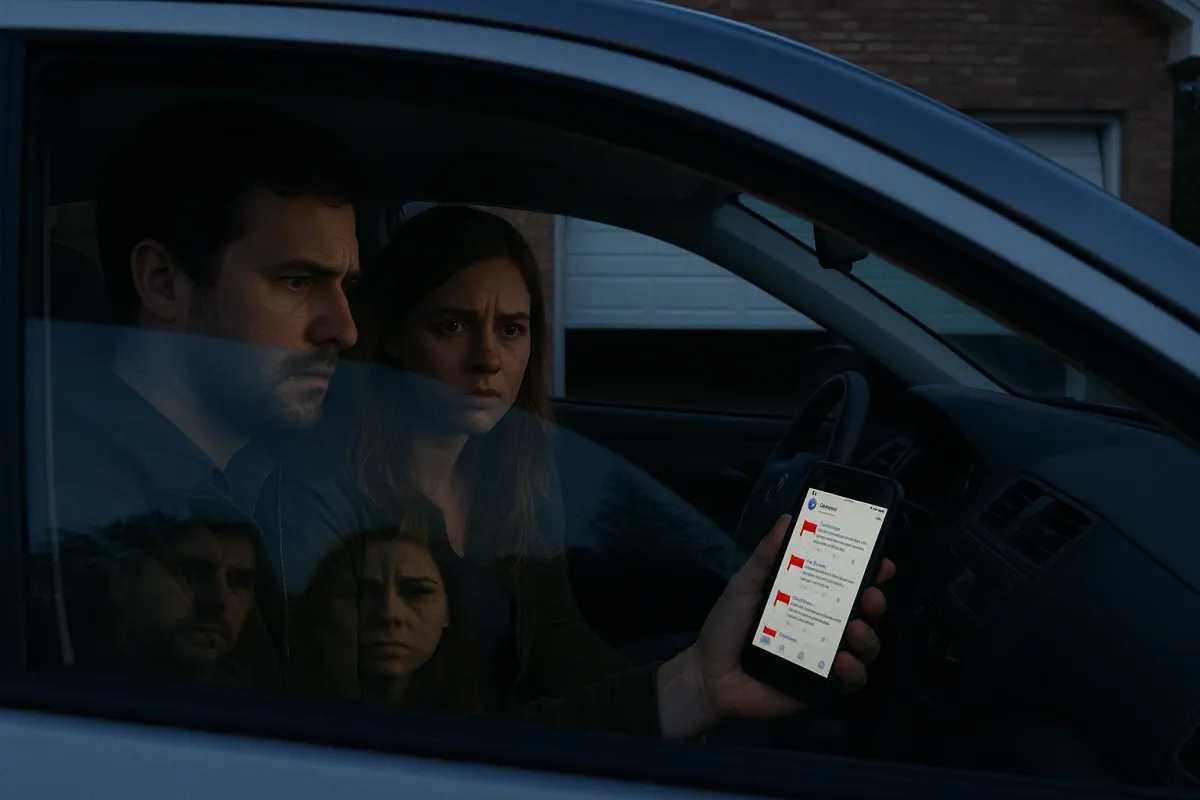
Relationship “red flag” threads are trending everywhere right now—millions of views, thousands of comments, and a collective realization that small warning signs quietly add up to serious trouble. While social feeds dissect toxic patterns at home and at work, there’s one relationship most homeowners still ignore: the one with their garage door.
In those viral stories, nothing is obviously catastrophic at first. It’s the subtle cues—raised voices, small lies, broken promises—that signal a deeper problem. Your garage door behaves the same way. Before it fails dramatically at 7:30 a.m. on a workday, it whispers. It hesitates. It strains. It leaves clues.
Inspired by today’s conversation around “red flags we ignored,” let’s look at the refined, often-overlooked signals your garage door is giving you right now—and how a premium, detail‑driven approach can turn a potential disaster into a quietly flawless entrance.
1. The “Raised Voice” You’ve Normalized: Sound as an Early Warning System
In viral relationship posts, people often say, “I thought that tone was normal.” Homeowners do the same with their garage door. A door that screams, rattles, groans, or slams is not simply “old”—it’s signaling distress.
A well‑tuned, properly balanced garage door is remarkably refined in sound: a low, even hum from the opener, a muted roll from the rollers, and a solid but gentle close. When that soundscape changes—metallic grinding, high‑pitched squeals, thuds at the end of travel—something in the system is compensating or fighting friction. Premium technicians treat noise not as an annoyance but as diagnostic data. Each sound corresponds to a likely source: worn rollers, dry hinges, misaligned tracks, an opener straining beyond its rating, or torsion springs losing tension.
Luxury‑level maintenance begins with a sound profile. An expert listens with the door fully closed, mid‑travel, and fully open, noting pitch and rhythm. They don’t simply “grease everything.” They selectively lubricate high‑load pivot points, replace undersized or cheap nylon rollers with sealed-bearing options, and tune opener force and travel limits to restore that quiet, confident motion. If your garage door has become the loudest voice in your home, it’s not just irritating—it’s a red flag that a more expensive failure is near.
2. Micro‑Misalignments: The Subtle Sag That Becomes a Structural Problem
In the relationship threads that are trending, people talk about “tiny boundary shifts” that eventually reshape everything. In garage architecture, the equivalent is micro‑misalignment: a door that doesn’t sit perfectly flush, a faint gap where daylight shows through, or a side that seems to lead or lag by a few millimeters.
Modern insulated and carriage‑style doors are heavy, engineered systems. When they are even slightly out of square, the strain is not cosmetic. Hinges twist under uneven load, sections flex in ways the manufacturer never intended, and tracks are pushed out of true. Over time, that subtle sag translates into cracked panels, warped stile joints, and premature opener failure.
An elevated service call treats alignment like fine cabinetry rather than “just a big door.” Technicians laser‑check the track plumb and header angle, verify that the horizontal tracks are level relative to each other, and confirm that the torsion shaft is not bowed from uneven spring tension. They correct the door’s resting position so the bottom seal compresses evenly across the slab—no daylight, no over‑compression. That meticulous squaring doesn’t just look beautiful from the driveway; it protects the door’s structure and preserves the quiet, straight‑line motion every time you leave the house.
3. The Power Imbalance: When Your Opener Is Doing Emotional Labor for Bad Hardware
Many of the most shared “red flag” stories describe power imbalances—one person doing all the work while the other coasts. If your garage door opener is hauling a poorly balanced door, the same pattern is playing out above your car.
A properly balanced door should hover in place when lifted halfway by hand with the opener disconnected. If it free‑falls closed or rockets open, the torsion or extension springs are no longer doing their job. The opener then becomes the overburdened partner, forced to lift dead weight several times a day. That leads to overheated motors, stripped drive gears, bent rails, and mysterious “it just stopped working” failures that never seem to happen at a convenient time.
Premium repair strategy in 2025 is shifting away from simply swapping openers and toward recalibrating the entire lift ecosystem. High‑end service includes:
- Precisely matching spring size and wire gauge to door weight, not “close enough” approximations.
- Verifying that total door weight aligns with the opener’s rated capacity, especially after insulation or window upgrades.
- Fine‑tuning up/down force settings so the opener protects itself and responds correctly to obstructions.
- Evaluating the age and duty cycle rating of the opener, not just whether it “still runs.”
The result is a harmonious division of labor: springs carry the load; the opener simply guides. When this balance is restored, the door moves with an effortless elegance that feels more European luxury elevator than clunky overhead panel.
4. Privacy, Safety, and Smart Access: The New Standard of Discreet Security
As conversations about boundaries and safety dominate social media, it’s worth noting: your garage door is the single largest moving barrier between public space and private life. Yet many homes still rely on decades‑old openers with fixed‑code remotes and no audit trail—essentially leaving the side door unmonitored and trusting no one’s copied the key.
Modern premium systems, particularly from top manufacturers like LiftMaster, Genie, and Chamberlain, now treat access like a digital relationship: revocable, trackable, and context‑aware. Smartphone‑based control lets you see exact open/close history, grant temporary access codes to guests or service providers, and revoke them instantly without reprogramming the entire system. Adaptive LED lighting integrated into the opener offers a soft, architectural wash of light when you arrive, rather than a harsh flash that spills onto the street.
Refined upgrades in 2025 are going further: pairing low‑profile, camera‑equipped openers with discreet door sensors and quiet DC motors. The effect is understated but powerful—your entrance is monitored, logged, and lit thoughtfully, without looking like a fortress or a gadget showroom. In a cultural moment obsessed with red flags and personal safety, your garage door can be upgraded from a vulnerability to a quietly intelligent guardian.
5. Maintenance by Calendar, Not by Crisis: Designing a “No‑Drama” Garage Future
In countless red flag threads, people say the same thing: “I waited until it was unbearable to change anything.” Most homeowners operate the same way with their garage: they wait for the emergency—the snapped spring, the trapped car, the crushed delivery schedule—before investing in solutions.
The premium approach mirrors executive health or luxury auto maintenance: proactive, scheduled, and data‑based rather than emotional. A refined garage strategy for the next 3–7 years looks like this:
- Annual performance checkup rather than “call when it breaks.” Springs, cables, rollers, tracks, sensors, and opener settings are tested, cleaned, lubricated, and adjusted on a calendar.
- Service history and lifespan planning. High‑end providers log service dates, part types, and expected cycle life so you know, for example, that your 25,000‑cycle springs are halfway through their service life—not guessing.
- Planned upgrades, not impulse replacements. Instead of waiting for catastrophic failure, you schedule upgrades to insulated doors, premium weather seals, or smart openers when it aligns with your budget and home improvement plans.
- Visual and tactile inspection training. A sophisticated homeowner doesn’t need to be a technician, but they do know how to spot fraying lift cables, rust at hinge points, or a bottom seal that’s hard and flattened rather than supple.
Over time, this mindset transforms your garage door from a recurring crisis to an asset that simply works—quietly, predictably, and beautifully—much like a well‑maintained European sedan that starts every morning without fanfare.
Conclusion
As social media fills with stories of ignored red flags and relationships that failed by a thousand small compromises, your garage door is telling a similar story—if you’re willing to listen. The noises you’ve normalized, the misalignments you no longer see, the opener that’s overworking in silence, the outdated security, and the absence of a plan: each is a subtle signal, not yet a catastrophe.
Treating your garage entrance with the same seriousness you’d give to any other high‑value relationship in your life changes everything. With expert calibration, discreet smart security, and maintenance by design rather than by emergency, your garage door stops being a source of anxiety and becomes a statement of quiet competence.
In a world obsessed with public drama, there is something distinctly luxurious about a door that simply opens—smoothly, silently, and exactly as it should—every single time.
Key Takeaway
The most important thing to remember from this article is that this information can change how you think about Garage Doors.