Most people can list the red flags they’ve ignored in relationships. Fewer can name the red flags they’re ignoring in their own homes—particularly in the garage. As viral stories circulate of people confessing the clues they missed before things turned toxic, there’s a striking parallel in how homeowners treat early warning signs in their most mechanically complex entry point: the garage.
The garage door is the largest moving system in your home, yet its distress signals are usually dismissed as “quirks” until something jams, snaps, or fails outright. In the spirit of today’s obsession with spotting red flags before the damage is done, it’s time to look at your garage with the same scrutiny people are finally giving their personal lives.
Below are five refined, expert‑level insights into garage maintenance—each one a “red flag decoder” for homeowners who expect more than basic fixes and want their garage to operate with quiet, dependable precision.
1. The Subtle Soundtrack: Why “New Noises” Are Never Harmless
In relationship stories shared online, people often admit they overlooked a partner’s tone—sharpness in the voice that seemed small at first. Garages have their own version of that: the evolving soundtrack of creaks, rattles, and metallic echoes that slowly become “normal” in your mind.
A properly maintained garage door system operates with a low, consistent hum. Grinding, screeching, popping, or a sudden change in volume is rarely incidental. These sounds usually point to dry or misaligned rollers, an overworked opener, or torsion springs that are beginning to fatigue. Left unaddressed, what starts as a faint protest can become a snapped cable, a derailed door, or a seized opener at the worst possible moment—think storm season or a late‑night airport run.
Premium maintenance is not just about spraying a generic lubricant and hoping for the best. A sophisticated inspection includes listening while the system runs, checking every hinge, roller, and bracket under load, and using silicone‑based or lithium lubricants specifically matched to the hardware. The goal is to eliminate not only obvious strain but also micro‑vibrations that shorten the life of the opener and transfer stress into the framing of the house. In a well‑kept home, silence isn’t just a luxury—it’s proof that each component is working within its design limits.
2. Cosmetic Cracks, Structural Consequences: The Floor You’re Ignoring
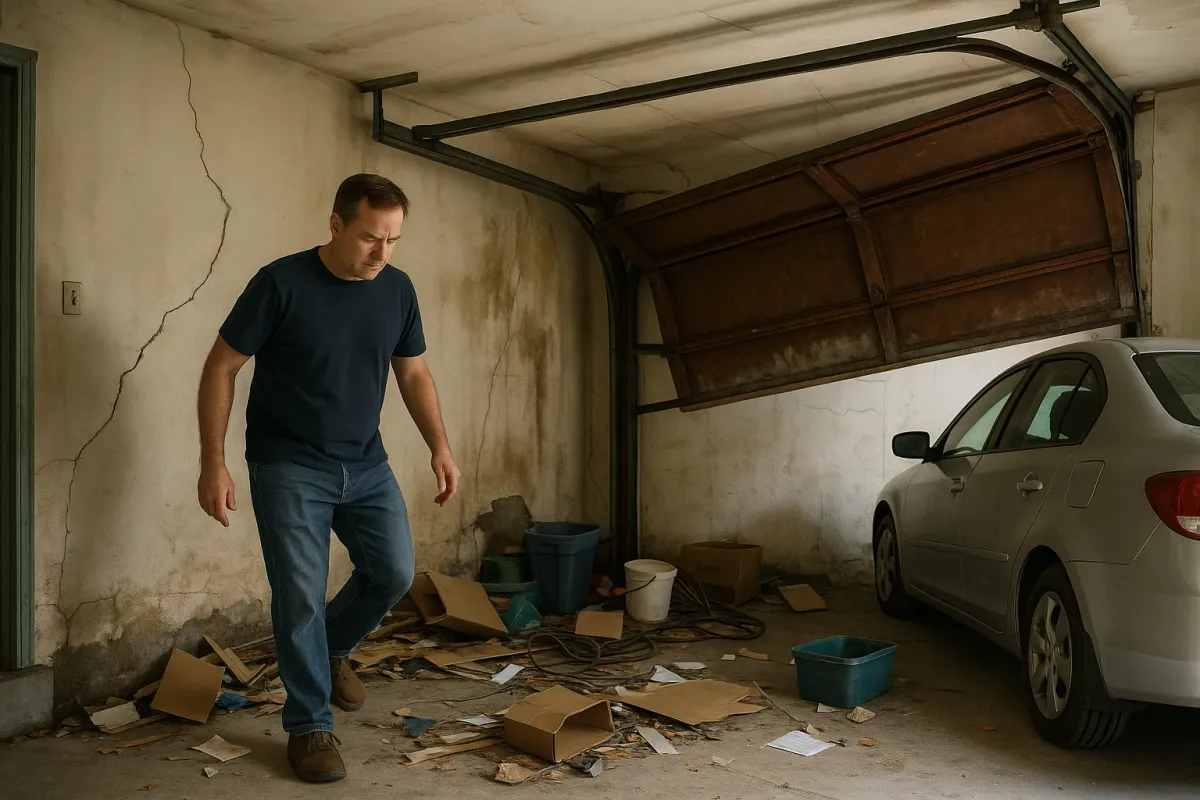
In the same way people online confess they ignored “small” cracks in their relationships, homeowners routinely dismiss hairline cracks and stains on the garage floor as inevitable aging. Yet those minor flaws are often precise, early indicators of bigger issues—moisture intrusion, salt damage, and shifting substrates that will ultimately undermine both the structure and everything parked inside it.
A sophisticated maintenance approach treats the garage floor as a critical surface, not an afterthought. Fine map‑cracking around the perimeter can signal poor drainage or seasonal heaving. Rust‑colored halos under tires hint at road‑salt absorption that will continue to erode the concrete from within. Oil patches are more than unsightly; they interfere with coatings and can make premium floor systems delaminate prematurely.
High‑end garages today are moving toward industrial‑grade protective systems: diamond‑ground concrete, vapor‑tested slabs, and polyaspartic or high‑solids epoxy finishes that resist chemicals, abrasion, and hot‑tire pickup. But the real luxury is preventative discipline. Annual cleaning with a pH‑neutral degreaser, prompt sealing of fresh cracks, and strategic use of containment mats in snowy or coastal regions can extend the life of both bare and coated slabs. This isn’t about aesthetics alone—it’s about preserving the structural integrity beneath the elegance.
3. The Silent Strain Above: Torsion Springs and Load Balance
In every viral “toxic workplace” story, there’s usually one theme: a single overburdened person doing the unseen heavy lifting until they finally break. Torsion springs are that overburdened worker in your garage—responsible for almost all the lifting while the opener gets the credit.
Most homeowners underestimate how finely calibrated a well‑balanced door should be. When properly maintained, a manual lift test should allow you to raise the door with one hand and have it stay put at mid‑travel without drifting up or crashing down. If your door feels heavy, slides down when half open, or requires the opener to strain to move it, your springs are telegraphing a clear red flag.
Elite maintenance doesn’t wait for springs to snap—an event that can cause violent movement, damage to vehicles, or sudden inoperability. Instead, it includes periodic load testing, inspection for surface rust and coil gaps, and proactive replacement based on cycle ratings and usage patterns. For high‑use households (multiple vehicles, frequent in‑and‑out, workshop activity), upgrading to high‑cycle springs is the equivalent of staffing up to avoid burnout. It’s an invisible upgrade, but in the world of precision home care, the best work is often what you never see fail.
4. Light, Air, and Hidden Leaks: Your Garage as a Microclimate
Online, people describe the moment they realized their environment was “toxic”—subtle fatigue, not wanting to be there, a constant low‑level discomfort. Garages can create their own quiet toxicity: fumes trapped in a sealed space, humidity attacking tools and stored items, and temperature swings that punish everything from paint to power tools.
The modern, premium garage is treated as a controlled microclimate, not a dusty annex. Weatherstripping that is brittle, flattened, or sun‑bleached is more than an eyesore; it’s a breach point for water, dust, pests, and unconditioned air. Even a slim daylight gap under the door or at the side seals is a red flag that the inner environment is being compromised. Over time, that means corrosion on tools, rust at the bottom of luxury vehicles, and mold growth on cardboard storage.
Exceptional maintenance goes beyond replacing bottom seals. It may include upgrading to insulated, gasketed doors, adding quiet exhaust systems to purge fumes, and integrating the garage into a smart ventilation or dehumidification strategy. For homeowners who keep collections—cars, bikes, wine fridges, or precision equipment—monitoring temperature and humidity via sensors is rapidly becoming the norm. The reward is an environment that feels composed and intentional every time you enter, not a place you unconsciously rush through.
5. Intelligent Systems, Neglected Settings: The New Red Flags of Smart Garages
As more homes adopt smart openers, app‑controlled access, and integrated security, a new class of maintenance red flags has emerged—digital rather than mechanical. In the same vein as people sharing the moment they realized a relationship or workplace was being monitored or controlled, your garage’s “intelligence” can either protect you or quietly expose you if it’s not configured and maintained correctly.
Outdated firmware on smart openers can leave you vulnerable to security flaws. Weak Wi‑Fi passwords or shared logins may allow former guests, contractors, or even neighbors continued digital access. Misaligned safety sensors or disabled auto‑close features undermine the core promise of safety and reliability. Yet many homeowners install these systems once and never revisit the settings, logs, or updates.
A refined maintenance routine now includes digital hygiene: checking access logs periodically, pruning authorized users, enabling two‑factor authentication where available, and scheduling regular firmware updates—just as you would for your phone or laptop. Physically, testing auto‑reverse functions with a padded obstruction and verifying sensor alignment should be a quarterly ritual. The most luxurious experience is not having more tech; it’s having tech that has been rigorously curated, hardened, and tuned to your household’s actual patterns and privacy expectations.
Conclusion
The stories dominating people’s feeds about ignored red flags in relationships and workplaces are, at their core, lessons about attention. About noticing when something feels off early—before the damage is visible, and before the cost of repair becomes steep.
Your garage is sending you similar signals: new noises, subtle drafts, hairline cracks, heavier lifts, minor app glitches. You can treat them as quirks to live with, or as early, elegant invitations to bring the space up to the standard of the rest of your home.
For homeowners who expect their surroundings to perform as beautifully as they look, garage maintenance is no longer a chore; it’s a form of quiet, ongoing refinement. Catch the red flags now, and your garage will reward you with what truly feels luxurious today: serenity, reliability, and the confidence that the largest moving system in your home is working as impeccably as you do.
Key Takeaway
The most important thing to remember from this article is that this information can change how you think about Maintenance.