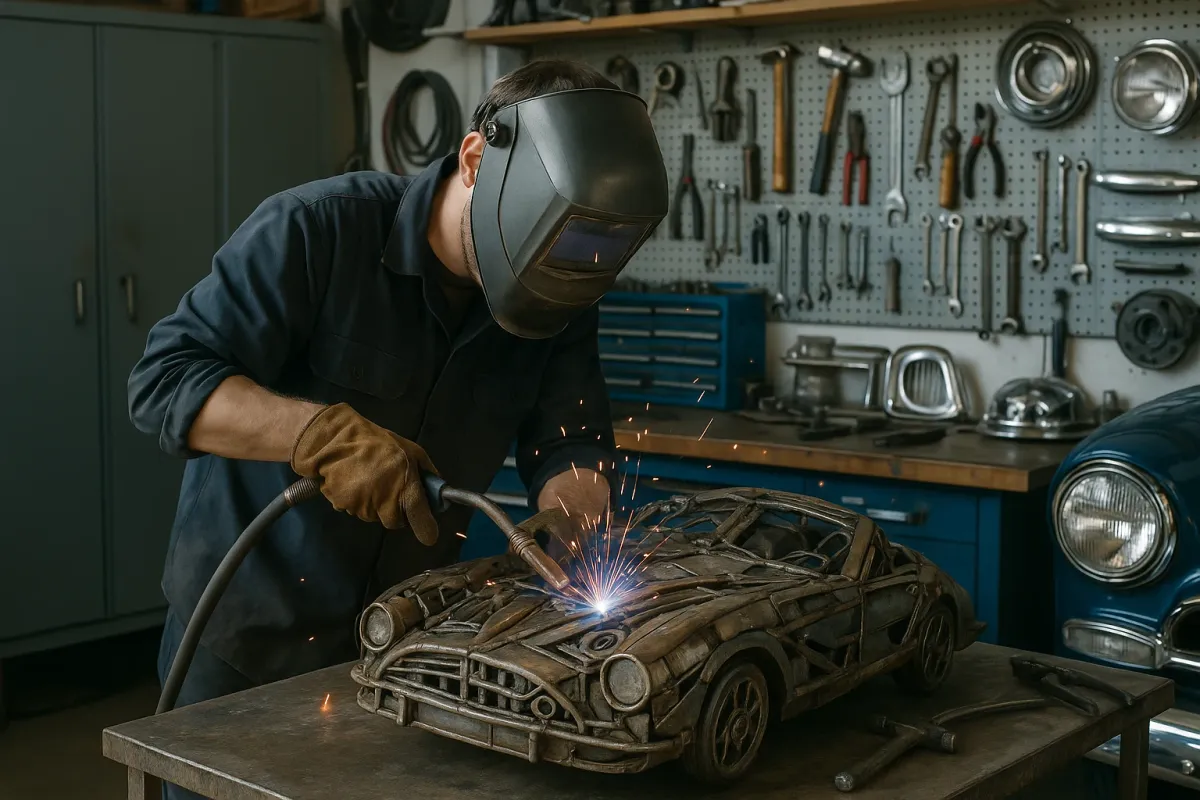
In today’s feeds, one story quietly cuts through the noise of celebrity drama and viral memes: sculptor Brian Mock transforming discarded car parts, screws, and steel offcuts into museum‑worthy metal sculptures. His work, highlighted in a trending feature on reclaimed materials, is more than visual poetry—it’s a masterclass in what’s possible when you refuse to treat metal as “junk” and instead treat it as a medium.
For discerning homeowners, that shift in mindset is exactly what separates a merely functional garage from a meticulously engineered one. If artisans like Mock can coax beauty and structure out of scrap, there is no excuse for accepting sloppy welds, noisy hardware, or disposable repairs in the most mechanically complex entrance to your home: the garage door.
Below are five exclusive, craft‑level insights inspired by this reclaimed‑metal renaissance—practical, premium repair principles that turn your garage from a problem zone into a quietly sophisticated machine.
1. Treat Every Repair Like Metalwork, Not Housework
Brian Mock’s sculptures begin where most people stop thinking: the scrap pile. He studies how each component bends, bears weight, and joins to another. High‑end garage repair should follow the same discipline.
When a door starts binding, rattling, or sagging, a commodity technician will simply swap the most obvious part—maybe a roller or hinge—and move on. A craft‑minded specialist will first read the metal: is the track slightly out of plane from a minor impact? Are hinge leaves beginning to flare from years of torsion? Has the bottom section started to rack from one corner hitting the floor first? These are subtle distortions, the garage equivalent of warped sculpture stock.
Insist that your repair professional treats the door assembly as a single, interdependent piece of engineering, not a collection of replaceable widgets. That means laser‑straight tracks, plumb and level sections, fasteners torqued to spec, and hardware upgraded where geometry—not just age—demands it. The result is not just a quieter door; it’s a door that moves with the deliberate smoothness of a well‑balanced piece of kinetic art.
2. Elevate “Reclaimed” to “Refined”: Smart Hardware Upgrades
Mock’s sculptures elevate reclaimed parts into something better than their original purpose. Your garage can follow the same philosophy: keep what’s structurally sound, upgrade what controls and refines performance.
Instead of defaulting to a full replacement, a premium repair plan might retain a solid steel door shell while upgrading the hardware suite: sealed ball‑bearing rollers instead of stamped nylon, heavy‑gauge hinges in high‑stress locations, and commercial‑grade torsion springs sized precisely to your door’s actual weight—not a catalog guess. Where older wooden doors still have architectural charm, a skilled technician can retrofit modern balance systems and reinforced struts behind the scenes, preserving aesthetics while bringing function up to contemporary standards.
This blend of preservation and precision is what separates a luxury repair from a mass‑market service call. You’re not buying “whatever’s on the truck”; you’re commissioning a thoughtful refresh that respects the existing structure the way a sculptor respects a particularly beautiful piece of reclaimed metal.
3. Quiet Is a Luxury Finish—Engineered, Not Accidental
Those viral metal sculptures are mesmerizing in part because of what you don’t notice: nothing buzzes, rattles, or looks improvised. Everything appears intentional. That same standard of intentional quiet should govern your garage.
A clattering garage door is not “just old”—it’s a mechanical system telegraphing friction, imbalance, and misalignment. A premium repair isn’t satisfied with “working again”; it targets silence. That means:
- Ensuring tracks are not only aligned but de‑tensioned of stress, so rollers glide rather than scrape.
- Matching spring lift to within a few pounds of door weight, so the opener isn’t straining and chattering under load.
- Swapping to rubber‑isolated opener mounts and vibration‑dampening fasteners where the motor meets the structure.
- Choosing lubricants appropriate to climate and material—lithium for metal hardware, silicone for rubber and nylon—applied precisely, not sprayed indiscriminately.
The benchmark is simple: once the repair is complete, you should hear the motor more than the door, and the motor itself should sound like a muted hum, not a power tool. That level of calm operation reads as luxury every single time you arrive home.
4. Design Your Repairs Around Future Loads, Not Just Today’s Problems
Mock’s reclaimed sculptures look effortless, but they’re engineered to stand—weight distribution, center of gravity, and structural joints all calculated from the outset. Long‑term garage reliability demands the same forward planning.
Most garages today quietly host much more than a vehicle: EV charging equipment, ceiling‑mounted storage, home gyms, or even climate‑controlled workshops. Each of these adds structural and electrical load. A stopgap repair that ignores your future use is already obsolete.
A refined repair strategy starts with questions: Are you planning to install an EV charger, which may require dedicated circuits and a clean cable path around the door tracks? Considering heavy overhead storage that will share the same framing as your opener? Eventually replacing your vehicle with a heavier SUV or adding insulation to the door, significantly increasing its weight?
The answers should shape the repair. That might mean reinforcing mounting points today to accept a quieter, wall‑mounted opener next year; selecting springs that can accommodate a modest door‑weight increase; or routing wiring and conduit in a way that anticipates EV infrastructure. You’re not patching a problem—you’re quietly designing a future‑proofed mechanical entry.
5. Demand an Artisan’s Documentation, Not a Scribbled Invoice
Reclaimed‑metal artists like Mock document their process not just for prestige, but to show lineage: where the materials came from, how they were transformed, and how they’re meant to endure. Your garage deserves a similar level of transparency and traceability.
After any substantial repair, ask for more than a price total. A premium‑grade service record should include:
- A clear inventory of parts: brands, models, spring sizes, and load ratings.
- Before‑and‑after measurements: door balance tests, track plumb/level notes, safety sensor alignment details.
- A maintenance roadmap: when to expect spring fatigue, opener belt wear, or weather‑seal compression in your specific climate.
- Photographic notes of any latent structural issues (hairline header cracks, rust at the bottom section, compromised fasteners in old framing).
With this in hand, you’re no longer reacting to surprises; you’re curating the condition of what may be the largest moving object in your home. It’s the difference between a forgettable repair and an ongoing, well‑managed system—much like acquiring a piece of art with provenance instead of a mass‑produced print.
Conclusion
The renewed fascination with Brian Mock’s reclaimed‑metal sculptures isn’t only about aesthetics; it reflects a broader hunger for craftsmanship in an age of disposability. In the quiet realm of your garage, that same philosophy can be transformative.
Refuse patchwork fixes. Expect metalwork‑level precision, elevated hardware, engineered quiet, future‑aware planning, and artisan‑grade documentation. In doing so, you transform your garage from a service bay into a finely tuned, mechanical gallery—one where every opening and closing feels as considered as a sculptor’s final weld.
Key Takeaway
The most important thing to remember from this article is that this information can change how you think about Repair Solutions.