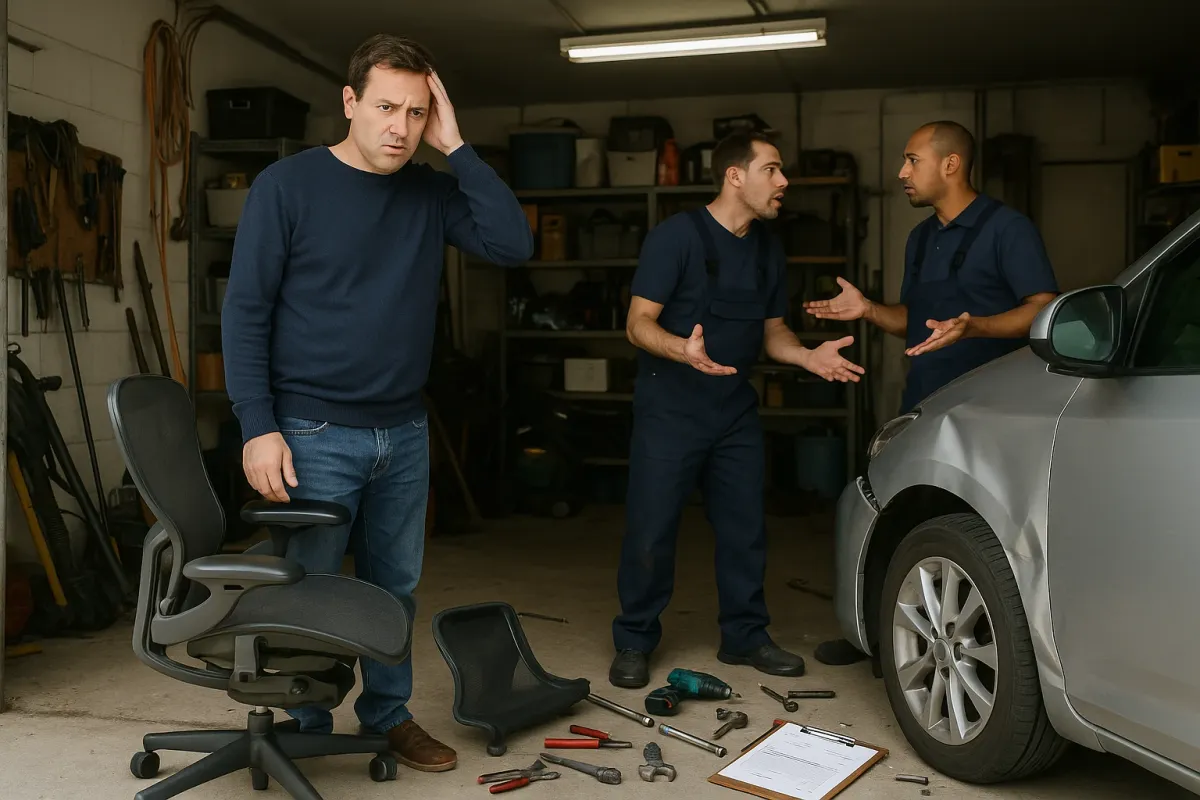
In a week where an $1,800 Herman Miller Aeron chair triggered an on-the-spot arrest after a co‑worker repeatedly “borrowed” it without permission, one subtle truth quietly resurfaced: premium gear demands premium respect. The viral story, circulating across social platforms today, is ostensibly about office drama—but for discerning homeowners, it’s a sharp reminder that high-end tools, equipment, and even your garage itself deserve the same level of boundary, care, and stewardship.
If a single office chair can provoke legal action when misused, imagine the silent costs of neglected torsion springs, misaligned tracks, overcrowded storage, or a luxury tool chest slowly corroding under fluorescent hum and concrete dust. Your garage is no longer a forgotten utility zone; for many, it’s a curated workspace, an automotive gallery, or an extension of a smart home ecosystem. The difference between a chaotic, “borrowed” space and a polished, high-performance garage often comes down to how deliberately it’s maintained and how clearly it’s “owned.”
Below are five exclusive, detail‑driven insights—born from the same respect that a $1.8K chair commands—that will help you elevate your garage repair decisions from reactive fixes to refined, long‑term solutions.
1. Treat Your Garage Hardware Like Premium Seating—Because It Is
In the viral chair incident, the conflict wasn’t just about comfort; it was about investment and ownership. The same dynamic exists in your garage every time a “good enough” hinge or bargain‑bin roller is installed on a high‑value door system. The hardware that lifts a 200–350 lb garage door multiple times a day is, functionally, your home’s largest moving mechanism—akin to a luxury ergonomic chair for your vehicle and equipment.
Refined repair starts by upgrading critical wear components—rollers, hinges, torsion springs, and cables—from builder‑grade to premium. Nylon‑coated, sealed‑bearing rollers glide more quietly and reduce stress on the opener. High‑cycle torsion springs (rated for 25,000–50,000 cycles instead of the typical 10,000) transform your door from a disposable item into a durable asset. Just as the Aeron chair is engineered to support posture and movement, a well‑specced hardware package supports the substantial weight and motion of your door with less noise, less strain, and fewer emergency calls. The outcome is not just reliability—it’s refinement you can feel every time the door moves.
2. Build “Respect for Equipment” Into the Layout, Not Just the Rules
The office chair headline exploded precisely because unspoken rules were violated—someone assumed access to a premium object that wasn’t theirs. Garages suffer from the same issue when family members, neighbors, or even contractors “borrow” tools or casually re‑park items, gradually dismantling any sense of order.
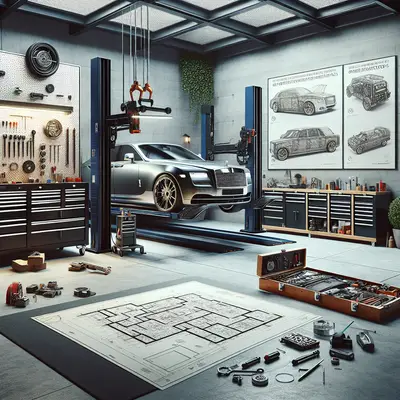
Sophisticated repair solutions acknowledge that etiquette is only as strong as the environment that supports it. Instead of relying on verbal boundaries, design your garage so that respect for equipment is physically embedded:
- Dedicated, labeled zones for automotive tools, woodworking, gardening, and seasonal storage reduce “wandering” items.
- Lockable tool chests and cabinets signal value and protect precision instruments the way a reserved ergonomic chair protects its owner’s investment.
- High‑visibility vertical storage—slatwall, ceiling racks, and modular shelving—turns expensive tools into part of a curated display, making misuse less likely and easier to detect.
- Protected parking for specialty equipment like motorcycles, e‑bikes, or detailing carts ensures that nothing is casually bumped, scratched, or stacked upon.
A polished layout serves as a gentle but powerful form of social engineering: when the space communicates intention and care, people instinctively treat it, and the items within it, with greater respect.
3. Silence Is the New Luxury: Precision-Tuning Your Door’s Acoustics
The Aeron story resonated online partly because of its symbolism—people are increasingly vocal about physical comfort and workplace ergonomics. In the garage, your equivalent “comfort statement” is acoustic: how your door and opener sound is a direct measure of whether your repair strategy is elegant or merely functional.
A refined solution doesn’t just make the door work again—it restores quiet, controlled movement. Achieving this requires a technician or informed homeowner who pays attention to nuance:
- Balanced spring tension so the door can be lifted smoothly by hand with minimal effort—this reduces strain and clatter.
- Track alignment to tight tolerances, eliminating the subtle binding and rattling that cheaper repairs often overlook.
- Rubber isolation mounts and vibration‑dampening fasteners to keep the opener from telegraphing noise into ceiling joists and adjoining living spaces.
- Targeted lubrication using high‑quality products suited to the specific component, rather than generic sprays that attract dust and grime.
Well‑executed acoustic tuning transforms the everyday act of opening your garage from a mechanical event into an almost architectural experience—quiet, assured, and befitting a premium home.
4. Protect High‑Value Tools From “Invisible Wear”—Climate and Power Quality
The $1.8K chair controversy highlights visible misuse, but in many garages the real damage is invisible: micro‑corrosion on precision tools, subtle warping of worktops, or premature failure of chargers and smart devices due to poor power quality. If your garage now houses lithium‑battery lawn equipment, EV chargers, detailing machines, compressors, or high‑end cordless tools, your repair strategy must extend beyond the purely mechanical.
Consider these refined protective measures:
- Humidity management via a modest dehumidifier and strategic insulation to prevent rust on chisels, bits, blades, and automotive components.
- Temperature control at the “equipment zone”—even a small infrared heater over a workbench can stabilize conditions for adhesives, finishes, and electronics.
- Clean, dedicated circuits for high‑draw devices like EV chargers, compressors, or heaters, preventing nuisance breaker trips and voltage drops that shorten equipment life.
- Surge protection and power conditioning for smart openers, battery chargers, and diagnostic equipment, treating them with the same respect you would for indoor electronics.
These adjustments may not be flashy, but they are the difference between tools that slowly degrade in the background and a garage ecosystem that retains its precision for years.
5. Move From “Call Me When It Breaks” to a Personal Service Standard
The viral office chair arrest is, at its heart, a reaction story: boundaries were crossed repeatedly until someone finally escalated. Many homeowners unintentionally run their garages the same way—repairs happen only after a cable snaps, a spring breaks, or a door jams halfway on a Monday morning.
A more sophisticated approach mirrors the way corporate facilities treat high‑value equipment: with a defined service cadence. Establish a personal standard of care:
- Annual or semi‑annual inspections by a vetted, reputable garage door specialist—not just a “quick look,” but a documented check of spring life, track integrity, fastener security, weatherstripping, opener safety features, and balance.
- Service history tracking, whether via a simple notebook in the garage or a shared digital log. Note dates, parts replaced, and technician details—creating continuity rather than ad‑hoc fixes.
- Proactive part upgrades at the right time (for example, replacing aging extension springs with torsion springs or swapping legacy openers for quieter belt‑drives with modern safety and smart features).
- Clear “use and respect” rules for anyone accessing the garage—where to park, how to operate the door safely, and what tools are off‑limits without permission.
By shifting from reactive to curated maintenance, your garage transitions from a space you occasionally “deal with” to a well‑run system that reflects the same intentionality as the rest of your home.
Conclusion
The arrest over a $1.8K office chair is more than an odd workplace anecdote—it’s a cultural snapshot of how people now view premium objects: as investments that warrant clear rules, ongoing care, and serious consequences when mishandled. Your garage, with its door mechanisms, tools, vehicles, and smart systems, belongs in that same category.
When you elevate your repair strategy—specifying higher‑grade hardware, embedding respect into the layout, tuning for acoustics, protecting against invisible wear, and adopting a personal maintenance standard—you transform the garage from a utility zone into a refined, high‑performance environment. In a world where even an office chair can go viral for being taken for granted, choosing not to overlook your most hardworking room is a statement in itself: this space, and everything in it, is worth doing properly.
Key Takeaway
The most important thing to remember from this article is that this information can change how you think about Repair Solutions.