A refined home does not tolerate a mediocre garage. The space that guards your vehicles, tools, and seasonal essentials deserves the same level of discernment you bring to your kitchen, wardrobe, or art on the walls. Repairing a garage is no longer about simply “making it work again”; it is about restoring precision, comfort, and quiet authority to a space that should function with near-effortless reliability.
This is where repair decisions become a craft. Below, you’ll find five exclusive, underutilized insights that elevate garage repair from a chore to a considered investment—one that rewards you daily in silence, smooth motion, and long-term stability.
The Hidden Geometry: Aligning Your Door Beyond “Good Enough”
Most homeowners think of a garage door repair in binary terms: it opens or it doesn’t. In reality, the difference between a door that merely works and one that operates with refined grace is geometry—specifically, alignment and balance.
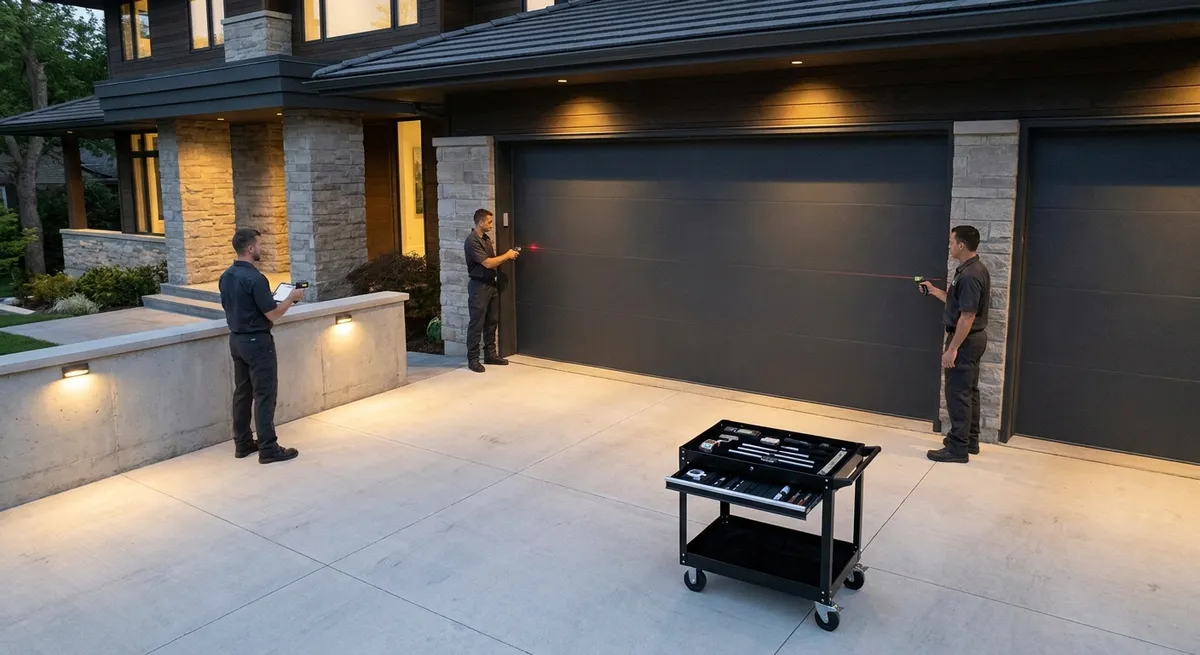
A premium repair starts with a precise assessment of the door’s weight distribution, track alignment, and spring tension. A door that is even slightly misaligned forces the opener to work harder, accelerates wear on rollers and hinges, and can eventually warp panels. Skilled technicians will:
- Use a level to verify vertical and horizontal track alignment instead of “eyeballing” it.
- Test door balance by disconnecting the opener and observing whether the door holds safely at mid-height without drifting.
- Inspect for subtle track bruises or bends that cause binding and noise.
- Adjust spring tension incrementally, not by feel alone, but by how precisely the door holds position.
The result is not simply a quieter door—it’s mechanical harmony. When alignment is perfected, the motor hums rather than strains, hardware lasts longer, and the door’s movement feels intentional, not reluctant.
Silence as a Benchmark: Engineering a Quieter Mechanism
Noise is one of the most telling indicators of repair quality. A garage that rattles through its cycle telegraphs neglect; one that glides open with subdued refinement signals meticulous attention to detail.
Beyond the usual “lubricate the moving parts” advice, sophisticated noise control involves material selection and strategic upgrades:
- Rollers: Swapping builder-grade metal rollers for nylon, ball-bearing rollers can dramatically reduce vibration and clatter.
- Hinges and brackets: Upgrading to heavier-gauge hardware tightens movement tolerances and minimizes flex, which often manifests as metallic creaks.
- Opener type: A belt-drive or direct-drive opener, properly installed and tuned, is markedly quieter than a chain-drive—especially under a bedroom or living space.
- Isolation mounts: Rubber or neoprene vibration isolators between the opener and the ceiling framing prevent mechanical noise from telegraphing into the rest of the home.
A refined repair philosophy treats noise as a defect to be engineered out, not a minor irritant to ignore. When silence becomes a benchmark, every subsequent decision—from lubricant grade to fastener torque—is elevated.
Structural Integrity First: Repairing What You Don’t Immediately See
Too many garage repairs begin and end with the visible symptom: a broken spring, a warped panel, a finicky opener. A more discerning approach pauses to ask: Why did this fail now? That question almost always leads to structure.
The garage is one of the most structurally vulnerable areas of a home—subject to heavy loads, vehicle impact, frequent door cycles, and significant temperature swings. High-caliber repair work will include:
- Framing inspection around the opening: Checking for moisture damage, crushed or split studs, and header deflection that can twist the door opening out of square.
- Fastener integrity: Confirming that track brackets and opener mounts are anchored into sound structural members, not just drywall or compromised wood.
- Slab condition: Assessing if the concrete has cracked, settled, or heaved enough to affect bottom seal contact, weatherproofing, and door travel.
- Corrosion evaluation: Particularly in coastal or high-humidity regions, rust on tracks, cables, and fasteners can signal systemic moisture problems that require more than a quick hardware replacement.
Addressing underlying structural concerns doesn’t merely fix today’s issue; it stabilizes the entire system. You’re not just repairing a garage door—you’re preserving a critical architectural opening in your home’s envelope.
Smart Systems, Thoughtfully Calibrated (Not Just Installed)
Smart garage technology is now commonplace, but sophistication lies in calibration, not mere connectivity. A premium repair experience doesn’t stop at wiring and pairing an opener with an app; it ensures the system is tuned to your lifestyle, safety needs, and security standards.
Attentive smart-system repair and setup will consider:
- Travel and force limits: Ensuring the opener’s force settings are low enough to protect against entrapment, yet high enough for reliable closing in colder months or light wind conditions.
- Sensor positioning: Mounting photo-eye sensors at the correct height and ensuring that wiring is protected from impact, pets, and routine storage activities.
- Access logic: Configuring temporary digital keys or guest access windows for service providers, housekeepers, or family members, rather than sharing permanent codes.
- Integration with home networks: Connecting the opener to secure, updated Wi‑Fi, using strong passwords, and enabling firmware updates to maintain cybersecurity hygiene.
- Power continuity: Pairing the opener with battery backup where appropriate, allowing access even during outages—especially critical in regions prone to storms or grid instability.
The most refined garages respond intelligently and consistently, with systems that feel seamless rather than fussy. Properly repaired and calibrated smart components make the garage an extension of your home’s overall digital ecosystem.
Climate, Materials, and the Long Game of Durability
Many repair decisions are made in isolation—replace a panel, swap a spring, add new weatherstripping—without considering the local climate and material science that quietly determine how long those repairs will last.
Homeowners who expect enduring performance focus on compatibility between environment, material, and expected service life:
- Springs and cycles: For high-use garages, specifying high-cycle torsion springs (often rated for 25,000–50,000 cycles instead of the typical 10,000) can dramatically reduce future failures.
- Weather seals and thresholds: Choosing seals formulated for your temperature range prevents stiffening, cracking, and loss of flexibility that compromise both comfort and energy efficiency.
- Door material: In humid or coastal climates, insulated steel or composite doors tend to outperform wood in terms of stability, rust resistance (with proper coating), and maintenance demands.
- Corrosion protection: Powder-coated hardware, stainless or galvanized fasteners, and properly sealed tracks are not aesthetic upgrades; they are strategic defenses against premature failure.
- Insulation and comfort: In garages used as workshops, gyms, or storage for sensitive items (wine, instruments, electronics), pairing door insulation with well-installed wall insulation and a properly sealed attic or bonus room above creates a significantly more stable microclimate.
Durability is not an accident. It’s the compound result of informed repair choices that respect both your local environment and the way you actually use your space.
Conclusion
A garage that simply functions is common. A garage that operates with quiet authority, structural confidence, and considered technology is the mark of a homeowner who refuses compromise in the less-visible corners of their property.
Approaching repair as a disciplined, detail-driven process—aligning geometry, engineering silence, safeguarding structure, calibrating smart systems, and selecting climate-appropriate materials—transforms emergency fixes into enduring enhancements. In doing so, you shift the garage from a tolerated utility zone into a precisely managed extension of your home’s overall standard.
Sources
- U.S. Consumer Product Safety Commission – Garage Door Safety Tips – Discusses safe operation, force settings, and entrapment protection for residential garage doors
- International Association of Certified Home Inspectors – Garage Inspection Guidelines – Covers structural considerations, framing, opener mounting, and safety components in garages
- U.S. Department of Energy – Insulation and Air Sealing in Garages – Explains how garages influence home comfort, energy use, and recommended sealing/insulation strategies
- Clopay Garage Doors – Material and Insulation Overview – Provides details on different door materials, insulation options, and climate considerations
- LiftMaster – Smart Garage Door Opener Features and Safety – Outlines modern opener technologies, connectivity, and safety features relevant to sophisticated repair decisions
Key Takeaway
The most important thing to remember from this article is that this information can change how you think about Repair Solutions.