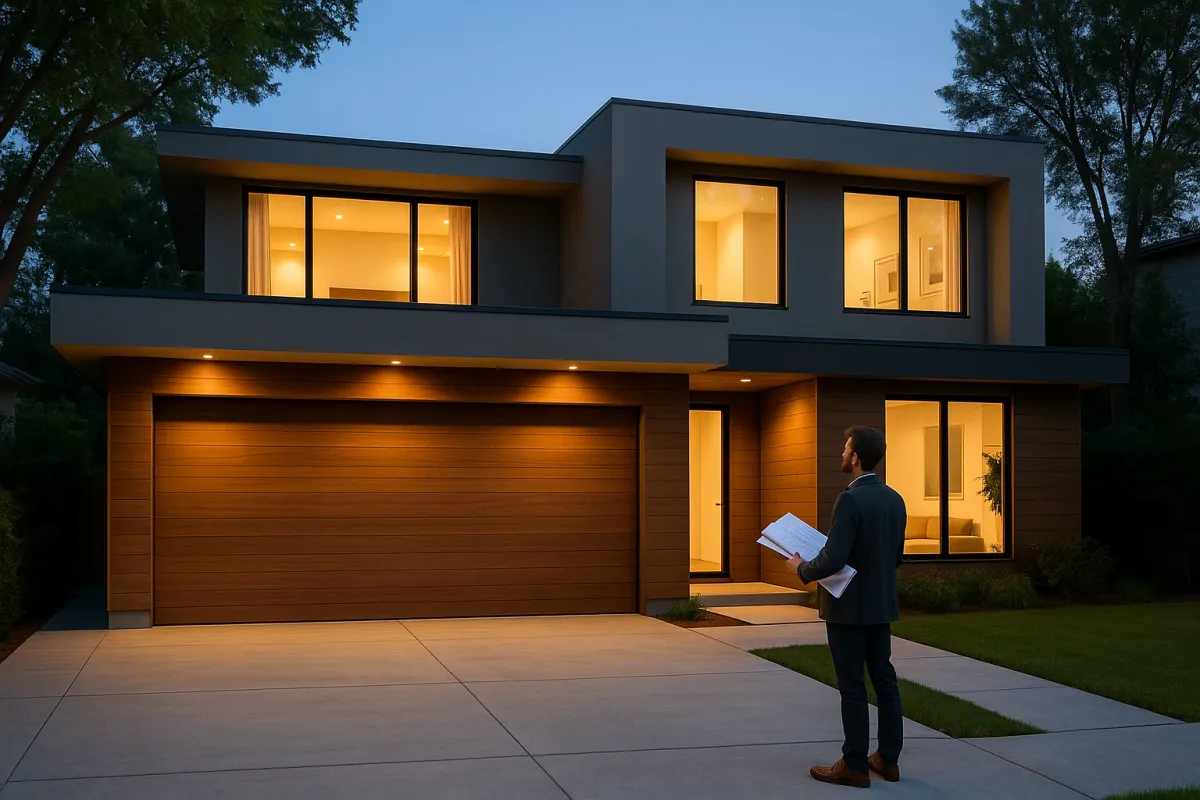
The internet is currently captivated by artisans turning simple blocks of wood into museum‑worthy pieces—viral collections like “50 Times People Made Something Amazing Out Of Wood” are dominating feeds and inspiring homeowners to rethink what “ordinary” materials can become. While most viewers scroll and admire, a more discerning question emerges: if craftspeople can transform raw timber into heirloom objects, why are so many garage doors still treated like disposable, hollow panels?
At Garage Fix Guide, we see the same missed opportunity every day. The garage door is the single largest moving element on your property façade—yet it’s often the least considered. As handcrafted woodwork, bespoke cabinetry, and custom millwork trend online, a new mindset is emerging: your garage door deserves the same level of craftsmanship, engineering, and quiet luxury.
Below, we distill five exclusive insights for homeowners who expect more—from performance, from design, and from every repair decision they make.
1. The “Furniture Standard” Mindset: Why Your Next Repair Should Start With Finish, Not Just Function
As woodcraft videos go viral, one theme is constant: surfaces matter. The best makers obsess over grain direction, edge profiles, and finish systems. Your garage door—especially if it’s wood or wood‑look—should be held to the same “furniture standard.”
When you call for a repair, most service visits default to springs, rollers, and openers. Necessary, yes. Sufficient, no. A premium service should also assess the visual continuity of your door: UV damage at the bottom rails, micro‑checking in stain, clear coat breakdown on south‑facing elevations, and subtle warping along stile joints. When panels are replaced, are they color‑matched and sheens aligned, or simply “close enough”? A door with mismatched touch‑ups cheapens an otherwise sophisticated façade. Request that any panel or trim replacement includes at least a sectional refinishing plan—sanding transitions, feathering stain, and re‑topcoating the full section, not just the patch. It is the same principle luxury furniture makers apply: no visible “repair seams.”
2. Hidden Architecture: How Your Garage Door Can Imitate Custom Millwork
Those stunning wood creations trending online prove one thing: profiles and shadow lines are everything. The same sculptural thinking can transform the architectural presence of your garage door—without a full replacement.
A refined repair specialist will look beyond “flat panel vs. carriage style” and focus on proportion and depth. Many standard doors have applied trim with shallow relief that looks flat from the curb. Through strategic upgrades during necessary repairs, you can introduce deeper stiles and rails, applied battens with crisper edges, or even custom overlay kits that read more like millwork than mass‑produced steel. When sections are being swapped, it’s the ideal time to refine details: align faux hinge hardware with stile lines, tighten reveal gaps between panels, and ensure the top section echoes any transom or window muntin pattern on the main house. Think of your garage door as exterior cabinetry—every line should feel intentionally drawn, not factory‑default.
3. Silent Precision: The Acoustics of a Truly Premium Door
As high‑end interiors move toward quieter, more serene spaces, noise is increasingly viewed as a design flaw, not an inevitability. Yet many homeowners still tolerate a shrill, clattering garage door that announces every arrival to the entire street.
During your next service, insist on an acoustic‑first approach. This goes far beyond “lubing the tracks.” Precision‑tuned torsion springs, properly tensioned cables, and upgraded nylon‑coated rollers can dramatically reduce impact and vibration. Belt‑drive or direct‑drive openers, paired with rubber isolation mounts, prevent motor noise from transferring into framing. A thoughtful technician will also inspect the track anchoring system, adding anti‑vibration pads at key connections and checking that horizontal tracks are perfectly level to avoid “binding squeaks.” Even weatherstripping contributes to the soundscape: high‑density, flexible bottom seals and side jamb seals prevent the hollow thud of metal-on-concrete closure. The benchmark is simple: your door should feel more like a soft‑close drawer than a warehouse shutter.
4. Climate‑Conscious Performance: Insulation, Movement, and Material Behavior
The same woodcraft trends that celebrate natural materials also remind us that wood—and even faux‑wood panels—move with climate. Ignoring this reality is one reason so many garage doors age poorly, especially in regions with harsh seasons.
A premium garage repair or upgrade should begin with an understanding of your micro‑climate. In cold regions, uninsulated or low‑R‑value doors cause condensation, corrosion at hardware junctions, and brittle seals that split prematurely. In hot climates, dark‑stained or dark‑painted doors can reach temperatures that warp panels, fatigue adhesives, and cause lamination failures. Ask your technician to evaluate not just “is the door insulated?” but “is the insulation appropriate for this orientation and weather pattern?” For wood or composite doors, controlled movement is key: properly sized expansion gaps between sections, flexible sealants at vulnerable joints, and breathable yet protective finishing systems prevent the kind of hairline cracks and bowing that send homeowners prematurely shopping for replacements. An elegant door is one that is engineered to age gracefully in your specific environment.
5. Repair as an Upgrade Path: Turning a Service Call Into a Long‑Term Elevation Plan
The most seasoned craftspeople treat every project as part of a continuum: today’s repair, tomorrow’s refinement, next year’s masterpiece. Your garage door deserves the same strategic thinking.
Instead of viewing each service call as a one‑off fix, ask for a phased elevation plan. Step one might be structural reliability—new springs, reinforced struts, safer cables. Step two could address daily experience—whisper‑quiet hardware, upgraded opener, smart controls calibrated to soft‑start and soft‑stop. Step three moves into aesthetics—reprofiling trim, upgrading windows to insulated glass with divided‑lite designs that echo your architecture, or transitioning from a standard stamped steel pattern to a more tailored overlay system. This tiered approach allows you to align investments with other projects—landscape lighting, new front door, or driveway resurfacing—so that the garage doesn’t lag behind or visually fight the rest of your upgrades. In the hands of the right professional, a “simple repair” becomes the first stroke in a composed, cohesive exterior.
Conclusion
As social media celebrates the artistry possible in a single piece of wood, homeowners are quietly raising their expectations for everything in and around the home. The garage door is no longer allowed to be the utilitarian afterthought—the rattling, mismatched, visually noisy plane that undermines an otherwise refined property.
By adopting a furniture‑grade mindset, treating your door as exterior millwork, prioritizing acoustic comfort, respecting climate‑driven material behavior, and using each repair as an intentional upgrade step, you elevate your garage from a service space to a statement piece. The same care that turns raw timber into gallery‑worthy objects can—and should—shape the largest moving surface on your home.
Key Takeaway
The most important thing to remember from this article is that this information can change how you think about Garage Doors.