The internet is obsessed with transformation right now. Scroll through today’s feeds and you’ll see it everywhere: from Bored Panda’s feature on “The Nature Photographer Of The Year 2020 And Their Winning Pictures” to entire communities dedicated to woodcraft, lighting, and visual storytelling. The message is clear—people no longer want spaces that simply function. They want spaces that photograph well, feel curated, and communicate a point of view.
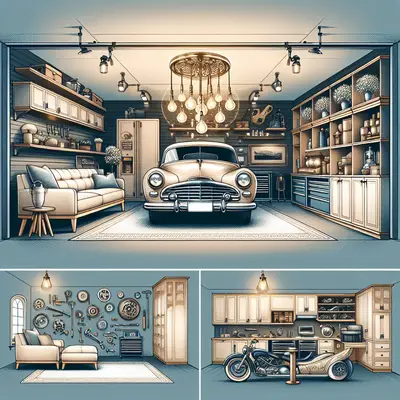
That same visual standard is quietly moving from living rooms and kitchens into the most neglected square footage in the home: the garage. If photographers can sculpt light to turn an ordinary landscape into an award‑winning image, discerning homeowners can do the same to elevate a concrete box into a gallery‑worthy, high‑performance extension of the house.
Below are five refined, rarely discussed upgrade insights that bring that photography‑level thinking into the garage—perfect for homeowners who expect more than bare bulbs and stained concrete.
1. Treat Garage Lighting Like a Studio, Not a Storage Room
Nature Photographer of the Year finalists don’t rely on a single overhead bulb; they layer light deliberately. Your garage deserves the same nuance.
Begin by replacing the lone ceiling fixture with a three‑layer system: high‑CRI LED panel lighting for general illumination, directional task lights over benches and tool walls, and low‑glare accent lighting along walls or ceiling trusses. Look for fixtures with a CRI (Color Rendering Index) of 90+ so paint tones, wood grains, and vehicle finishes read accurately—just as they would under professional lighting.
Avoid the harsh “warehouse white” look. Instead, select 4000K “neutral white” for a crisp but not clinical tone that flatters both vehicles and finishes. Place linear fixtures parallel to the hood line of your car and to the front edge of your workbench; this reduces shadowing, much like a photographer placing key lights to model a subject rather than flatten it.
The upgrade isn’t just aesthetic. Thoughtfully designed lighting reduces tool-search fatigue, lowers accident risk, and makes late‑night arrivals feel composed instead of chaotic.
2. Elevate Storage With Cabinetry That Photographs Beautifully
That Bored Panda woodcraft feature—“50 Times People Made Something Amazing Out Of Wood”—captures a broader design shift: utility pieces are expected to be beautiful. For the garage, this means stepping away from mismatched plastic bins and wire racks toward cabinetry that could live comfortably in a designer kitchen.
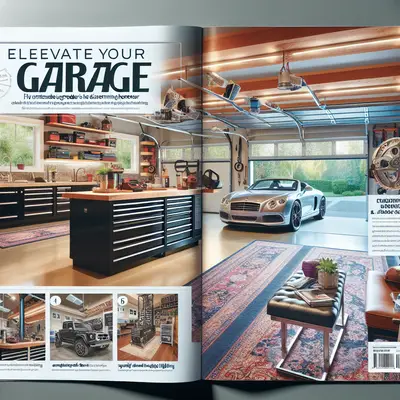
Opt for full‑height, flush‑front cabinets with integrated pulls or sleek edge pulls rather than exposed handles designed for industrial spaces. Powder‑coated steel in matte finishes (charcoal, deep navy, stone) offers durability without reading “auto shop.” For a more bespoke look, pair steel carcasses with real wood veneer fronts—white oak, walnut, or rift‑sawn ash—to echo interior millwork.
Inside, specify pull‑out trays sized for power tools, soft‑close hinges, and integrated cable pass‑throughs so chargers and battery systems disappear behind closed doors. When the doors shut, the entire wall reads as one clean plane—a visual calm that makes even an everyday sedan feel more curated the moment the door opens.
The result is not just more storage, but a visual backdrop that would look perfectly at home in a design magazine or an architect’s portfolio.
3. Upgrade the Floor Like a Luxury Showroom, Not a Utility Slab
Nature photography awards celebrate texture, reflection, and subtle tonal shifts. Your garage floor is the single largest canvas you control—yet most homes leave it as builder‑grade concrete, stained by time and neglect.
For a genuinely premium upgrade, consider a professionally installed polyaspartic or high‑solids epoxy system, but specify it with the same care you’d bring to stone selection in a kitchen. Avoid loud “confetti” chips that read like a car wash; opt instead for tight, fine flake blends in restrained palettes—graphite with subtle quartz flecks, warm greige with micro‑pearl, or a nearly solid tone with just enough flake to hide dust.
Request a satin or low‑sheen topcoat. High‑gloss may look dramatic in marketing photos, but in daily use it can highlight imperfections and show every footprint. Satin retains reflection while feeling more architectural and less automotive showroom.
For those seeking the truly bespoke, mechanically polished concrete with a penetrating sealer can deliver a gallery‑like finish—smooth, light‑reflective, and unexpectedly elegant. It pairs particularly well with minimalist cabinetry and warm wood details, turning the garage into a quietly luxurious threshold between exterior and interior.
4. Design Wall Systems as Curated Displays, Not Tool Dumps
The online love for “hidden details” in films like Ratatouille reflects a broader appetite for spaces that reward a second look. Apply that mindset to your vertical surfaces and the garage instantly feels more considered.
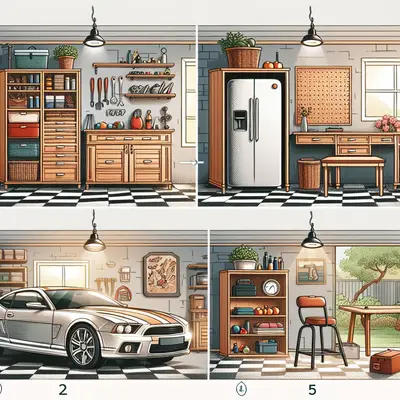
Instead of covering every inch with pegboard, select one or two focal walls and treat them as curated displays. Use a high‑quality slatwall system, but limit visible items to tools you reach for weekly. Group them by function and color—black‑handled tools together, polished metal on a single rail—so the wall reads as intentional composition, not visual noise.
Behind the scenes, integrate concealed storage: shallow cabinets flush with the wall to hide seasonal gear, wall‑mounted cases for detailing products, and narrow vertical pull‑outs for brooms and long‑handled tools. Add warm backlighting—a soft LED strip at the underside of a floating shelf or along the top of the slatwall—to create a subtle halo effect at night.
This approach turns your most practical implements into part of the room’s design language, the way a photographer carefully positions foreground elements to frame a scene.
5. Quiet the Mechanicals So the Space Feels Calm, Not Industrial
Award‑winning nature photography is defined as much by what you don’t notice—noise, clutter, distraction—as by what you do. To achieve a similar serenity in the garage, address the ambient “mechanical noise” that most upgrades ignore.
Start with the obvious: replace an older chain‑drive opener with a belt‑drive or direct‑drive, ideally one with a DC motor and soft‑start/soft‑stop functionality. The difference is dramatic; instead of a metal rattle announcing every arrival, the door glides open with a subdued, almost architectural presence.
Next, refine the acoustic envelope. Insulated garage doors not only regulate temperature but also dampen street noise and mechanical vibration. Pair them with perimeter seals and a properly insulated common wall between the garage and interior; this reduces sound transfer and allows you to run tools or chargers late at night without waking the household.
Finally, discretely manage the visual clutter of infrastructure: conceal exposed wiring in painted conduit aligned with existing lines, box out unsightly plumbing in clean drywall chases, and select low‑profile, architecturally neutral safety sensors and keypads. The goal is a space where necessary technology recedes, allowing the vehicles, cabinetry, and finishes to take visual priority—much like a well‑edited photograph where nothing extraneous competes with the subject.
Conclusion
As today’s feeds celebrate photographers, woodworkers, and designers who transform the ordinary into the remarkable, the garage is quietly emerging as the next frontier for serious home upgrades. By borrowing principles from award‑winning imagery—layered light, curated texture, disciplined composition—you can convert a purely functional enclosure into a refined, gallery‑grade space.
These upgrades go far beyond resale value. They reframe how you arrive home, how you store what matters, and how you move between the outside world and the sanctuary inside. In an age where every room is expected to be camera‑ready, the most luxurious statement you can make may be the one your guests only glimpse when the garage door lifts: a space so considered it feels less like a catch‑all, and more like a private studio for your life.
Key Takeaway
The most important thing to remember from this article is that this information can change how you think about Upgrades.