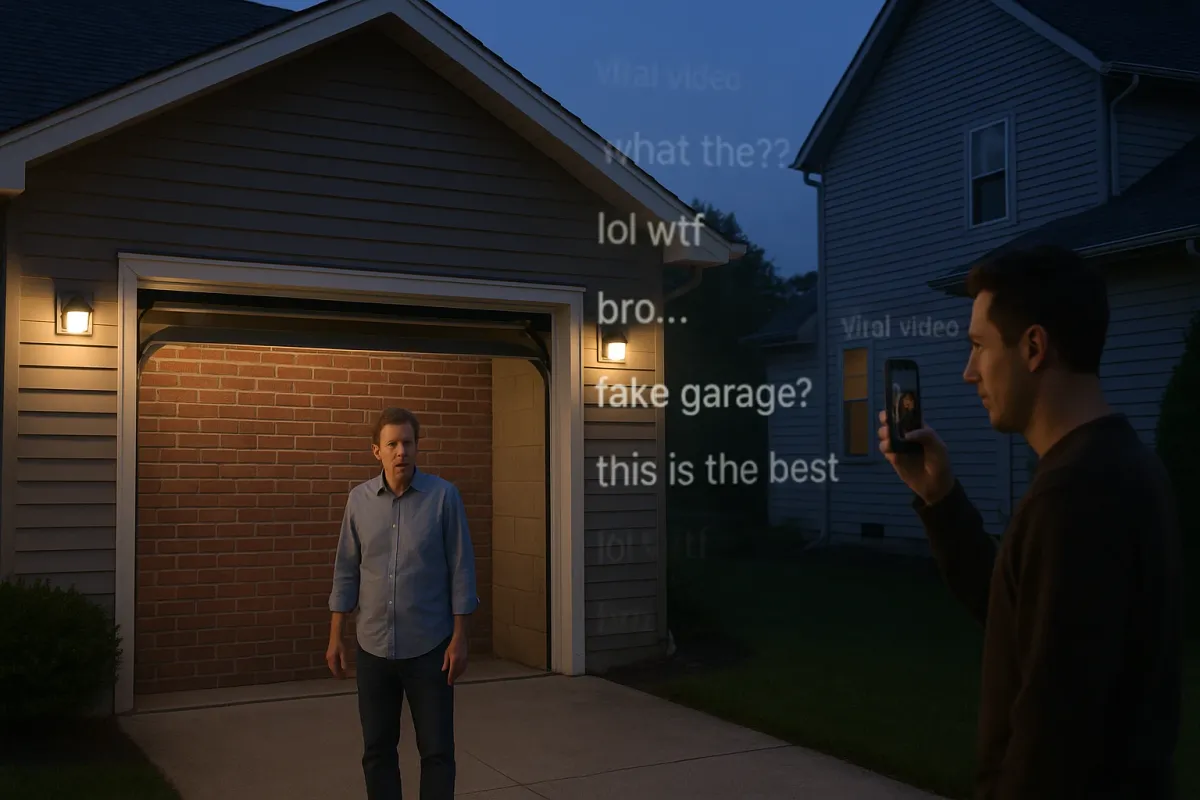
The internet is having a field day with “Real Estate Listings From Hell” — that viral collection of homes so badly designed they feel almost theatrical. Crooked staircases, toilets in kitchens, and doors that open into nowhere are being shared, mocked, and dissected across social media. Beneath the humor, though, is a serious undercurrent: people are waking up to how much design, safety, and craftsmanship matter in the everyday spaces we inhabit.
Nowhere is this more relevant than at the front line of your home’s functionality and curb appeal: the garage door. While absurd listing photos trend on Instagram, a quieter revolution is happening among discerning homeowners—those who understand that a misaligned track, a compromised spring, or an awkwardly placed opener isn’t just an inconvenience; it’s the difference between a refined home experience and a daily irritation.
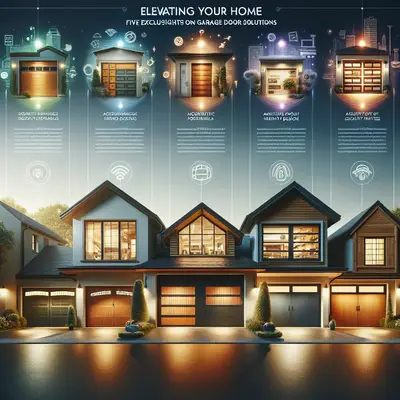
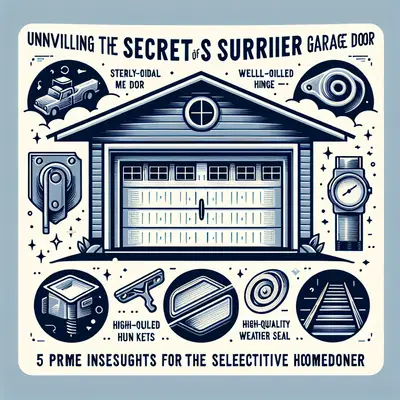
Inspired by the current obsession with design gone wrong, this piece distills five exclusive, high-level insights for homeowners who expect more from their garages than “good enough.”
1. The “Listing Photo Test”: Would Your Garage Door Survive the Spotlight?
One reason “Real Estate Listings From Hell” resonates is that you don’t need to be an architect to see something is off. The same intuitive reaction applies to garage doors. If a single photo of your garage door were to appear in a high-end property listing today, would it project quiet luxury—or quiet neglect?
Perform your own “listing photo test.” Step back to the street, snap a photo of your home, and look only at the garage area. Is the door faded or yellowed against fresh siding? Are the panels slightly warped, misaligned, or dimpled from minor impacts? Do the weather seals at the bottom and sides look compressed, torn, or uneven? These subtleties read instantly in photos—and even more sharply in person. A premium approach treats the garage door as architectural frontage, not an afterthought. Upgrading to a properly insulated, well-designed door with refined hardware and clean sight lines doesn’t merely avoid “listing from hell” status; it positions your home as one that understands proportion, texture, and restraint.
2. Hidden Chaos Behind a Quiet Close: The Mechanics of Real Safety
The worst viral listings often hide practical hazards behind visual comedy: a railing that looks quirky but fails safety codes, or a “creative” loft with no fire escape. Garage doors carry a similar duality. A door can appear to glide smoothly while hiding significant mechanical risk behind a deceptively calm façade.
Premium safety isn’t about whether the door “seems fine”; it’s about what a quiet, trained inspection reveals. Springs with microscopic fractures, cables beginning to fray, or opener force settings calibrated too high may function today but fail catastrophically tomorrow. A sophisticated homeowner insists on: annual balance testing (can the door stay at mid-height without drifting?), verification that the auto-reverse system responds instantly to both obstruction and light-beam interruption, and confirmation that the opener’s force settings are calibrated to stop on resistance, not bulldoze through it. In an era where people share unsafe homes for entertainment, the real luxury is a door that is deliberately, demonstrably safe—by engineering, not by luck.
3. Acoustics as a Status Symbol: Turning Clatter Into Calm
Scroll through those nightmare listings and you’ll notice something else: they look noisy. Clashing materials, clutter, and awkward geometry suggest a home that never really rests. Your garage door can broadcast the same discomfort every time it opens with a shudder, clank, or metallic squeal.
A genuinely refined garage experience treats acoustics with the same seriousness as a premium audio system. Upgrading from chain-drive to belt-drive openers, using nylon rollers instead of metal ones, and ensuring tracks are both true and properly secured transforms the door’s movement from industrial racket to soft, controlled motion. Lubrication, done intelligently with the right products in the right places (rollers, hinges, springs—not tracks), becomes routine care rather than crisis response. Silence, or something close to it, communicates precision. In a world where people mock noisy, chaotic spaces online, a whisper-quiet garage door is its own form of luxury statement.
4. The New Curb Appeal Standard: Smart, Efficient, and Architecturally Coherent
The viral “Real Estate From Hell” posts underscore a key lesson: people now evaluate homes as much for coherence and thoughtfulness as for square footage. A mismatched addition or an odd door placement can undermine the entire impression of a property. For garages, the standard is shifting the same way.
A premium garage door strategy focuses on three interlocking elements: smart functionality, energy performance, and architectural integration. Smart openers with secure, encrypted remotes and app-based control reduce vulnerability from lost remotes and allow you to monitor access even when traveling. High-quality insulated doors with proper perimeter sealing help stabilize temperature not only in the garage, but also in adjacent rooms—particularly important as more garages double as gyms, workshops, or studio spaces. Equally vital is design coherence: panel style, color, and window configuration should echo your home’s architecture, not fight it. The goal is a garage that appears as if it were conceived with the house from day one, not bolted on as an afterthought.
5. From “Functional” to “Future‑Proofed”: Planning Repairs Like an Investment
Many of the worst property listings share a common thread: years of improvisation instead of a clear plan. Unpermitted additions, improvised stairs, random cosmetic fixes—each decision made in isolation, with no regard for long-term integrity. Garage doors often suffer the same fate: a panel patched here, a spring replaced there, a mismatched opener swapped in when something fails.
Elevated garage stewardship means stepping back and asking, “What is the ten-year vision for this space?” If you plan to stay, your repair strategy should align with that horizon. That might mean replacing a tired, under-insulated door rather than continually repairing it, opting for a higher-grade spring system rated for more cycles, or pre-wiring and configuring power outlets and Wi‑Fi coverage to accommodate future smart upgrades and possible EV charging. Even if a full transformation isn’t in this year’s budget, sequence your decisions as if it were: choose finishes, hardware, and components that belong to a cohesive long-term plan. The result is the opposite of a “listing from hell”—a garage that quietly gains value and utility with every carefully considered improvement.
Conclusion
As the internet gleefully circulates homes that seem designed as cautionary tales, a subtle shift is taking place among homeowners who refuse to treat their spaces as improvisations. The garage door—so often overlooked until it fails—is now recognized as a crucial intersection of safety, aesthetics, acoustics, efficiency, and long-term planning.
Avoiding “real estate from hell” status isn’t about perfection; it’s about intentionality. When your garage door is balanced, whisper-quiet, architecturally aligned, technologically secure, and chosen with a decade-long view, you elevate it from mere mechanism to an integral expression of how you live. In an age obsessed with sharing the worst examples of design, the true hallmark of sophistication is a garage that never goes viral—because it simply works, beautifully, every single day.
Key Takeaway
The most important thing to remember from this article is that this information can change how you think about Garage Doors.