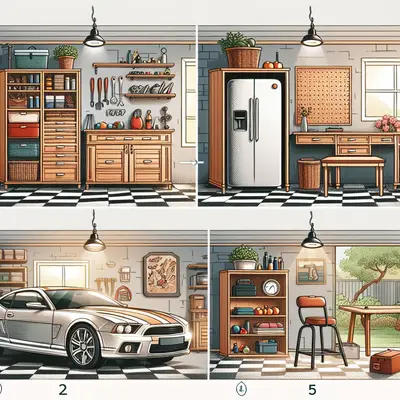
The finest upgrades are rarely loud; they simply make everything work better, feel calmer, and look deliberately resolved. A well‑considered garage is exactly that—a quiet engine of daily life where every element operates with precision. For discerning homeowners, this space is no longer a chaotic afterthought, but a highly tuned extension of the home’s architecture, performance, and value.
Below are five exclusive, detail‑driven insights that move well beyond basic “organize and repaint” advice—tailored for those who expect their garage to function flawlessly and look composed while doing it.
Re‑Engineering the Envelope: Insulation, Airflow, and Temperature Discipline
Upgrading a garage begins with treating it as a genuine building envelope, not an oversized storage box. Temperature swings, moisture intrusion, and erratic airflow all conspire to damage finishes, tools, vehicles, and mechanical systems over time. Precision‑minded homeowners prioritize the hidden performance layer first.
Closed‑cell spray foam or high‑density rigid foam panels on exterior walls and the ceiling create a stable thermal barrier while helping to reduce noise transfer from the street and from power tools. Where budgets or construction constraints prevent full foam coverage, a hybrid “flash and batt” approach—thin spray foam for air sealing, mineral wool for added R‑value—can be remarkably effective. A properly weather‑stripped entry door and an insulated garage door (with a verified R‑value from a reputable manufacturer) prevent your climate control from leaking into the driveway.
Air quality, often overlooked, becomes critical when the garage doubles as a workshop or gym. A quiet, wall‑mounted, variable‑speed exhaust fan paired with a dedicated fresh air intake can gently clear fumes and fine dust without creating drafts. Investing in this kind of infrastructure transforms the garage from a harsh, seasonal space into a stable environment where finishes last longer, vehicles corrode less, and off‑gassing from fuels and chemicals is better managed and contained.
Intelligent Power and Lighting: Designing for Tools, Vehicles, and Daily Rhythm
Most garages are under‑wired and over‑burdened—extension cords draped along walls, overloaded outlets struggling to serve power tools, freezers, and EV chargers simultaneously. An upgrade that respects both safety and refinement starts at the panel. A licensed electrician can install dedicated circuits for high‑demand equipment and a future‑ready 240‑volt line for an EV charger, even if you haven’t taken delivery of the car yet. The result is quiet confidence: nothing is improvisational; everything has a place on the electrical map.
Lighting is equally strategic. Replace the single, harsh ceiling fixture with layered illumination: high‑CRI LED strips or panels for general ambient light, focused task lighting above workbenches, and discreet accent lighting for shelving and display zones. Warmer color temperatures (around 3000–3500K) near entry points and slightly cooler, crisper light (4000–5000K) for task areas create a visual gradient that feels purposeful rather than utilitarian.
Digital controls—occupancy sensors, smart switches, and scenes tied to your home automation system—quietly elevate the experience. Imagine the garage door opening in the evening to a pre‑set “Arrival” scene: wall sconces washing the perimeter, overhead fixtures at half power, and targeted lighting guiding you to storage zones and interior doors. Power and light shift from being purely functional to orchestrated.
Precision Storage: Architectural Order Instead of Visual Noise
True refinement in a garage is not just about hiding clutter; it is about intentional, architectural order. This means designing storage around how you live, not around whatever shelving system happened to be on promotion. The most successful upgrades begin with a brutal inventory: what deserves long‑term residency in this space, and what should be discarded, donated, or relocated to climate‑controlled storage inside the home?
Once you’re left with only what earns its footprint, you can assign storage types strategically. Closed cabinetry with integrated handles (or subtle edge pulls) conceals tools, seasonal décor, and household supplies, leaving the room visually calm even when fully loaded. A continuous counter or work surface beneath those cabinets provides a landing zone for packages, projects, and day‑to‑day tasks. Open shelving, used sparingly and at eye level, displays items that must remain accessible but can be organized into matching, labeled containers.
Ceiling‑mounted racks, when properly anchored and loaded within rated capacities, liberate floor space for vehicles while housing rarely used gear—luggage, holiday décor, or large sports equipment. Even the most basic wall systems (slatwall, pegboard, or rail‑based) become elevated when installed in precise grids, with hooks and holders deliberately matched to bicycles, ladders, garden tools, and extension cords. The result is a space whose order is evident at a glance—nothing is ad hoc, and nothing feels temporary.
Floor Systems With Purpose: From Rough Slab to Engineered Surface
Many homeowners rush to cover a cracked, stained slab with whatever epoxy kit is readily available. A more sophisticated approach treats the floor as a critical structural and functional surface, not just a cosmetic problem. Before any finish is applied, a qualified contractor should assess for movement, scaling, moisture intrusion, and potential settlement. Small cracks and surface defects can be addressed with professional grinding and patching compounds; more serious issues may demand control joint repairs, drainage adjustments, or, in rare cases, partial slab replacement.
Only once the substrate is stable should you select a finish system. Professional polyaspartic or high‑solids epoxy coatings offer superior resistance to chemicals, hot‑tire pickup, and UV exposure compared to many consumer kits. For homeowners who demand minimal downtime, fast‑curing systems can return the garage to use in a single weekend, but they must be installed by experienced crews to avoid bubbling, uneven coverage, or premature failure.
Alternatively, modular garage tiles—preferably from reputable manufacturers with tested load ratings—provide a floating surface that can be reconfigured, replaced, or removed without committing to a permanent coating. Paired with careful color blocking, the floor can subtly define car bays, workshop zones, and walking lanes. Regardless of the system chosen, integrated floor drains (where code and grading allow) and a deliberate slope away from interior doors help protect the home from water intrusion, winter slush, and routine washing.
Acoustic and Vibration Refinements: A Quieter, More Civilized Mechanism
Noise is one of the most telling signs of a neglected garage. The shriek of a misaligned opener, the hollow clang of tools, and the echo of every footstep instantly betray the space as unfinished. A refined upgrade program addresses sound as seriously as structure.
Begin with the garage door itself. Modern belt‑drive openers, especially wall‑mounted jackshaft units, dramatically reduce operational noise by eliminating much of the vibration transmitted through the ceiling. When paired with a well‑balanced, properly lubricated torsion spring system and nylon rollers, opening and closing becomes a low, controlled motion instead of a daily disturbance. Periodic professional adjustment ensures that the opener is not compensating for mechanical issues the springs should be handling.
Inside the space, consider simple but effective acoustic interventions: rubber or cork pads beneath heavy equipment, soft‑close hardware on cabinets, and tool organizers that prevent metal‑on‑metal collisions. Strategic use of sound‑absorbing panels—either fabric‑wrapped acoustic boards or more industrial solutions designed for workshops—along selected wall or ceiling surfaces can dramatically soften reverberation. The goal is not complete silence, but a controlled, pleasant acoustic profile where activity feels deliberate rather than harsh.
Conclusion
A truly elevated garage is less about spectacle and more about precision. It does not scream for attention; it simply operates flawlessly, safeguarding your vehicles, tools, and household assets while integrating gracefully with the life of the home. By re‑engineering the envelope, refining power and light, designing storage with intent, specifying the right floor system, and taming noise and vibration, you transform the garage from a problem zone into one of the most quietly competent spaces on your property.
For homeowners accustomed to high standards in every other room, the garage should be no exception. When upgraded thoughtfully, it becomes a daily reminder that performance, order, and elegance can—and should—extend all the way to the driveway.
Sources
- U.S. Department of Energy – Insulation in Residential Buildings – Guidance on insulation types, R‑values, and building envelope performance
- Energy Star – Garage Doors and Insulation Considerations – Official recommendations for insulated exterior doors and energy efficiency
- Occupational Safety and Health Administration (OSHA) – Electric Power Guidelines – Safety considerations relevant to upgrading electrical systems in residential spaces
- International Code Council – International Residential Code Overview – Framework for structural, electrical, and mechanical standards in home projects
- Clopay Garage Doors – Insulated Door Technology – Technical details on insulated garage door construction and performance
Key Takeaway
The most important thing to remember from this article is that this information can change how you think about Upgrades.