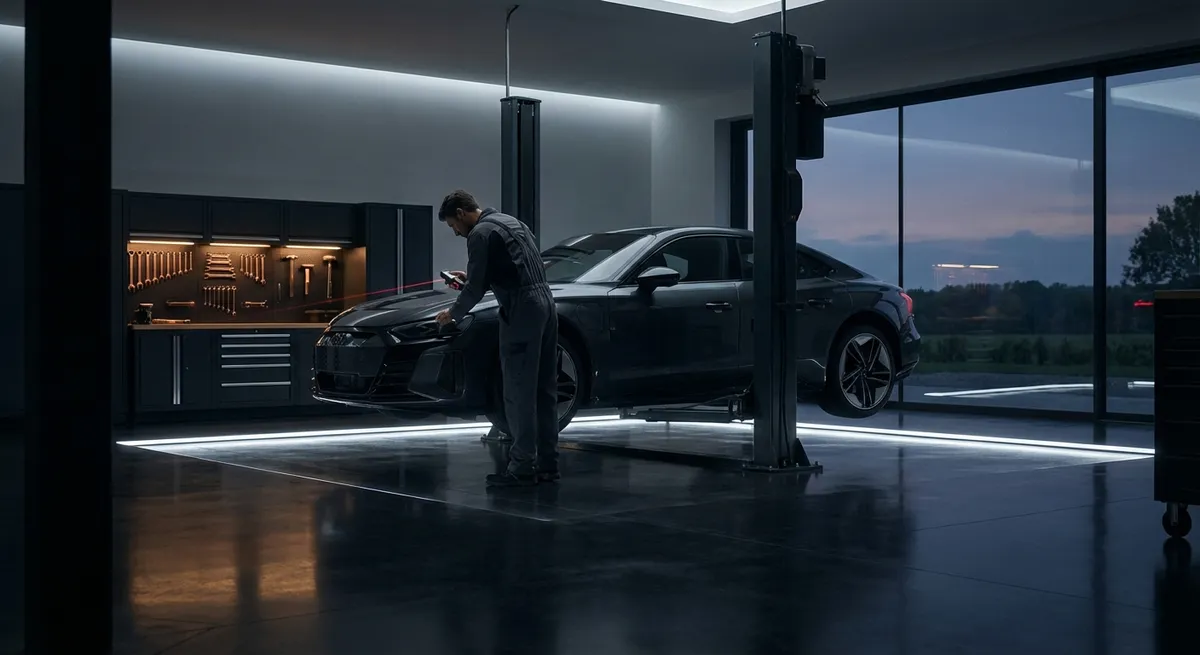
The most sophisticated homes are betrayed not by their façades, but by what happens behind the garage door. A misaligned track, a shuddering opener, a hairline crack in the slab—these are the quiet failures that erode both function and refinement. Repairing them is not merely a matter of “making it work again”; it is an exercise in precision, restraint, and long-term thinking. This guide explores elevated repair solutions that respect both the architecture of your home and the standards of those who inhabit it—culminating in five exclusive insights that discerning homeowners rarely hear from typical service providers.
Understanding the Garage as a Mechanical Ecosystem
A refined repair approach begins with a simple shift in mindset: your garage is not a single “thing” to fix, but an ecosystem of interdependent components. Door panels, springs, cables, tracks, rollers, openers, sensors, lighting, and the concrete slab all interact. A repair in isolation—replacing a spring, for example—without understanding its relationship to other parts often leads to recurring issues.
A well-calibrated garage door exerts balanced force along the tracks, minimizing strain on the opener and reducing vibration that can transfer into adjacent living spaces. A precise repair professional will evaluate weight distribution, hinge wear, track alignment, and opener torque settings in a single visit, adjusting as a system rather than as individual failures. This systems-based perspective transforms repairs from reactive patchwork into proactive refinement that extends lifespan, preserves quiet operation, and protects surrounding finishes and structures.
Elevating Diagnostics: Beyond “It Makes a Noise”
Most homeowners call for service only when something becomes unbearable—a grinding sound, a door that won’t close, a light that won’t turn on. A premium repair strategy replaces this crisis mentality with targeted diagnostics. The objective is not simply to locate the obvious fault, but to uncover the subtle misalignments and emerging failures that have not yet announced themselves.
A truly competent technician will observe more than the door itself. They will listen to the motor under both load and idle, inspect torsion springs for micro-fractures, feel for friction points along the tracks, and check mounting brackets for even the slightest looseness. They will review opener settings (force, travel, speed), assess sensor alignment with a laser-level mindset, and note environmental factors such as moisture migration, nearby plumbing, and temperature swings.
This elevated diagnostic process ensures that each repair becomes an opportunity to quiet future problems before they surface—replacing disruptive emergencies with measured, predictable adjustments.
Material Intelligence: Choosing Components That Age Gracefully
All garage parts are not created equal, and much of the frustration homeowners face can be traced to short-lived, low-grade components. A refined repair strategy is rooted in material intelligence: choosing replacement parts not because they are the cheapest, but because they match the architectural quality of the home and the expectations of its owners.
Look for:
- Torsion springs calibrated to your exact door weight and usage pattern, not generic “one-size-fits-most” options. For high-cycle households, consider extended-life springs designed for greater open/close counts.
- Nylon rollers with sealed bearings instead of noisy steel rollers. They glide more quietly, demand less lubrication, and reduce track wear.
- Reinforced hinges and brackets on heavier, insulated, or custom-finished doors to prevent sagging and panel distortion.
- Weatherstripping with UV- and temperature-resistant compounds that won’t become brittle or warped after a couple of seasons, preserving both insulation and visual cleanliness along the threshold.
The subtle difference between commodity hardware and premium components is rarely visible at the time of installation. It reveals itself months and years later in the absence of squeaks, the stability of movement, and the way the door closes with a confident, muted finality rather than a rattle.
Precision in Motion: Calibrating for Quiet Performance
Sophisticated garages are defined not only by their appearance, but by the way they move. A door that opens with a smooth, controlled whisper is a design feature in its own right. Precision calibration is where this refinement is either achieved or lost.
Calibrating for quiet performance includes:
- Setting the spring tension so the door can be lifted by hand with consistent, moderate effort throughout its travel. If it surges upward or crashes downward, calibration is off—and your opener is compensating with undue strain.
- Adjusting opener force and travel limits so the motor stops exactly where it should, without pressing the door into the floor or straining against the header. This prevents warping, premature seal wear, and structural fatigue.
- Ensuring track alignment is perfectly true—both vertically and horizontally. Even a slight twist can cause rollers to bind, producing unnecessary noise and wear.
- Using appropriate lubrication sparingly and precisely: silicone-based for weatherstripping, lithium-based for metal moving parts. Over-lubrication can attract dust, degrade certain materials, and create messy residue.
This is the mechanical equivalent of fine piano tuning. The door will still “work” with less care—but only with this level of attention does it become quiet, dignified, and reliably composed.
Five Exclusive Insights Discerning Homeowners Rarely Hear
Beneath the surface of typical garage repair advice lies a more nuanced layer of insight—one that particularly suits homeowners who value longevity, subtlety, and structural integrity over quick fixes.
1. Your Opener Is Probably Not the Problem—It’s the Symptom
Many homeowners assume a struggling or loud opener needs replacement. In reality, openers often fail because they have been compensating for a poorly balanced door, worn springs, or misaligned tracks. Replacing the motor without correcting these underlying issues is akin to putting a stronger engine in a car with warped axles.
Refined approach: Always insist on a full balance and hardware inspection before signing off on an opener replacement. A well-balanced door feels almost weightless by hand; if it does not, the opener is being misused as a winch instead of a controller.
2. Hairline Cracks in the Slab Are a Structural Conversation, Not Just a Cosmetic Flaw
Small fractures in your garage floor may seem minor, but they often reveal deeper information: drainage issues, soil movement, or thermal expansion cycles. While not all cracks are structurally significant, dismissing them entirely is a missed opportunity for early intervention.
Refined approach: Have notable cracking assessed for depth, pattern, and moisture intrusion rather than simply patched. In some cases, addressing drainage, adding control joints, or using professional epoxy repairs can protect not only the slab but also the walls, foundation interfaces, and even the garage door’s track stability over time.
3. Vibration Control Protects More Than Just Your Sanity
Excess vibration from the garage door and opener does more than create noise. Over time, it can loosen fasteners, stress drywall seams in adjacent rooms, and transfer subtle movement into connected structures.
Refined approach: Consider anti-vibration mounting for openers, reinforced junctions where opener rails meet framing, and upgraded fasteners into solid blocking rather than relying solely on drywall or hollow framing. These details create a calmer, more stable environment and prevent the “ghost rattles” often heard in rooms above the garage.
4. Lighting and Wiring Are Part of the Repair Conversation
Garage repairs are usually framed as purely mechanical, but the most elegant garages treat power, lighting, and sensors as integral to the system. Flickering opener lights, poorly placed outlets, and exposed wiring undermine both safety and design coherence.
Refined approach: When undertaking significant repair or replacement, use the opportunity to rationalize wiring runs, upgrade to modern LED fixtures, and ensure that the opener, sensors, and auxiliary devices (such as EV chargers or tools) are served by clean, appropriately rated circuits. The result is not merely compliance, but a more composed and future-ready space.
5. Scheduled Micro-Adjustments Outperform Infrequent Major Repairs
Highly curated homes rarely leave critical systems to fail outright. The same philosophy should apply to the garage. Waiting until something breaks invites inconvenience, potential damage to vehicles, and rushed decisions with limited options.
Refined approach: Establish a recurring, low-disruption inspection cadence—often annually or semi-annually—focused on micro-adjustments: tightening hardware, verifying balance, checking seals, testing safety systems, and listening for early signs of friction. These brief sessions extend component life, protect finishes, and ensure that, when you do choose to upgrade, it is by design rather than under duress.
Conclusion
A truly refined garage is not the product of dramatic overhauls, but of thoughtful, precision-led repair decisions made consistently over time. By treating the garage as a mechanical ecosystem, elevating diagnostics beyond surface-level symptoms, investing in materials that age with grace, and prioritizing quiet, calibrated motion, homeowners can transform a typically utilitarian space into one that quietly matches the sophistication of the rest of the residence.
Most garages fail in whispers before they ever fail in shouts. The difference between a merely functional repair and an exceptional one lies in hearing those whispers—and responding with intention, craftsmanship, and respect for the home as a whole.
Sources
- U.S. Consumer Product Safety Commission – Garage Door Safety – Guidance on safety standards, sensors, and entrapment protection for garage door systems
- International Association of Certified Home Inspectors – Garage Inspection Best Practices – Technical insights on structural, mechanical, and safety considerations in residential garages
- Occupational Safety and Health Administration (OSHA) – Machine Guarding & Mechanical Systems – General principles on safe mechanical systems and moving parts that inform best practices for garage door mechanisms
- Portland Cement Association – Concrete Slab Cracking Overview – Detailed explanation of types, causes, and implications of cracks in concrete slabs, relevant to garage floors
- Energy Star (EPA) – Residential Weatherization and Sealing – Information on sealing and insulation strategies that apply to garage doors, thresholds, and building envelope performance
Key Takeaway
The most important thing to remember from this article is that this information can change how you think about Repair Solutions.