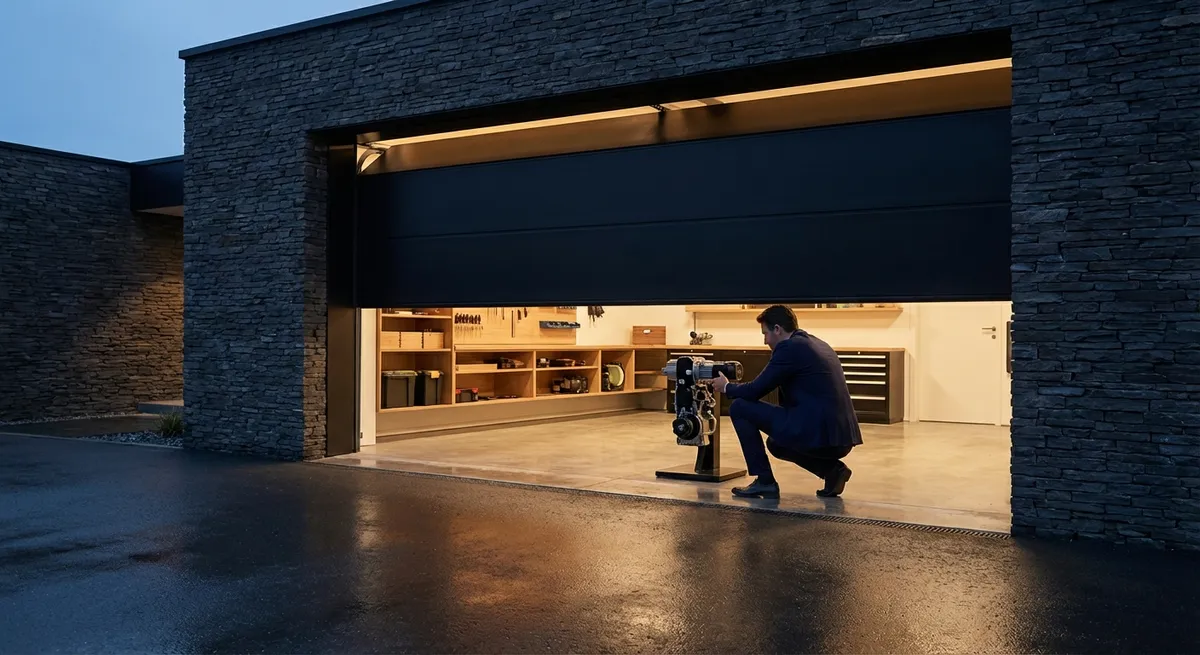
A garage door is often the largest moving element of your home, yet it rarely receives the level of attention afforded to kitchens, baths, or interiors. For discerning homeowners, this is a missed opportunity. A well‑tuned garage door delivers quiet authority, reliable security, and a sense of architectural completeness that elevates the entire property. This guide explores how to treat your garage door not as an afterthought, but as a precision system worthy of the same care you give to your car or your front entrance—complete with five exclusive insights that sophisticated homeowners consistently overlook.
Understanding the Garage Door as a System, Not a Slab
Most people see a garage door as a single object; professionals view it as a system of interdependent components. The panels, springs, tracks, rollers, hinges, opener, sensors, and weather seals must all be calibrated to work in elegant concert. When one element is compromised—even slightly—the system compensates, often in ways that accelerate wear elsewhere.
For instance, a misaligned track may cause the opener to work harder, masking the problem until both track and motor are prematurely worn. A fatigued torsion spring can force the opener to pull far above its intended load, quietly undermining its lifespan. Approaching your garage as a system invites you to look beyond the obvious: a squeak, a judder, or a slight delay is not just a nuisance; it is a diagnostic clue. Treating the door as a finely tuned mechanism rather than a simple barrier is the foundation of exceptional performance and long‑term reliability.
Exclusive Insight #1: The “Balance Test” as Your First Line of Defense
The most refined way to evaluate a garage door is not to listen, but to feel. The balance test, routinely used by experienced technicians, reveals far more about the health of your door than any quick visual scan.
Disconnect the opener (usually via the red release cord), then gently lift the door by hand to about halfway and release. A properly balanced door should hover in place, or move only slightly. If it slams down or shoots upward, the spring tension is incorrect. This imbalance may not yet be obvious during motorized operation, but it is already taxing your opener and increasing the risk of sudden failure.
What makes this test so valuable is its simplicity and precision: it costs nothing, takes less than a minute, and delivers an immediate snapshot of overall system health. For safety reasons, any adjustments to torsion or extension springs must be left to professionals, but your role is to identify imbalance early—before it becomes a costly or dangerous event.
Exclusive Insight #2: The “Sound Signature” That Predicts Failure
Every well‑maintained garage door has a distinctive sound signature—a consistent, low‑key mechanical hum with minimal vibration. When that signature changes, the door is sending you a warning. Learning to “hear” your door is a sophisticated habit that separates reactive ownership from truly proactive care.
Start by deliberately listening during a complete open-and-close cycle when the system is in good condition. Note where you hear the motor most clearly, when the rollers engage, and how the door transitions past the midpoint. Over time, subtle new sounds—metallic clicking, staccato rattling, or a dragging groan—often appear before visible problems do.
A clicking sound at regular intervals may indicate a worn roller bearing or hinge. A rough rumble near the top of travel can signal track misalignment or a warped panel. A strained, drawn‑out motor tone is frequently the opener compensating for additional resistance. Capturing short videos with audio and comparing them over time can be surprisingly revealing; it becomes your personal archive of the door’s performance history, enabling you to intervene long before a breakdown.
Exclusive Insight #3: Upgrading Hardware Quietly Transforms Performance
Many homeowners assume that improving a garage door’s feel and sound requires replacing the entire door or opener. In reality, upgrading select hardware components can yield disproportionate gains in refinement, particularly when the existing door is structurally sound.
Nylon rollers with sealed ball bearings, for example, dramatically reduce both noise and friction compared with older steel rollers. Precision‑made, heavy‑duty hinges can stabilize panel movement, eliminating the subtle shudder that contributes to both noise and wear. Reinforced struts can prevent long panels from flexing, preserving alignment and improving the opener’s efficiency.
What is elegant about these upgrades is how understated they are: there is no visible “renovation,” but the change in operation is unmistakable. The door moves with less drama, less vibration, and more confidence—closer to the quiet, decisive motion you would expect from a premium vehicle. This attention to component quality, rather than just aesthetics, is a hallmark of sophisticated home stewardship.
Exclusive Insight #4: Intelligent Opener Settings Are Often Misconfigured
Even high‑end garage door openers are commonly installed with “out of the box” settings that do not fully reflect the realities of your specific door, climate, or usage patterns. Fine‑tuning these settings can significantly enhance both safety and longevity.
Most modern openers allow adjustment of force sensitivity and travel limits. If the force setting is too high, the door may continue to press against obstructions, increasing the risk of damage or injury; too low, and the door may reverse unnecessarily on cold days when the weather seals are stiffer. Travel limits that are even slightly mis‑set can cause the door to slam into the floor or strain to over‑close, crushing seals and stressing the hardware.
Beyond the basics, features such as soft‑start/soft‑stop operation, variable speed, and integrated LED lighting schedules can be calibrated for a more polished experience. Pairing the opener with a Wi‑Fi or smartphone interface adds another layer of refinement: immediate alerts if the door is left open, usage logs, and remote control from anywhere. The true premium experience comes not from the brand name on the motor housing, but from the precision with which its capabilities are configured to your life.
Exclusive Insight #5: Climate, Materials, and Micro‑Conditions Matter
Refined performance is rarely universal; it is contextual. A garage door that performs flawlessly in a temperate, dry climate may falter in coastal humidity or harsh winters if its materials and finishes were not chosen with those conditions in mind.
Steel doors can be superbly durable, but in salty or coastal environments, high‑quality corrosion‑resistant finishes and regular inspections for rust are non‑negotiable. In regions with severe temperature swings, insulated doors with high R‑values help stabilize the garage environment, protecting tools, vehicles, and stored items while reducing stress on openers and seals. Wood doors, while visually exquisite, demand a disciplined regimen of sealing and refinishing to prevent warping and delamination.
Even micro‑conditions around your home play a role: a driveway that slopes toward the garage can funnel water and debris toward the bottom seal, shortening its life; strong prevailing winds on one side of the house may necessitate added bracing or different track anchoring. Viewing your garage door through the lens of environment—rather than as a generic product—enables choices that feel considered, tailored, and enduring.
Conclusion
A garage door can be far more than a loud, utilitarian slab that rises and falls on command. Treated with discernment, it becomes a carefully engineered system that operates with quiet precision, protects your home, and reflects the same standards you apply to every other element of your living environment. By adopting the balance test, learning your door’s sound signature, investing in select hardware upgrades, refining opener settings, and aligning materials with climate, you move from basic maintenance to genuine mastery.
The result is subtle but unmistakable: a door that glides instead of jerks, responds instead of resists, and serves as an understated yet constant expression of how thoughtfully your home is kept.
Sources
- U.S. Consumer Product Safety Commission – Garage Door Safety – Official guidance on safe operation and key safety features of garage door systems
- International Door Association (IDA) – Homeowner Resources – Industry association information on garage door components, maintenance, and professional standards
- Clopay Garage Doors – Understanding Garage Door Systems – Manufacturer’s overview of door components, materials, and insulation considerations
- LiftMaster – Garage Door Opener Support & Settings – Technical details on adjusting force, travel limits, and smart features on modern openers
- Energy.gov – Insulated Garage Doors & Home Efficiency – U.S. Department of Energy guidance on doors, insulation, and their impact on home energy performance
Key Takeaway
The most important thing to remember from this article is that this information can change how you think about Garage Doors.