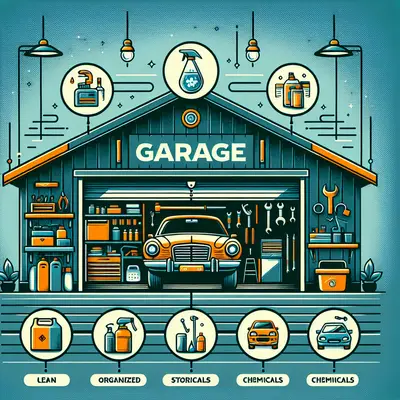
A well‑kept garage is not an afterthought; it is an essential component of a considered home—part workshop, part entry hall, part vault. When maintenance is treated as a refined practice rather than a reactive chore, the garage becomes quieter, safer, and vastly more resilient. This isn’t about obsessing over spotless concrete; it is about understanding how small, precise interventions preserve the integrity of expensive systems, protect vehicles and stored belongings, and maintain the architectural dignity of the home itself.
Below are five exclusive, detail‑oriented insights for homeowners who expect their garage to perform at a higher standard.
Insight 1: Treat the Garage as a Micro‑Climate, Not a Storage Room
Many garages fail prematurely because they are treated like exterior sheds—when in reality they are semi‑conditioned spaces that influence the entire home envelope.
Begin with climate control fundamentals: humidity, air movement, and temperature gradients. Excess humidity encourages corrosion on tools and door hardware, warps stored wood, and accelerates deterioration of concrete sealants. A simple hygrometer can reveal if your garage routinely sits above 50–55% relative humidity; if so, a dehumidifier or a dedicated exhaust fan becomes less of a luxury and more of a preservation tool.
Air sealing matters here as well. Inspect the weatherstripping around the garage door perimeter and the threshold at the bottom. Gaps let in fine dust, road salt, and moisture that quietly degrade moving parts and finishes. Premium silicone or EPDM weather seals, correctly tensioned, will keep the interior cleaner, stabilize temperature swings, and reduce strain on your garage door system.
Finally, consider whether the wall between the garage and living space is properly insulated and sealed. This boundary is critical for indoor air quality—fumes and particulates from vehicles and chemicals migrate easily through unsealed penetrations. Meticulous caulking around outlets, conduits, and base plates, along with intact fire‑rated drywall, maintains both comfort and safety at a surprisingly high level.
Insight 2: Elevate Door Maintenance from Lubrication to Precision Tuning
Lubrication is the bare minimum; refined garage door care goes further, focusing on balance, alignment, and load paths. A premium door operates quietly because its forces are controlled, not merely greased into submission.
Start with a balance test. With the opener disconnected, manually lift the door to about halfway. A properly balanced door will hover or move very slowly. If it slams down or shoots upward, the spring tension is off—this is not a DIY adjustment. Imbalanced doors overwork openers, stress hinges, and can fail unexpectedly. Scheduling a professional torsion or extension spring adjustment before the imbalance becomes severe is a hallmark of disciplined maintenance.
Next, inspect the tracks with an architect’s eye for geometry. They should be straight, plumb, and parallel—small deviations cause rollers to bind and hardware to fatigue unevenly. Look for rub marks or bright metal where paint has worn away; these are visual clues of misalignment or excessive movement. Track fasteners should be snug but not over‑tightened, allowing slight flex without vibration.
Rollers themselves are worth upgrading. Nylon‑coated, ball‑bearing rollers on proper stems run quieter and smoother than basic metal rollers, reducing shock loads transferred to hinges and panels. When combined with a high‑quality lithium‑based or silicone‑compatible lubricant on hinges, springs (never the coils directly—just the contact points), and bearing plates, the entire door system transitions from “functional” to “refined mechanical movement.”
Insight 3: Preserve the Concrete Floor as a Structural Surface, Not Just a Slab
The garage floor absorbs punishment that would destroy interior surfaces in months: hot tires, road salt, chemical spills, dropped tools, and constant vehicular loading. Treating it as a serious structural surface rather than a disposable slab dramatically extends its life and appearance.
Begin by reading the floor. Hairline cracks that remain stable are generally not structural emergencies, but they are pathways for moisture and deicing salts to penetrate deeper into the concrete. Clean them thoroughly and fill with a compatible crack repair product rather than simple caulk. Where spalling or surface scaling is visible—especially in cold climates—evaluate whether a professional resurfacing or high‑build coating is justified.
If you opt for a coating, avoid low‑grade “one‑weekend” kits for high‑value homes or heavily used garages. Industrial‑grade epoxy or polyaspartic systems, properly installed, resist hot tire pickup, UV degradation (with appropriate topcoats), and harsh chemicals. They also make cleaning oil drips and winter slush easier, which indirectly preserves the surrounding walls, storage, and door hardware by reducing airborne contaminants and moisture.
Even without a full coating, a premium penetrating sealer applied to clean, dry concrete can significantly slow moisture ingress and chloride damage. Pair this with thoughtful drainage—ensuring that floor slopes direct water toward the door or floor drains instead of walls—and you transform the slab from a sacrificial surface into a carefully managed structural asset.
Insight 4: Curate Electrical and Lighting as if the Garage Were a Working Studio
A refined garage is properly illuminated and safely powered, not merely “wired enough.” Fragile tools, EV chargers, and modern openers all draw power in ways older garages were never designed to support.
Start with illumination. Replace a single bare bulb mentality with layered lighting: high‑CRI LED fixtures for general lighting, directional task lighting over workbenches, and discreet, low‑glare lighting near the garage door and side entries. High color‑rendering LEDs make it easier to discern fluid leaks, surface rust, or hairline cracks in materials—problems you want to catch before they escalate.
On the electrical side, evaluate load and protection rather than just receptacle count. Ground‑fault circuit interrupter (GFCI) protection is essential in garages due to the presence of moisture and conductive surfaces. If you store or charge power tools, e‑bikes, or EVs, ensure appropriate circuits, breakers, and, where needed, dedicated EV charging infrastructure sized to manufacturer specifications. Overloaded shared circuits are a quiet enemy of both safety and equipment longevity.
Cable management is not merely aesthetic. Loose cords draped across pathways invite mechanical damage and trip hazards. Conduit, cord reels, and strategically placed outlets together create a space that feels intentional and orderly. It’s the difference between a garage that merely functions and one that operates like a small, private workshop engineered for efficiency.
Insight 5: Design a Maintenance Calendar That Mimics Professional Facility Care
Refined maintenance is systematic, not ad hoc. Borrow the discipline from commercial facilities, scaled to the residential garage.
Structure your schedule by season:
- Early Spring: Deep clean winter residue, inspect concrete for new cracking or spalling, flush floor drains, and confirm weatherstripping integrity after freeze‑thaw cycles.
- Mid‑Summer: Check door balance and hardware, lubricate moving parts, inspect for insect or rodent intrusion, and confirm the performance of ventilation or dehumidification.
- Early Autumn: Test safety features on the opener (auto‑reverse and photo‑eyes), inspect and tighten electrical connections where accessible, verify exterior sealing against wind‑driven rain, and prepare for cold‑weather vehicle storage.
- Mid‑Winter (where applicable): Monitor humidity, clear accumulated snow and ice from door thresholds, and visually check for condensation on cold surfaces that could indicate ventilation or insulation issues.
Document each inspection and adjustment, just as a facility manager would. Over time, this log becomes a powerful diagnostic tool, revealing patterns: a door that drifts out of balance each year on the same side, recurring rust on the same track bracket, or repeated circuit trips when particular tools are in use. Rather than reacting to breakdowns, you begin to foresee them and refine your interventions with increasing precision.
Conclusion
A garage maintained at a high standard is not ostentatious; it is quietly competent. There is a distinct satisfaction in a door that glides without protest, a floor that shrugs off winters and spills, lighting that reveals details instead of casting shadows, and systems that feel deliberately orchestrated rather than improvised. By approaching your garage as a micro‑climate to be controlled, a mechanical system to be tuned, a structural surface to be preserved, an electrical environment to be curated, and a facility to be systematically managed, you elevate it from a mere storage zone to a crucial, refined extension of your home.
Sources
- U.S. Department of Energy – Attached Garages and Indoor Air Quality - Explains how garages affect home air quality and why sealing and ventilation matter
- International Association of Certified Home Inspectors – Garage Inspection Guidelines - Details key components and safety considerations for residential garages
- International Door Association – Garage Door Safety and Maintenance - Offers manufacturer‑aligned guidance on safe, proper garage door maintenance
- Portland Cement Association – Concrete Slab Maintenance and Durability - Provides technical insights into concrete floor performance and protection
- U.S. Consumer Product Safety Commission – Garage Door and Opener Safety - Covers essential safety checks and standards for garage doors and openers
Key Takeaway
The most important thing to remember from this article is that this information can change how you think about Maintenance.