The garage door is often the largest moving element of your home—and one of the most overlooked. When it falters, scrapes, rattles, or hesitates, it does more than inconvenience you; it quietly lowers the standard of your entire property. An exceptional garage door isn’t simply one that opens and closes—it’s one that operates with precision, protects what you value, and integrates seamlessly into the architectural rhythm of your home. This guide is designed for homeowners who expect more than “it works,” and who value repair solutions that are deliberate, durable, and elegantly executed.
Rethinking the Garage Door: From Utility Panel to Architectural Element
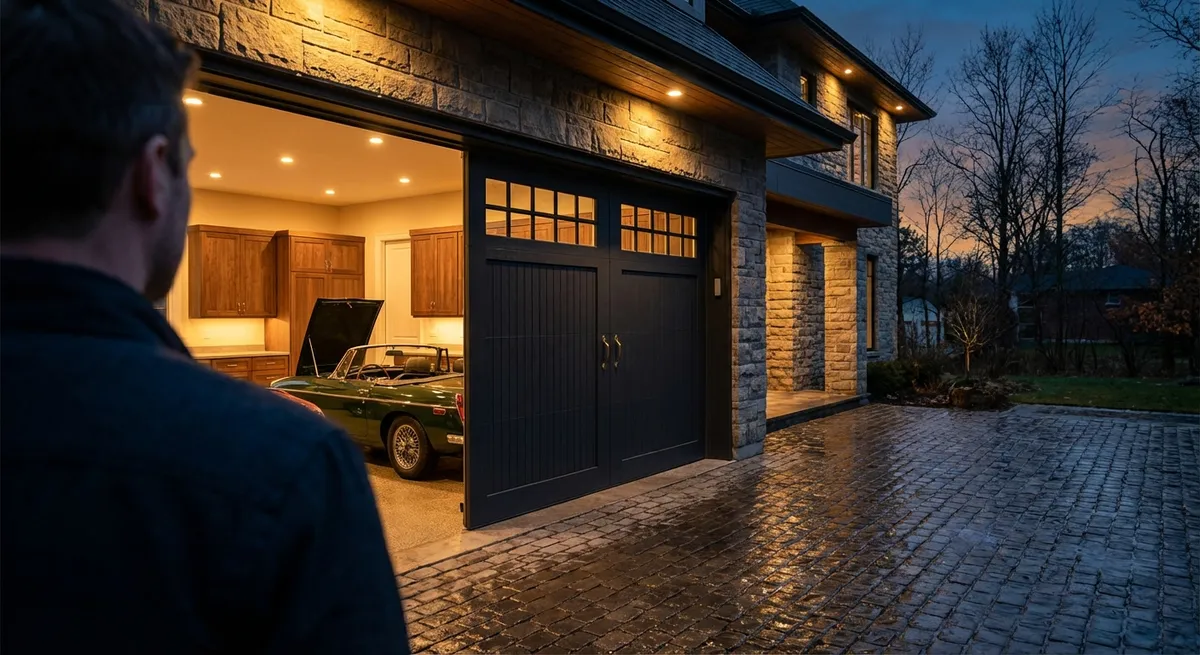
Most garage doors are treated as background infrastructure: a neutral, functional slab that lives on the periphery of design decisions. Discerning homeowners take a different view. They see the garage door as a vital façade element, one that contributes to symmetry, proportion, and visual continuity across the front elevation. Material choice, panel design, window layout, and even hardware finishes can subtly echo details from your entry door, trim profile, or window mullions, creating a cohesive, considered exterior rather than a collage of mismatched elements.
From a repair perspective, this mindset reshapes priorities. A replacement panel isn’t simply “close enough” if its texture or embossing clashes with the existing door. A hastily chosen weather seal in the wrong color or profile interrupts the visual line at the base. Premium repair means respecting the design language of your home with each decision. When issues arise—dents, fading, misalignment—the goal is not merely to restore function, but to restore the door’s role as an intentional part of your home’s architecture.
Exclusive Insight #1: Performance Begins with Precision Weight Balancing
The single most important—and most frequently neglected—aspect of a garage door’s performance is balance. A perfectly balanced door, when disconnected from the opener, should stay in place at roughly the halfway point, neither slamming down nor shooting upward. This simple characteristic dictates far more than homeowners realize: the strain on your opener, the consistency of operation, the door’s lifespan, and even how quietly it moves.
Springs that are even slightly miscalibrated force the opener to do work it was never meant to do. Over time, this leads to premature motor wear, frayed belts or chains, and gear failure inside the opener housing. Homeowners may hear this as “the opener sounds tired” or “it used to be smoother.” A refined repair approach begins with recalibrating torsion or extension springs to achieve precise weight neutrality, then confirming that the door tracks, rollers, and hinges support that balance without binding.
For homeowners expecting a premium experience, insist that any service visit includes a balance test and spring adjustment where needed—not just a cursory lubrication or force setting tweak on the opener. This is the equivalent of a proper alignment on a luxury vehicle: invisible when done right, expensive when ignored.
Exclusive Insight #2: Acoustic Comfort Is a Design Standard, Not a Luxury
Many homeowners quietly accept clattering rollers, metal-on-metal rattle, and opener hum as an inevitable part of garage life. In a refined home, this is not a given; it’s a symptom. The path to a serene garage door lies in three interlocking choices: hardware quality, isolation from the structure, and intelligent opener selection.
Upgrading to nylon or high-quality sealed-bearing rollers, for instance, can radically change the sound profile of each open and close cycle. Steel rollers on older, stamped-steel tracks transmit vibration into the framing, converting your garage wall into a sounding board. Similarly, vibration isolation mounts between the opener and the ceiling joists prevent mechanical noise from traveling into adjacent rooms—especially important when there’s a bedroom above the garage.
Opener technology matters as well. Belt-drive openers, particularly models with DC motors and soft-start/soft-stop functionality, move the door with a steady, controlled motion that feels closer to a glide than a lift. Once your mechanical system is tuned, a final layer of acoustic refinement can come from insulated door panels, which not only moderate temperature but also absorb some of the reverberation from street noise and weather. The result is a garage that operates with the quiet confidence that defines a truly high-caliber home.
Exclusive Insight #3: Intelligent Sealing Protects More Than Just the Garage
Weatherstripping and seals are often treated as an afterthought—an inexpensive add-on at the end of an installation. For a homeowner invested in the longevity of their property, these components are central to performance. Proper sealing at the top, sides, and bottom of the door does more than keep out drafts; it protects the structure, the door hardware, and anything you store in the garage.
A carefully chosen bottom seal and threshold combination can redirect surface water away from the interior, a critical protection in driveways that slope toward the house or in climates prone to heavy rain. High-quality side and top seals reduce dust infiltration and airborne contaminants, preserving finishes on vehicles, tools, and stored furnishings. For interior-comfort–focused homes, well-fitted seals minimize temperature swings that can raise energy usage in rooms adjacent to or above the garage.
Attention to detail matters here: seals trimmed precisely to length, compressed uniformly along their entire run, and chosen in colors that disappear against your trim or door for a tailored appearance. A premium repair approach evaluates where air, light, and water are entering, then designs a sealing strategy that is both technically effective and visually discreet.
Exclusive Insight #4: Smart Controls Are Only as Reliable as the Fundamentals
Smart garage door openers—those connected to Wi‑Fi, controlled via apps, and integrated into broader smart-home ecosystems—offer a sophisticated level of convenience and security. However, they are often added to systems that are mechanically unsound. When a door drags, binds, or is out of balance, even the most advanced smart opener is relegated to managing dysfunction.
A discerning strategy reverses the order: first, bring the physical system to an optimal standard, then layer in intelligence. Tracks should be plumb and true; hinges should pivot freely without play; the door should move cleanly through its travel without jerks or hesitations. Only after the door performs impeccably manually should the opener—smart or otherwise—be tuned for correct travel limits, force settings, and safety reversal calibration.
At that point, smart features become an extension of excellence, not a veneer over mechanical compromise. Remote access for deliveries, automatic closing after a set period, integration with security cameras, and real-time activity alerts all contribute to a garage door that feels actively managed rather than passively tolerated. For homeowners with higher security standards, the combination of a robust mechanical system and an intelligently configured smart opener dramatically raises the bar for both safety and convenience.
Exclusive Insight #5: Strategic Component Upgrades Extend the Life of the Entire System
Not every garage door demands full replacement to achieve a significant upgrade in performance and longevity. Often, targeted component-level improvements can transform a tired system into one that feels newly engineered. The key is selecting the correct components and viewing them as a curated suite rather than random part swaps.
High-cycle torsion springs, for instance, are engineered to outperform standard springs by a significant margin, reducing the frequency of failures and the risk of sudden, inconvenient breakdowns. Paired with heavy-duty, ball-bearing rollers and commercial-grade hinges where appropriate, they create a more stable, smoother-running system that handles daily use elegantly.
In some cases, upgrading to a stronger strut or reinforcing an existing one can prevent panel flexing and bowing on wider doors, especially those with windows or lighter construction. This is a subtle but meaningful refinement that protects both alignment and appearance over time. When the opener is due for replacement, choosing a model with a higher-grade rail system and better internal components provides a similar long-term benefit.
This incremental, strategic philosophy respects the existing investment in your door, enhances reliability, and elevates performance without unnecessary replacement. It’s a restrained, intelligent approach consistent with how high-end homeowners maintain other complex systems—from HVAC equipment to vehicles.
Conclusion
A garage door worthy of a refined home does more than rise and fall on command. It operates with composure, looks intentionally integrated with the architecture, shields your belongings and structure from the elements, and responds intelligently to your lifestyle. Achieving this standard is not about spectacle; it’s about disciplined attention to the details most homeowners never see: balance, acoustic tuning, sealing strategy, smart integration, and carefully chosen component upgrades.
When you approach garage door repair and improvement with that mindset, every service call becomes an opportunity—not just to “fix a problem,” but to incrementally craft a system that aligns with the rest of your home: thoughtful, composed, and quietly exceptional.
Sources
- U.S. Department of Energy – Garage Door Insulation & Weatherstripping - Covers the impact of insulation and sealing on energy efficiency, including attached garages
- International Association of Certified Home Inspectors – Garage Door Safety - Details best practices for safe and proper garage door operation and components
- LiftMaster Official Site – Garage Door Opener Technologies - Explains modern opener features, including smart controls and quiet-drive systems
- Clopay Garage Doors – Choosing and Maintaining Garage Doors - Provides manufacturer guidance on maintenance, balance, and component care
- Wayne Dalton – Garage Door Springs and Balance Information - Offers technical insight into how springs affect door balance and performance
Key Takeaway
The most important thing to remember from this article is that this information can change how you think about Garage Doors.