The modern garage is no longer a forgotten annex to the home—it’s a functional showroom, a mechanical nerve center, and a critical link between the street and the sanctuary you live in. When issues emerge, most homeowners focus only on what’s broken. Discerning owners, however, treat every repair as an opportunity to upgrade: to refine performance, elevate comfort, and future‑proof a space that quietly serves every single day.
Below are five exclusive, often overlooked upgrade insights that transform a problematic garage into a polished, high-performing asset.
Reframing the “Problem” Garage as a Performance Platform
A garage that rattles, leaks, or feels inhospitable in extreme weather is more than an annoyance—it’s feedback. Every noise, draft, and delay is a data point that reveals where the space is underperforming.
Rather than asking, “What’s the least I can do to fix this?” consider, “What’s the smartest way to improve this system so it won’t be an issue again?” That subtle shift turns a nuisance into an upgrade path. A temperamental door opener becomes an opportunity to adopt quieter, more intelligent drive systems. A damp corner morphs into a full moisture-management strategy, from sealing the slab to installing a more thoughtful drainage solution.
Sophisticated upgrades don’t just replace failing components; they recalibrate the environment. The result is a garage that opens smoothly, feels temperate year-round, and integrates with your home the way a well‑tailored garment integrates with a wardrobe: effortlessly.
Insight 1: Precision Door Balancing as the Foundation of Every Upgrade
Most homeowners focus on motors, tracks, or remotes when a garage door misbehaves. Yet the true baseline of a premium-performing system is proper door balance.
A correctly balanced garage door:
- Can be lifted and held halfway with minimal effort
- Reduces strain on the opener by allowing it to guide rather than haul
- Lowers noise, vibration, and wear on springs, rollers, and tracks
- Enhances safety, as an imbalanced door is more prone to sudden drops or erratic movement
If you’re investing in a new opener, better rollers, or smart controls without addressing door balance, you’re essentially pairing a luxury engine with an unaligned chassis. A quality technician will measure spring tension, verify cable integrity, and test balance at multiple points of travel—not just at the floor.
For homeowners aiming at a quiet, composed door, specify balance verification as part of any repair or upgrade appointment. It’s a refined detail that significantly influences longevity and performance.
Insight 2: Upgrading Drive Systems for Quiet, Controlled Operation
Many garages still operate on chain‑drive openers—durable, yes, but often loud, with a harsh mechanical character. Upgrading the drive system fundamentally changes the way your garage feels and sounds.
Key considerations:
- Belt vs. Direct Drive: Premium belt-drive openers, especially those with steel‑reinforced belts, provide a smoother and quieter motion. Direct-drive systems go further, eliminating many moving parts and delivering exceptional calm.
- Soft‑Start / Soft‑Stop: Look for openers that modulate speed at the beginning and end of travel. This reduces stress on hardware and diminishes the jarring “slam” that can telegraph through the structure.
- Vibration Isolation: Higher-end units use superior motor mounts and rail isolation pads. When installed correctly, these upgrades keep noise from transferring into ceiling joists and adjacent living spaces.
- Integrated Battery Backup: In areas where power interruptions are common, integrated backup ensures access remains seamless, with no frantic manual overrides in the dark.
If your current opener is more than a decade old, the step up in refinement—from raw mechanical noise to composed, nearly silent operation—is one of the most satisfying upgrades you can make.
Insight 3: Thermal Zoning the Garage for Comfort and Asset Protection
Many garages exist in a sort of thermal no‑man’s‑land: too cold in winter, oven‑like in summer, and an unfiltered temperature buffer between the exterior and your living areas. Treating the garage as its own thermal zone yields dividends in comfort, energy efficiency, and asset preservation.
Consider a layered approach:
- Insulated Door and Seals: A high‑quality insulated door (often polyurethane‑filled) combined with upgraded bottom seals, jamb weatherstripping, and top seals transforms the envelope. It’s a discreet yet powerful change, especially in climate‑sensitive regions.
- Air Sealing to Interior Spaces: Pay close attention to the wall and door leading into the home. Proper weatherstripping, threshold upgrades, and sealed outlets and penetrations reduce drafts and help limit the movement of fumes and particulates.
- Zoned Conditioning (Where Appropriate): In some jurisdictions and climates, adding a dedicated mini‑split system or radiant heater—properly separated from living spaces and correctly vented—creates a stable, comfortable environment for storage, hobbies, and vehicle care.
- Moisture Management: Address any visible condensation, efflorescence on walls, or pooling water. Strategic floor slope corrections, trench drains, or improved exterior grading often solve issues that would otherwise degrade tools, finishes, and stored belongings.
A thermally well‑managed garage not only protects vehicles and equipment; it also acts as a more refined transition space, helping maintain interior comfort and reducing the workload on your home’s main HVAC system.
Insight 4: Intelligent Lighting That Elevates Both Work and Security
A single bare bulb in the center of the ceiling is an artifact of a bygone era. Thoughtful lighting upgrades make a garage feel intentional, safe, and visually coherent with the rest of a premium home.
Aim for a layered lighting strategy:
- Uniform Ambient Light: High‑CRI LED fixtures, arranged to minimize shadows around vehicles and work surfaces, make every task—from finding a dropped screw to detailing a car—more precise.
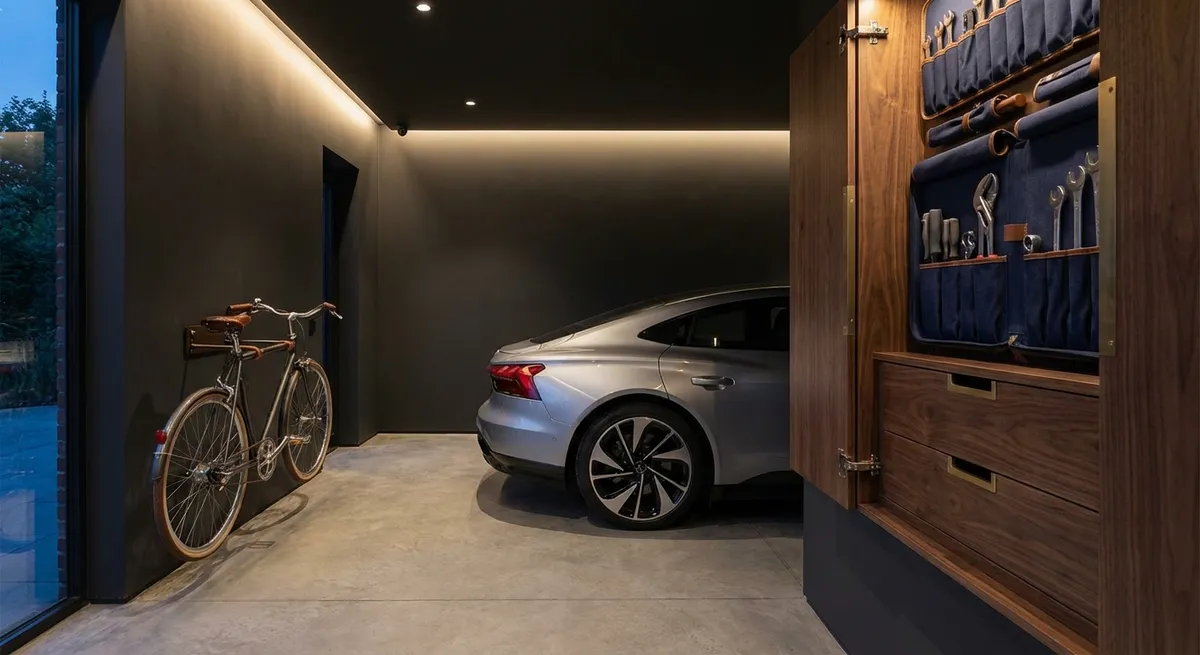
- Task and Accent Zones: Under‑cabinet LEDs, focused over-bench lighting, and discreet spotlights for storage areas all contribute to a sense of order and control.
- Integrated Smart Controls: Motion‑activated zones, scene presets, and app or voice control bring a surprising level of luxury. For instance, a “Return Home” scene can simultaneously open the door, bring lights up to a preset level, and trigger pathway lighting into the home.
- Security‑Conscious Illumination: Exterior and perimeter lighting tied to door status and motion sensors can deter intrusions and give clear visual feedback when the garage is open at night.
Choose fixtures rated for garages and, where necessary, damp environments. The right lighting plan doesn’t simply “brighten” the space; it refines how you experience and use it, day and night.
Insight 5: Storage and Floor Systems Designed as a Cohesive Environment
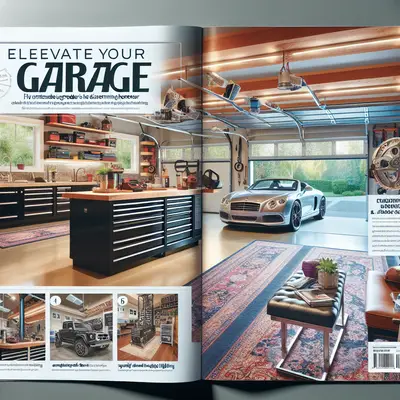
Many garage upgrades happen piecemeal: a new tool chest here, a basic shelf there, and maybe a coat of paint on the floor. A more elevated approach is to view storage, flooring, and circulation as a single integrated system.
Elements of a cohesive upgrade:
- Vertical and Overhead Utilization: High-load wall tracks, custom cabinetry, and overhead racks reclaim volume that is often wasted. Clear floor space is the true luxury—both visually and functionally.
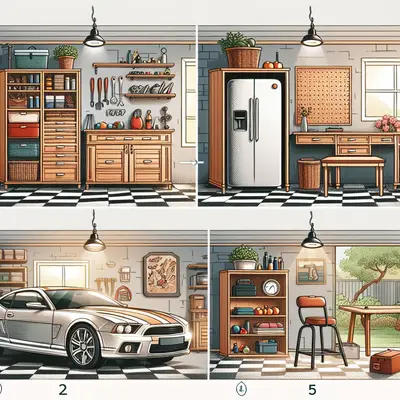
- Dedicated Zones: Define areas for vehicles, tools, sports equipment, seasonal items, and waste/recycling. When these zones are planned, not improvised, the garage feels curated rather than cluttered.
- Premium Floor Systems: A well‑installed epoxy or polyaspartic coating, or high-end modular tiles designed for automotive use, not only looks composed but also resists chemicals, hot‑tire pickup, and staining. Proper surface prep is critical; a rushed application will never feel truly “premium.”
- Serviceability: Opt for systems that can be maintained and repaired without tearing the entire space apart. Replacement tile options, touch‑up‑compatible floor finishes, and modular storage ensure that the garage remains adaptable as your needs evolve.
The end result is a garage that doesn’t just store items; it stage‑manages them. Vehicles, tools, and everyday gear each have a deliberate place, reinforcing a sense of order that quietly elevates daily routines.
Conclusion
A garage with issues doesn’t signal failure; it highlights opportunity. When you treat each problem—whether it’s noise, drafts, clutter, or inconsistent performance—as a catalyst for thoughtful upgrades, the space transforms from functional afterthought to polished extension of the home.
By focusing on precise door balance, refined drive systems, intelligent thermal zoning, elevated lighting, and cohesive storage and flooring, you create more than a “fixed” garage. You create a composed, resilient environment that operates with the calm confidence of a well‑engineered machine—one that welcomes you home every single day with quiet assurance.
Sources
- U.S. Department of Energy – Insulated Garage Doors - Overview of how insulated doors and proper sealing improve comfort and energy performance
- International Association of Certified Home Inspectors – Garage Door Safety - Technical guidance on garage door balance, springs, and safe operation
- UC Davis Energy Efficiency Center – High-Efficiency Lighting - Insights into modern LED lighting technologies and quality considerations
- U.S. Environmental Protection Agency – Indoor Air Quality and Attached Garages - Information on air sealing and pollutant transfer between garages and living spaces
- National Association of Home Builders – Storage and Organization Trends - Industry perspectives on evolving homeowner preferences for storage and functional spaces
Key Takeaway
The most important thing to remember from this article is that this information can change how you think about Upgrades.