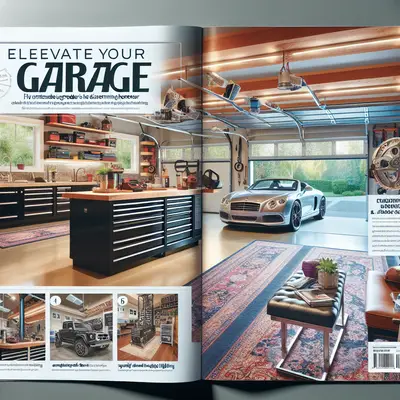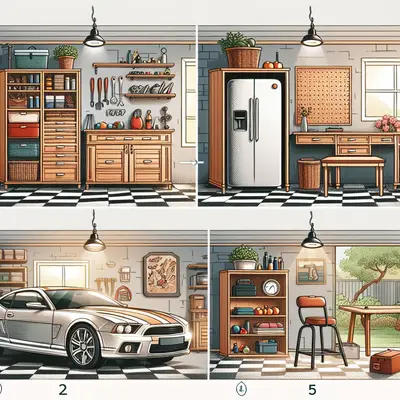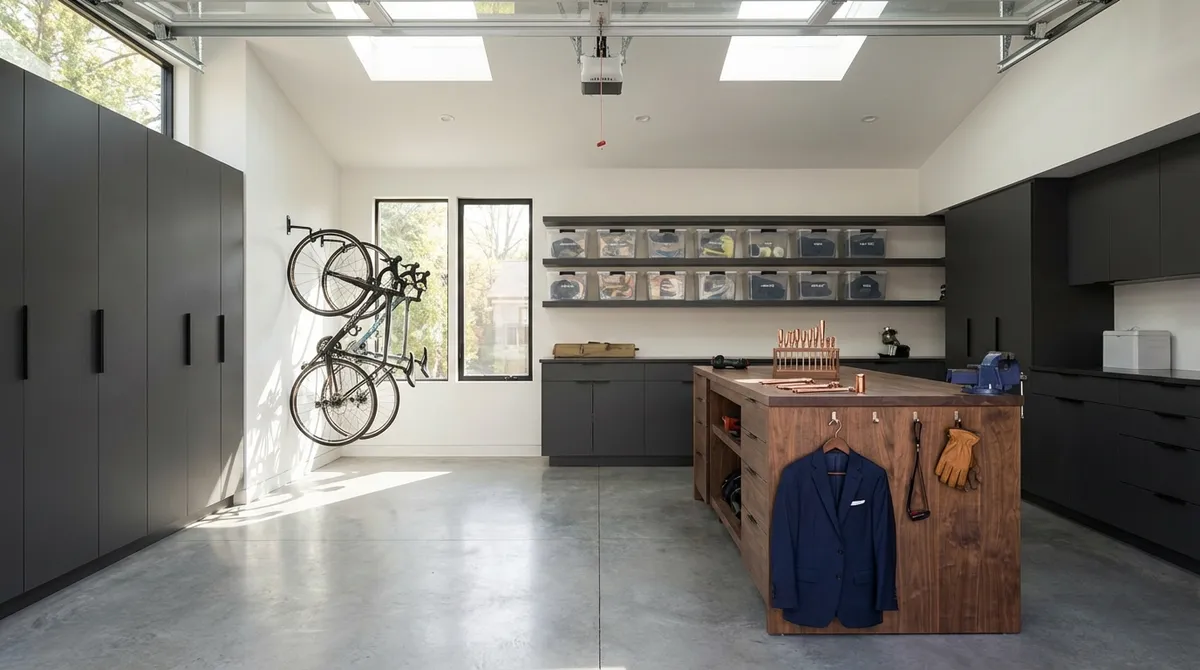
The most impressive garages are rarely the loudest transformations. They are the quiet, disciplined upgrades that make every movement—door, tool, vehicle—feel precise, intentional, and effortless. Before glossy epoxy floors or designer storage systems, there is a deeper layer of refinement: the hidden decisions that make a garage perform to a higher standard every single day.
This guide explores premium-minded upgrades that privilege function, durability, and control—and offers five exclusive insights that discerning homeowners can use to resolve persistent garage issues with elegance rather than overcorrection.
Reframing the Garage: From Utility Room to Performance Space
The modern garage is less a storage shed and more a performance space for your home. It interacts with your car, your security system, your energy usage, and your daily rituals. When treated as a performance environment rather than a dumping ground, upgrade decisions change.
Instead of asking, “What can I add?” the better question becomes, “What friction can I remove?” That friction may be a door that never quite closes smoothly, lighting that leaves corners in murky shadow, or storage that forces you to move three things to reach one.
A refined approach starts with a simple audit: trace your steps from driveway to interior door at different times of day. Note where you pause, where you hesitate, where you bend or reach awkwardly. These micro-inefficiencies reveal where upgrades will genuinely transform how you use the space. Luxury in a garage is not spectacle—it is the absence of annoyance.
Structural Intelligence: Upgrading the “Skeleton” Before the Surface
Before any visible upgrade, focus on the structural systems that quietly govern safety and performance: tracks, framing, anchoring, and load paths. Many garage frustrations—misaligned doors, recurring cracks in drywall, mysterious rattles—are symptoms of these underlying elements being compromised or poorly planned.
A disciplined upgrade strategy begins with:
- Verifying that door tracks are plumb and properly secured into solid backing—not just drywall.
- Confirming that overhead storage systems are anchored into joists or engineered supports sized for the intended loads.
- Inspecting the header above the garage door for sagging, bowing, or old repairs that suggest movement.
- Reviewing any cutouts for utilities (electrical, plumbing, HVAC) that may have weakened framing over time.
This “skeleton-first” perspective prevents you from layering expensive finishes over a structure that will continue to shift, vibrate, or fail in subtle ways. A premium garage does not merely look substantial—it is substantial.
Exclusive Insight #1: Treat Load Ratings as a Floor, Not a Target
When installing overhead racks, wall-mounted systems, or ceiling lifts, many homeowners accept the manufacturer’s rated capacity as a green light to fill to the limit. For a refined and longer-lasting setup, aim to use no more than 60–70% of stated capacity. This buffer absorbs the impact of dynamic loads (items being moved, bumped, or shifted) and small installation imperfections, dramatically reducing long-term stress on both hardware and structure.
Precision Door Performance: Silence, Balance, and Controlled Motion
The garage door is the single largest moving object in most homes. Yet many upgrades treat it as an afterthought, focusing on panel style or color rather than how it moves, sounds, and ages. A premium door upgrade is not only about the door itself but the entire motion experience.
Start with balance. A properly balanced door should remain in place when lifted halfway, not crash down or shoot upward. If it won’t hold its position, your springs are not correctly calibrated—a condition that stresses the opener and accelerates wear.
Noise is another key indicator. Grinding, rattling, and sharp metallic sounds usually stem from misaligned tracks, worn rollers, or vibration being transmitted into the framing. Upgrading to high-quality, sealed-bearing nylon rollers and vibration-dampening mounting hardware can turn a clattering door into a near-silent glide. Pair this with a belt-drive opener instead of a chain-drive unit, and you transform not just sound levels, but perceived quality.
Exclusive Insight #2: Tune the Door for Your Climate, Not Just Manufacturer Defaults
Spring tension and lubricant choice should respond to your climate. In cold regions, a silicone-based lubricant maintains performance over a wider temperature range and is less prone to thickening, while doors may need slightly different spring calibration to account for contraction of metal components in winter. In hot climates, petroleum-based lubricants are more likely to break down and attract dust, increasing friction. A professional who understands regional climate behavior can tune the door to your environment, not just to the installation manual.
Lighting and Power: Engineering Clarity, Not Just Brightness
Upgrading garage lighting is often reduced to “make it brighter,” typically by adding more fixtures or higher-wattage bulbs. A more refined approach prioritizes clarity and control: targeted illumination, accurate color rendering, and smart placement of power.
Ceiling-mounted LED strips or panels with a high CRI (color rendering index) make tasks like paint correction, woodworking, or detailed inspections more accurate, as colors and surface defects appear as they truly are. Avoid single-point overhead glare directly over vehicles; instead, create an even grid of diffused light, supplemented by dedicated task lighting at workbenches and tool walls.
Equally important is electrical planning. Strategically placed outlets—at waist height along work zones, near potential EV charging locations, and at ceiling level for openers and lifts—allow tools and technology to be used without tangled extension cords or unsafe improvisation. Circuits dedicated to high-draw equipment (compressors, welders, EV chargers) prevent nuisance tripping and extend the life of your panel and devices.
Exclusive Insight #3: Match Lighting Zones to Garage “Roles”
Rather than installing a single lighting system for the entire space, define distinct roles: vehicle bay, workshop area, storage wall, and transition zone to the house. Give each its own switch or smart control. This allows you to enter the garage at night and activate only a soft, pathway-level illumination, or light just the workbench without flooding the entire space. The result is not only more efficient but feels inherently more composed and intentional.
Flooring and Surfaces: Quiet Durability Over Loud Design
Floors are among the most visible upgrades, yet they are also where many high-end garages quietly fail. A showy coating without proper preparation will chip, peel, or stain in ways that undermine the entire impression of quality. True refinement begins with substrate discipline.
Concrete should be tested for moisture, cleaned, and mechanically profiled (often via grinding) before any coating. Cracks should be properly routed and filled, not merely skimmed. Only then does it make sense to choose between high-solids epoxy, polyaspartic systems, or premium sealers. The most luxurious outcome is often not the most dramatic visually; a satin, subtly reflective finish that masks minor imperfections and resists hot-tire pickup will age far better than a high-gloss surface that telegraphs every flaw.
Wall surfaces matter as much as floors. Upgrading to moisture-resistant drywall or cement board in vulnerable areas, using premium paints with scuff resistance, and integrating continuous baseboards or cove bases all contribute to a space that is easier to maintain and less prone to looking tired.
Exclusive Insight #4: Design for How You Clean, Not Just How You Park
When choosing floor finishes and wall materials, consider your preferred cleaning method. If you favor occasional deep rinses with a hose, prioritize floor slopes, drainage, and coatings proven to withstand standing water and mild detergents. If you prefer dry maintenance (vacuum, dust mop), focus on seamless transitions, minimal texture that traps debris, and lighter neutral tones that show dust before it becomes embedded. Matching materials to your cleaning style is one of the most effective ways to preserve a premium look with minimal effort.
Intelligent Storage and Tool Access: Precision Over Volume
Most garages do not suffer from lack of storage but from indiscriminate storage. The difference between a cluttered garage and a refined one is not how much it can hold, but how quickly you can retrieve exactly what you need—and return it without thought.
Wall systems—slatwall, French cleats, or custom cabinetry—are most successful when treated like a wardrobe: curated, deliberate, and sized to real patterns of use. Frequently used tools should live between knee and shoulder height, while rarely used items can move overhead. Custom drawer inserts for sockets, bits, and hand tools transform chaotic tool chests into intuitive stations where everything has both a place and logic.
Closed cabinets hide visual noise; open systems offer immediacy. A premium solution often combines the two: closed fronts for bulk storage and less attractive items, open rails or panels near task areas for the tools you use weekly.
Exclusive Insight #5: Build Storage Around “Return Paths,” Not Just Access
Many systems are organized around how easily you can take things out. The truly elevated garage is organized around how effortlessly items go back. If a tool or seasonal item requires two or three movements (open a cabinet, move a bin, lift a lid), it will eventually live on the nearest flat surface. When planning storage, ask: “What is the path of least resistance when I’m done using this?” Design that path to be frictionless—one open, one motion, one closure—and clutter quietly disappears.
Conclusion
A superior garage is not defined by the price of its finishes or the scale of its transformation. It is defined by the way everything works—quietly, predictably, precisely—over years of use. By upgrading structure before surface, motion before appearance, and ease of maintenance before display, you create a space that feels composed rather than decorated.
The five insights shared here—treating load ratings conservatively, tuning doors for climate, zoning light by function, aligning finishes with cleaning habits, and organizing around return paths—belong to a more disciplined way of thinking about garage upgrades. It is an approach where luxury is not loud; it is the subtle absence of compromise every time you step through that door.
Sources
- U.S. Department of Energy – Residential Lighting – Guidance on efficient lighting, useful when planning layered garage illumination
- Occupational Safety and Health Administration (OSHA) – Walking-Working Surfaces – Relevant for understanding safe load support and surface safety considerations
- International Door Association – Garage Door Safety & Maintenance – Best practices for proper garage door balance, hardware, and safe operation
- Purdue University – Concrete Floor Slab Construction – Technical insight into concrete behavior and preparation that underpins durable floor upgrades
- National Renewable Energy Laboratory (NREL) – Electric Vehicle Charging at Home – Useful when planning dedicated circuits and future-ready power in the garage
Key Takeaway
The most important thing to remember from this article is that this information can change how you think about Upgrades.