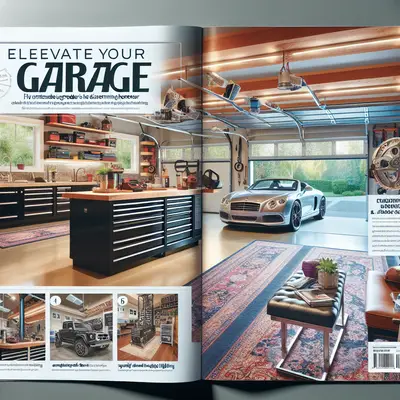
A well‑considered garage is less about spectacle and more about the quiet precision of things simply working—every time. For discerning homeowners, upgrades are not just repairs; they are calibrations of comfort, safety, and elegance. This is where meticulous choices in hardware, lighting, climate control, and organization turn a purely functional room into an extension of a refined home.
Below are five exclusive, detail‑driven upgrade insights crafted for homeowners who expect their garage to meet the same standard as the rest of their residence.
Elevating the Mechanism: Hardware That Feels as Good as It Works
The average garage door mechanism is designed to be adequate; a premium setup is designed to be imperceptible. The difference lies in the quality and tuning of the hardware.
Upgraded torsion springs, for example, can be precisely matched to the weight and dimensions of your door, reducing strain on the opener and dramatically extending its lifespan. Quiet belt‑drive openers, especially models with DC motors and soft‑start/soft‑stop technology, deliver a smoother, almost gliding motion that avoids the jarring thud many homeowners simply accept as normal. High‑cycle rollers with sealed bearings minimize friction and noise, turning each open–close cycle into a controlled, near‑silent movement. Even reinforcing the door with a discreet strut can transform a slightly flexing, rattling panel into a solid, reassuring surface that moves in a single, perfectly aligned plane. When correctly specified and installed, this level of upgrade feels less like “new hardware” and more like a door that finally behaves the way it should have all along.
Architectural Lighting: Treating the Garage Like a Room, Not a Utility Space
Lighting is often the most neglected dimension of a garage—and the most transformative when done correctly. Rather than a single harsh ceiling fixture, think in layers: ambient, task, and accent lighting, just as you would in a living space.
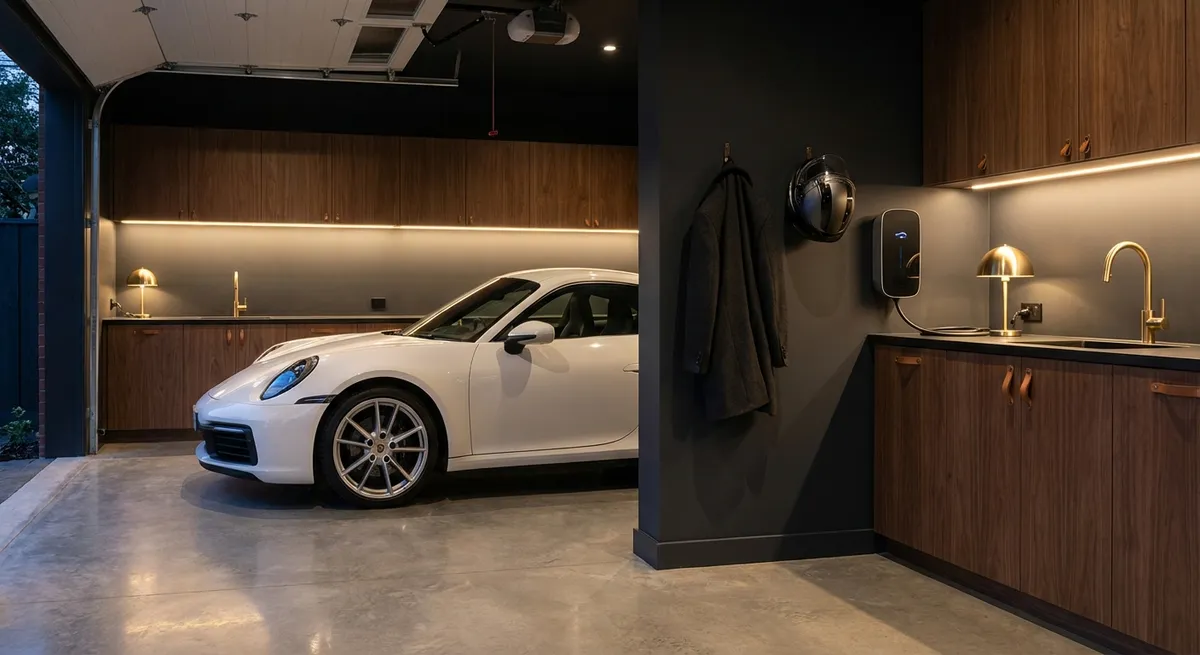
High‑CRI LED fixtures (with a color rendering index of 90 or above) reveal true colors of vehicles, tools, and finishes, which matters both for aesthetics and precision work. Linear LEDs along the perimeter of the ceiling wash walls with an even glow, eliminating the tunnel‑like effect of a lone bulb. Task lighting above workbenches or detailing stations can be specified with adjustable color temperature, allowing cooler light for focused work and warmer tones when the garage functions as a transition space before entering the home. Subtle motion‑activated under‑cabinet strips and step lights add both safety and a sense of quiet sophistication after dark. The result is a garage that feels curated rather than lit merely “enough to see.”
Climate as Craft: Turning the Garage into a Stable Environment
A premium garage upgrade is not just about what you see—it’s about how the space behaves year‑round. Temperature and humidity control are central to protecting vehicles, stored items, and the building envelope itself.
Insulated doors and properly sealed perimeter weatherstripping form the foundation of a controlled environment, but refined setups go further. A modest, dedicated mini‑split system can keep temperature and humidity within a narrow, stable range, protecting finishes, electronics, and stored materials that would otherwise suffer from seasonal swings. Dehumidification is especially critical in coastal or humid regions, preventing condensation on tools, rust on mechanical components, and mold in boxes or wall cavities. Simple details such as insulating the garage ceiling and any shared walls with the home can also reduce energy transfer, making adjacent interiors feel more comfortable and the entire home more efficient. The upgrade is not just comfort—it is quiet preservation of everything the garage holds.
Intelligent Access: Security and Convenience Without the Gadget Clutter
The modern garage entry is often the true front door of the home. Elevating it requires more than a new keypad; it requires a thoughtfully integrated access strategy.
Premium smart openers support encrypted wireless protocols, automatic updates, and geofencing features to close the door when you’ve driven away—a critical safeguard against the most common garage security lapse: simple forgetfulness. Discreet exterior keypads with rolling codes, paired with interior deadbolt‑style locks on access doors, create layered protection without visual clutter. Integrated cameras and sensors can distinguish between a door that is open, closed, or obstructed, sending precise alerts instead of vague notifications. For homeowners with deliveries, controlled access windows or smart locks on internal storage closets allow packages to be secured within the garage without granting full access to the home. The guiding principle is elegance through restraint: technology that works quietly, accurately, and only when needed.
Order as an Upgrade: Storage That Protects, Not Just Hides
Many storage systems simply relocate clutter; elevated storage protects, organizes, and visually calms the space. The difference is in structure, material, and intent.
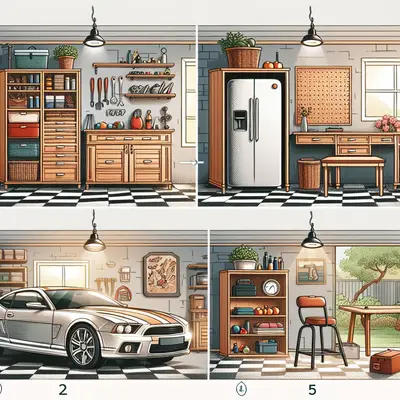
Wall‑mounted rail or slat systems keep tools and seasonal items off the floor, creating clear sightlines and easy cleaning. Closed cabinetry—with durable, automotive‑grade finishes and soft‑close hardware—keeps visual noise contained while protecting contents from dust and humidity. Overhead racks, when anchored into structure and properly load‑rated, reclaim unused ceiling volume for seldom‑used items, while leaving enough clearance for doors and vehicles. Thoughtful zoning—detailing supplies near the vehicle bay, sports gear near the exterior door, tools near the workbench—reduces micro‑friction in daily routines. Everything has a designated place, and the garage begins to function like a well‑designed utility room rather than a catch‑all. The sophistication lies not in the number of storage pieces, but in how precisely they align with the way the household actually lives.
Conclusion
A refined garage is not defined by extravagance but by intention. Each upgrade—whether mechanical, visual, environmental, or organizational—contributes to a space that moves, feels, and functions with quiet authority. For homeowners who notice the subtleties of a well‑tuned door, a stable climate, or a perfectly lit work surface, these upgrades are less about repair and more about aligning the garage with the standard set by the rest of the home.
When executed thoughtfully, the garage stops being a back‑of‑house afterthought and becomes what it should have been from the beginning: a precise, dependable, and quietly luxurious extension of your living space.
Sources
- U.S. Department of Energy – Insulation & Air Sealing – Guidance on insulation and air sealing strategies that apply directly to improving garage energy performance and comfort
- Occupational Safety and Health Administration (OSHA) – Lighting Standards – Baseline recommendations for safe and effective lighting levels that inform premium garage lighting design
- UL Solutions – Garage Door Opener Safety Requirements – Technical and safety standards governing garage door operators, essential when selecting upgraded openers and access systems
- International Code Council – International Residential Code (IRC) – Building code framework that influences garage walls, fire separation, and structural considerations for overhead storage and door systems
- University of Minnesota Extension – Controlling Home Humidity – Detailed discussion of humidity management principles that translate directly to creating a stable garage environment
Key Takeaway
The most important thing to remember from this article is that this information can change how you think about Upgrades.