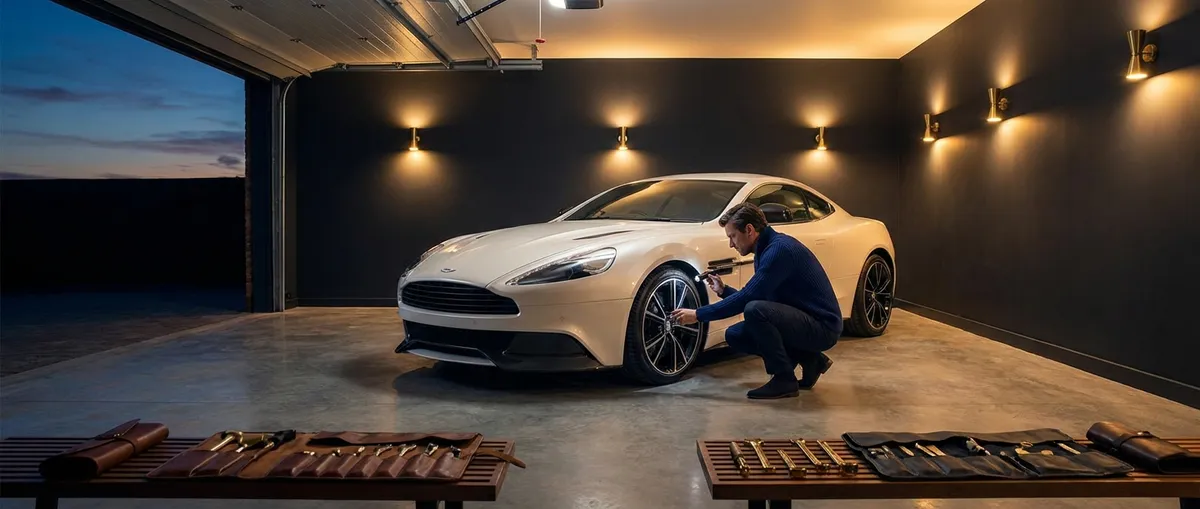
A well‑kept garage is rarely the hero of a home tour, yet it quietly determines how every arrival and departure feels. The way your door moves, the absence (or presence) of vibration, the subtle precision of the lock and track alignment—these are the details that signal whether a property is merely maintained or genuinely curated. Thoughtful garage maintenance is less about crisis repairs and more about preserving a standard of living: predictable, silent, and reassuringly dependable.
Below are five exclusive, often‑overlooked insights that elevate garage care from “good enough” to truly refined.
1. Treat the Garage Door as Mechanical Architecture, Not Just Hardware
Most homeowners think of the garage door as a single object. In reality, it is an assembly of interdependent systems—structural, mechanical, and electronic—that behave more like a piece of moving architecture than a simple barrier.
Begin with balance and structural integrity. A door that is even slightly out of balance forces the opener to overwork, increasing wear on gears, belts, and sprockets. A qualified technician can perform a balance test by disconnecting the opener and checking where the door settles on its own. If it drifts or refuses to stay at mid‑height, the springs and tension system are no longer in harmony with the door’s weight.
Equally critical is the fastening ecosystem: hinge screws, track brackets, and reinforcement struts. High‑cycle use—common in homes where the garage is the primary entry—can loosen these connections, introducing play that leads to vibration, noise, and eventual distortion of the door sections. A refined maintenance routine includes periodic torque checks on fasteners, inspection of the top panel’s reinforcement where the opener arm attaches, and verification that the tracks remain plumb, parallel, and properly anchored to solid framing, not just drywall or compromised studs.
When you approach the system as mechanical architecture, the goal shifts from “stop it from breaking” to “preserve the geometry and movement that define how the door feels every single day.”
2. Elevate Lubrication from Afterthought to Precision Practice
Most lubrication advice is either vague or excessive: “Spray everything” or “Oil it once a year.” A premium standard demands a more discriminating approach—right product, right amount, right location.
Silicone or lithium‑based sprays formulated for garage components are ideal for metal‑on‑metal contact points: hinge joints, spring coils, steel rollers, and bearing plates. These products create a clean, dry film that resists dust buildup and avoids the gummy residue that common household oils can leave behind. Nylon rollers, increasingly common in high‑end doors, require far less lubrication—over‑applying can actually attract debris and increase noise over time.
Focus on three zones:
- Hinges and pivot points – A minimal application at each joint, then cycle the door fully to work the lubricant in.
- Torsion springs and bearing plates – A light, controlled spray to reduce friction and corrosion, particularly in coastal or high‑humidity environments.
- Locking hardware and side latches (if present) – A small dose of graphite or dedicated lock lubricant maintains smooth, precise operation without the mess of standard oils.
Avoid lubricating the tracks themselves. They are designed for clean, rolling contact, and adding lubricant can cause the rollers to slip or collect grime. Proper lubrication is less about making everything slippery and more about preserving the integrity and feel of movement. When done correctly, you notice it not as “silence” but as a lack of harshness—an almost upholstered quality to the motion.
3. Engineer Silence by Managing Vibration, Not Just Noise
An elegant garage doesn’t merely sound quiet; it feels composed. The difference lies in vibration control—how well your system isolates the natural tremors of a moving door from the structure of your home.
Start at the opener. Many premium installations suspend the motor unit using vibration‑dampening hardware rather than rigid metal straps. Rubber‑isolated mounting brackets or specialized anti‑vibration kits reduce the transmission of movement into ceiling joists, which is particularly crucial when bedrooms sit above the garage. Even upgrading to a belt‑drive or direct‑drive opener—already smoother than chain models—delivers its full benefit only when paired with proper isolation and alignment.
Next, consider the track interface. Misaligned or lightly fastened tracks can chatter against framing as the door travels. A refined tune‑up includes checking every bracket for tightness, confirming alignment with a level, and using appropriate anchors rated for the underlying material (wood studs, masonry, or engineered lumber). In some cases, adding rubber or neoprene isolators between brackets and framing helps further attenuate vibration.
Finally, examine the door’s interface with the home: the weatherstripping, bottom seal, and stop molding. Worn or hardened seals not only compromise insulation but also allow the door to “tap” against jambs and the floor, exaggerating minor movements into audible knocks. By maintaining supple, well‑fitted seals, you introduce a soft landing at every closure. The result is not silence for its own sake, but a kind of mechanical poise that suits a sophisticated property.
4. Monitor the Invisible: Torque, Cycles, and Environmental Stress
Most garage failures are not sudden—they are the final act of stresses that have been accumulating, silently, for years. A discerning maintenance program proactively addresses the forces you cannot see.
Spring torque and cycle life form the heart of this invisible calculus. Standard torsion springs are often rated for 10,000 cycles—surprisingly easy to exhaust in a busy household. High‑cycle springs, properly specified for door weight and use patterns, dramatically extend the service life and reduce the likelihood of abrupt failure. Tracking approximate cycles—how many times per day the door operates—gives you a realistic sense of when to schedule proactive replacement rather than waiting for a disruptive break.
Environmental stress is equally critical. In cold climates, steel can contract and lubricants thicken; in hot, sunny regions, panels and seals endure thermal expansion, UV exposure, and warping risk. A refined maintenance schedule acknowledges these realities: a pre‑winter inspection focused on springs, seals, and safety sensors; a pre‑summer check emphasizing panel integrity, paint or finish condition, and opener ventilation.
Humidity and proximity to salt air accelerate corrosion on cables, hinges, and fasteners. In these settings, stainless or coated components are not mere upgrades but rational investments. Periodic visual inspection for rust “bloom,” fraying cables, and pitted hardware allows for graceful, planned replacement rather than emergency service.
By watching torque, cycles, and environment, you are no longer reacting to breakdowns—you are managing a lifecycle.
5. Integrate Safety and Intelligence Without Sacrificing Aesthetics
Luxury garages are increasingly defined not just by surfaces and finishes, but by the caliber of their safety and smart systems—and how discreetly those systems are integrated.
Begin with the fundamentals: properly aligned photo‑eye sensors, tested auto‑reverse sensitivity, and intact manual release mechanisms. These are non‑negotiable, especially in households with children, pets, or frequent deliveries. Yet they can be checked and calibrated with the same care you’d give to a security system: deliberate, documented, and revisited at regular intervals.
Smart openers and controllers add another layer of refinement. Wi‑Fi enabled units with soft‑start and soft‑stop functions not only enhance convenience but also reduce mechanical stress. Activity logs can reveal patterns of use, highlighting when a door is working harder than it should or being operated more frequently than anticipated. Integration with whole‑home platforms or discrete keypads and geofencing minimizes the need for wall clutter and exposed wiring.
Aesthetic discipline matters here. Conduit runs can be planned to follow clean lines; sensors can be mounted with precise symmetry; wall controls can be aligned with existing switch banks rather than scattered haphazardly. The goal is a system where technology is palpably present, yet visually restrained—safety and intelligence that quietly support the experience rather than dominate it.
Conclusion
An exceptional garage does not announce itself; it simply works—every day, in every season, with unwavering composure. What distinguishes refined maintenance from routine upkeep is a shift in perspective: seeing the garage as a calibrated, architectural mechanism whose quiet reliability shapes the rhythm of home life.
By treating the door as mechanical architecture, practicing precise lubrication, managing vibration instead of merely muting noise, monitoring invisible stresses, and integrating smart safety with visual restraint, you move beyond basic repair into the realm of stewardship. The reward is not just fewer service calls, but a space that feels intentionally crafted—where every departure and return reflects the same standard of care as the rest of your home.
Sources
- U.S. Consumer Product Safety Commission – Garage Door Safety - Outlines essential safety features, testing practices, and accident prevention for residential garage doors
- International Door Association – Homeowner Garage Door Maintenance Tips - Provides industry‑backed guidance on routine inspection and lubrication practices
- Clopay Garage Doors – How to Maintain Your Garage Door - Offers manufacturer‑specific recommendations on hardware care, balance checks, and environmental considerations
- LiftMaster – Garage Door Opener Safety and Security - Details smart opener features, safety sensor standards, and best practices for secure, connected operation
- U.S. Department of Energy – Insulated Garage Doors and Energy Efficiency - Explains how seals, materials, and door condition impact comfort and energy performance in attached garages
Key Takeaway
The most important thing to remember from this article is that this information can change how you think about Maintenance.