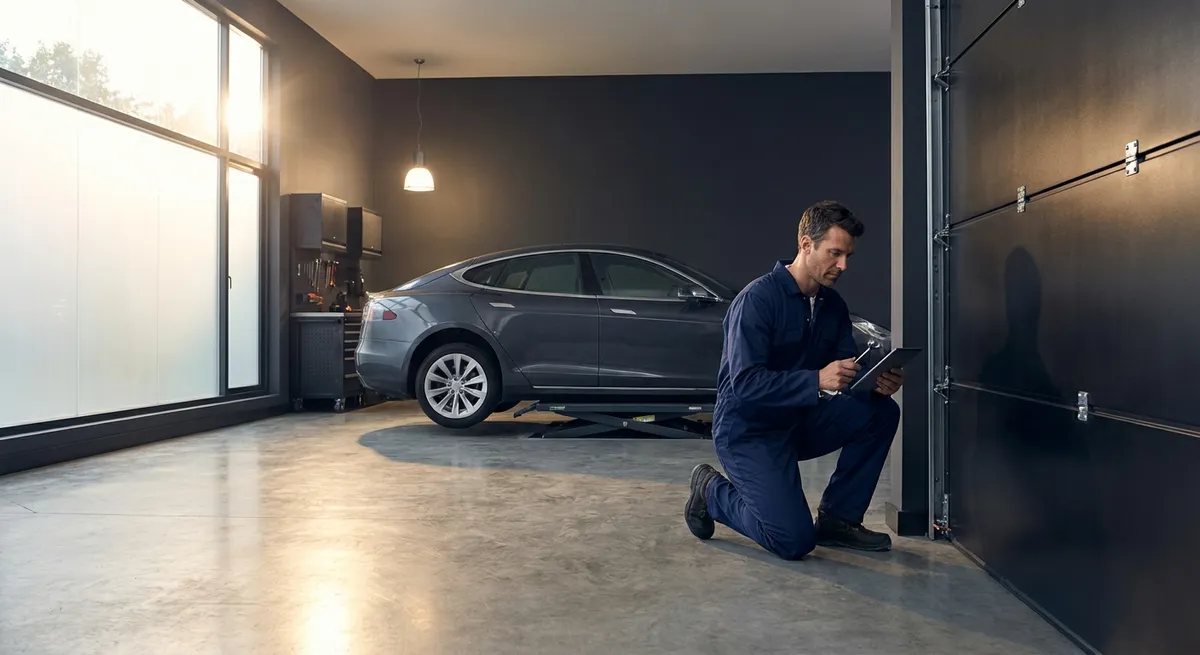
Every departure from home begins in the garage. When that space functions flawlessly, it fades into the background—silent, reliable, and reassuring. When it doesn’t, it becomes a daily stress test. A refined garage isn’t about lavish upgrades; it’s about intelligent repair solutions, meticulous adjustments, and discreetly elevated performance. This is where engineering discipline meets everyday living—and where small, precise interventions can transform the way your home feels every time you touch the wall button or pull into the driveway.
Below are five exclusive, detail‑oriented insights that move beyond basic fixes, designed for homeowners who expect more than “good enough” from their garage.
Recalibrating, Not Just Repairing: The Art of a Balanced Door
Most garage door repairs focus on “making it work again.” A refined approach aims for balance—literally. A properly balanced door should, when disconnected from the opener, rest at mid‑travel without slamming down or drifting upward. This subtle equilibrium is the cornerstone of long‑term reliability.
Instead of immediately replacing springs at the first sign of strain, a skilled technician will measure door weight, spring torque, and track alignment as a system. Minute adjustments—half‑turns on torsion springs, track plumb corrections with shims, or roller upgrades from basic nylon to sealed-bearing wheels—can reduce operating load on your opener by a remarkable margin. The payoff is not only smoother movement but also reduced motor wear, fewer emergency calls, and less structural stress on mounting points over time.
A balanced door also operates more quietly and safely. An imbalanced door asks the opener to do work it was never meant to handle, increasing the risk of stripped gears, overheated motors, and sudden failures. Recalibration turns a repair call into a structural reset, returning the system to the tolerances it should have had from day one.
Precision in Motion: Upgrading Tracks, Rollers, and Hardware as a Cohesive System
Many homeowners treat hardware as a collection of parts. The premium mindset treats it as choreography: every hinge, bracket, and roller has a role in a controlled, predictable movement. When that choreography falters, the solution is rarely a single replacement part—it’s a coordinated refinement.
Instead of swapping a single bent hinge or noisy roller, consider addressing the entire “motion path” of the door. High-cycle, sealed-bearing rollers reduce friction and vibration, thicker-gauge hinges resist flexing under load, and true‑gauge tracks (not thin builder‑grade metal) hold alignment under seasonal temperature swings and everyday use. When these components are upgraded together, the door glides rather than lurches.
Attention to fasteners is equally critical. Lag screws that have begun to loosen in framing should be upgraded to longer, properly anchored fasteners, especially where openers attach to headers and ceilings. This approach avoids the all-too-common “band-aid” of simply tightening old hardware into compromised wood. The result is a garage door that tracks cleanly, resists misalignment, and maintains its adjustment far longer between service visits.
Intelligent Opener Repair: Programming, Not Just Replacing
Modern garage door openers are less like simple motors and more like quiet, ceiling-mounted computers. Treating them as disposable devices is a missed opportunity. Thoughtful repair means diving into their intelligence—diagnostics, programmable features, and integration potential.
When an opener misbehaves, start with its self-diagnostic capabilities. Many units provide error codes through LED flashes or digital displays that pinpoint issues such as limit switch problems, sensor misalignment, or force setting errors. Instead of guessing and swapping parts, reading and interpreting these codes leads to precise, minimal intervention repairs.
Beyond fault fixing, refined repair includes a full reprogramming review: adjusting travel limits so the door seals without over-compressing the weatherstrip, tuning force settings to the lowest safe level, and recalibrating soft‑start and soft‑stop profiles where available. For homeowners with smart home ecosystems, ensuring the opener’s firmware is current and integrations are properly configured can turn a once-frustrating device into a seamless, secure, app‑controlled access point.
This approach extends the life of the opener, avoids unnecessary replacements, and unlocks features that often ship disabled by default—like vacation lock modes, timed auto‑close, or motion‑activated lighting that elevates both convenience and security.
Sealing the Envelope: Repairing Your Way to a Cleaner, Drier Garage
Water intrusion, dust, and drafts are often treated as cosmetic annoyances, but they are, in reality, early warnings that the garage “envelope” is failing. Instead of merely replacing a worn bottom seal, a truly elevated repair examines the full perimeter—and the surface it meets.
Refined sealing starts with the floor. A hairline crack under the door threshold can channel water inward. Grinding and filling low spots, then installing an appropriate threshold seal, creates a precise landing surface for the bottom gasket. On the door itself, upgrading to heavy‑duty, UV‑resistant bottom seals and side jamb weatherstripping ensures long-term resilience rather than a one‑season fix.
The benefits are practical and quietly luxurious: reduced dust on stored items, fewer pests, better protection for tools and finishes, and a more stable temperature in adjacent living spaces. For attached garages, this directly influences indoor air quality and energy efficiency. A well-sealed garage feels composed—no stray leaves swept in by the wind, no standing water after rain, no mysterious drafts at the mudroom door.
Maintenance as a Scheduled Ritual, Not a Reaction
The most refined repair solution is the one that prevents the emergency call altogether. Premium homes often have scheduled maintenance for HVAC, roofing, and landscaping; the garage deserves the same disciplined attention. Moving from reactive to ritualistic care transforms repair from crisis management into quiet, predictable stewardship.
An annual or semi‑annual “garage performance check” can include:
- Testing door balance and adjusting springs if necessary
- Inspecting cables for fraying and drums for uneven wear
- Lubricating rollers, hinges, and bearings with appropriate non‑silicone, garage-rated lubricants
- Checking the integrity of mounting points, angle iron supports, and opener rail alignment
- Verifying safety reversal systems with a calibrated test (not just a casual foot tap)
- Inspecting and refreshing perimeter seals and thresholds
This ritual keeps everything within design specifications and turns what could be a disruptive breakdown into a series of small, predictable corrections. It also builds a detailed history of the door and opener’s condition—ideal for discerning homeowners who value documentation, especially when it comes time to sell or appraise the property. A garage that has been consistently maintained and meticulously documented signals a home that has been cared for with intent.
Conclusion
A truly elevated garage is not defined by what you see—it is defined by what you do not notice. Doors that move without complaint, openers that respond without hesitation, seals that keep the outside firmly outside: these are the hallmarks of a space that has been repaired with precision and foresight, not merely patched.
By embracing recalibration over quick fixes, treating hardware as a cohesive motion system, leveraging the intelligence built into modern openers, sealing the envelope with intention, and adopting maintenance as a quiet ritual, homeowners can transform their garage from a utilitarian afterthought into a discreetly refined extension of the home. The daily act of leaving and returning becomes smoother, calmer, and, in its own understated way, luxurious.
Sources
- U.S. Consumer Product Safety Commission – Garage Door Safety Guidelines – Covers safety standards, reversal systems, and best practices for garage door openers
- International Door Association (IDA) – Homeowner Resources – Provides professional guidance on door balance, maintenance, and choosing qualified service providers
- Clopay Garage Doors – Maintenance & Troubleshooting – Manufacturer instructions on balancing, lubrication, hardware inspection, and weathersealing
- LiftMaster – Owner’s Support & Manuals – Detailed programming, diagnostics, and safety setup information for modern openers
- U.S. Department of Energy – Air Sealing Your Home – Explains the impact of sealing on comfort, air quality, and energy efficiency, applicable to attached garages
Key Takeaway
The most important thing to remember from this article is that this information can change how you think about Repair Solutions.