A well‑kept garage is more than storage and shelter; it is the mechanical heart of a discerning home. When maintenance is handled with precision and foresight, the space becomes quieter, safer, and far more enduring—without ever calling attention to itself. This is where refined detail matters: how a door glides, how dry the slab remains after a storm, how organized the tools feel in your hand when something needs attention.
What follows is a considered approach to garage maintenance, built around five exclusive insights that homeowners with high expectations will genuinely appreciate. These are not basic tips; they are carefully chosen practices that preserve performance, protect investment, and elevate the everyday experience of using your garage.
Seeing the Garage as a System, Not a Collection of Parts
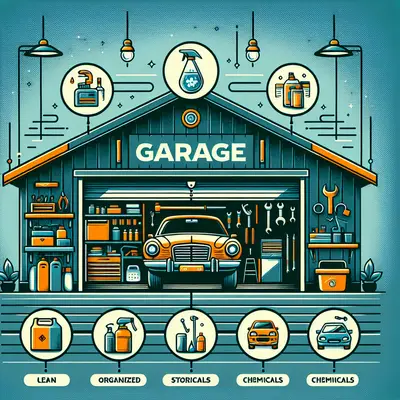
Most garage problems are treated as isolated failures: a squeaking hinge, a flickering light, a stubborn lock. A more elevated approach views the garage as a system in which structure, mechanics, climate, and organization constantly influence one another. This shift in perspective is especially powerful for homeowners who already invest in quality finishes and precision hardware inside the home.
When you consider the garage door, slab, walls, lighting, and storage as interdependent, maintenance becomes strategic instead of reactive. For example, inconsistent humidity can affect both the steel of the door tracks and the dimensional stability of storage cabinetry. Poorly calibrated lighting can hide stress fractures in the slab or the faint rust bloom on a torsion spring until the issue becomes costly. Treating inspections as a holistic review—lighting, structure, hardware, moisture, safety—lets you correct small imbalances before they cascade into a full repair. In a refined garage, nothing is truly “just cosmetic”; small details often signal broader systemic conditions.
The “Balance Point” of the Garage Door: The Hidden Indicator of Health
One of the most overlooked diagnostics for garage health is the door’s balance point. Homeowners typically notice only the opener’s performance—whether the door moves or not—yet the real insight lies in how the door behaves without power assistance. A properly balanced door should stay in place when lifted halfway, not drift up or crash down. This balance is critical not only for safety, but for the longevity of your opener, springs, and track system.
An unbalanced door quietly punishes the opener motor, forcing it to lift far more than it was designed to handle. Over time, that strain can lead to premature motor failure, cable fraying, uneven roller wear, and misalignment of tracks. Once or twice a year, have a qualified technician perform a controlled balance test and adjustment—especially if you have a heavier insulated or fully finished door. The intervention is subtle but consequential: a recalibrated spring system preserves smooth motion, reduces noise, and ensures that even in a power outage, the door can be operated by hand with dignified ease rather than brute effort.
Moisture Control as a Luxury-Level Safeguard
At a premium level of home care, moisture is treated as a structural and aesthetic threat, not merely an inconvenience. Garages are uniquely vulnerable: they accumulate snowmelt, road salt, humidity from car exhaust, and occasional wind‑driven rain. Left unmanaged, this moisture undermines the concrete slab, encourages mold in wall cavities, corrodes door hardware, and warps any wood-based storage.
A refined maintenance plan starts with the slab itself: subtle slope toward the door, intact expansion joints, and high-quality sealers that resist de-icing salts and oil penetration. Beyond the floor, quiet but efficient ventilation—such as a well‑placed, humidity‑sensing exhaust fan—allows the space to dry more quickly after wet entries. Weatherstripping should be inspected not only for drafts, but for its ability to channel water away from the interior. Paying attention to the door’s bottom seal and the interface between slab and threshold can prevent the slow wicking of moisture into framing. Controlled dryness may be invisible day to day, yet its impact is dramatic: cleaner air, reduced rust on tools and vehicles, and a garage that ages gracefully instead of gradually crumbling at the edges.
Precision Lighting and Power Planning for Effortless Maintenance
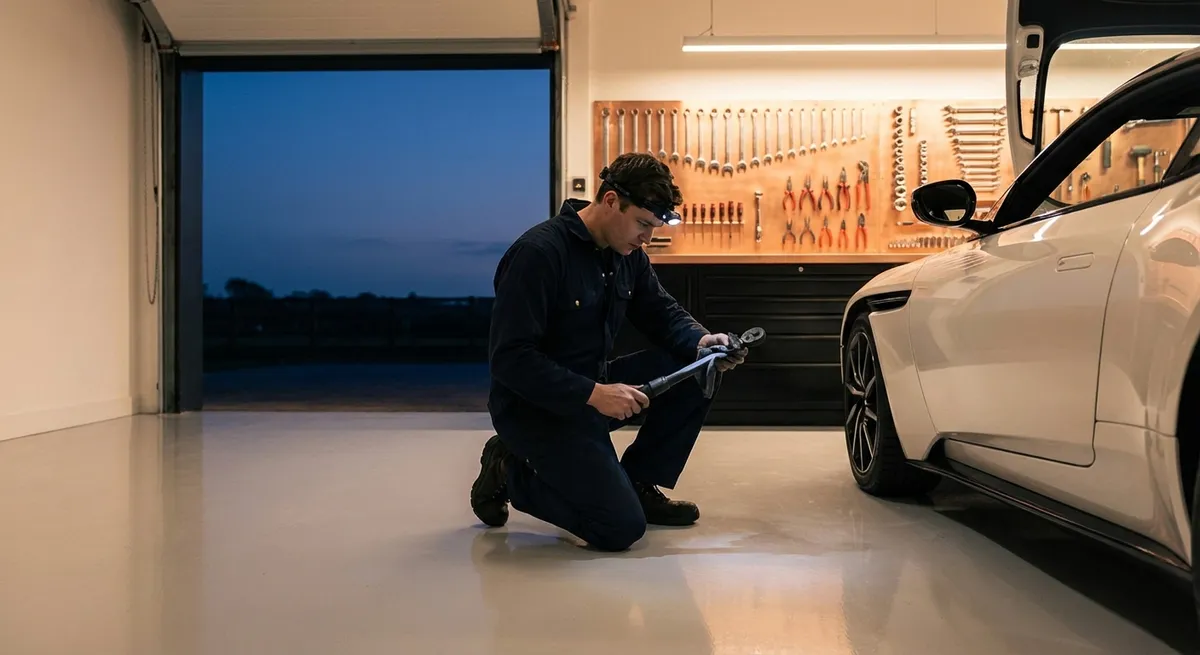
Many garages are underlit and underpowered, which quietly discourages proper upkeep. Dust, hairline cracks, and early corrosion are often missed simply because they are not clearly visible. A more elevated approach treats lighting and power as foundational maintenance tools rather than afterthoughts. Cool, high‑CRI LED fixtures positioned to minimize shadows around the door tracks, ceiling, and perimeter walls make inspections intuitive. You notice issues as you move, without needing to “go looking” for them.
Similarly, thoughtfully placed outlets—at workbench height, near storage systems, and in strategic ceiling locations—allow cordless tools, shop vacuums, and inflators to be used without tangled extension cords. This, in turn, makes routine tasks like cleaning tracks, vacuuming out corners, or servicing openers far less burdensome. Consider dedicated circuits for heavier loads (air compressors, EV chargers) to avoid nuisance tripping. The result is a garage that invites precise care: it is easier to spot what needs attention, and far more convenient to address it promptly.
Storage That Protects, Not Just Organizes
Premium garages do not simply hide clutter; they protect what matters. The difference is subtle but meaningful: organizing is about where items go; protecting is about how they age while stored. A refined maintenance strategy selects storage with materials and placement designed to preserve tools, finishes, and equipment. Steel or high‑grade composite cabinets resist moisture better than raw particleboard. Wall-mounted systems keep items off the slab, away from splash zones, and clear of potential minor flooding events.
Temperature-sensitive items—paints, sealants, adhesives, batteries, and certain lubricants—deserve insulated cabinets or interior storage where feasible, preserving their performance and avoiding chemical degradation. Delicate power tools are better suspended on wall systems with secure locking mechanisms rather than piled into plastic bins, where their cords can kink and housings can crack. Periodic review of stored materials, combined with clearly labeled zones, turns the garage from a passive holding area into an active preservation environment. Over time, this level of thoughtfulness reduces replacements, avoids failures at critical moments, and maintains the visual order that defines a truly well‑kept space.
A Seasonal Rhythm That Feels Effortless, Not Burdensome
Maintenance becomes sustainable when it follows an intuitive rhythm rather than a random list of chores. Instead of reacting to breakdowns, homeowners can “tune” the garage in short, purposeful sessions aligned with the seasons. Early spring is ideal for evaluating moisture damage, refreshing floor sealers, and inspecting wall bases for any signs of rot or efflorescence after winter. Late summer lends itself to lubrication of moving hardware, review of fire safety (extinguishers, detectors), and checks on ventilation before peak heat subsides.
Autumn is the moment to prepare for harsher conditions: updating weatherstripping, confirming door balance and safety sensors, and ensuring that lighting is sufficient for longer nights. A concise written checklist—focusing on door movement, slab condition, moisture points, safety systems, and storage integrity—transforms these sessions into a quiet routine that rarely takes more than an hour or two. The payoff is a garage that feels consistently composed: no sudden surprises, no emergency calls, just a space that reliably meets the standards of the rest of the home.
Conclusion
A sophisticated garage is distinguished not by extravagance, but by restraint and foresight. When maintenance is elevated from patchwork fixes to a considered, system‑wide discipline, the space becomes a discreet asset: safer, quieter, and far more durable. Checking door balance, managing moisture as meticulously as you would in a wine cellar, illuminating the space like a workshop rather than a shed, choosing protective storage, and embracing a seasonal rhythm—these are the quiet decisions that separate a merely functional garage from one that truly reflects a premium home.
Behind every smooth‑gliding door and every immaculately kept slab is a pattern of attentive care. Refine that pattern, and the garage will reward you with years of unremarkable performance—the highest compliment any hardworking space can earn.
Sources
- U.S. Department of Energy – Lighting Choices to Save You Money – Overview of efficient lighting options, useful for planning high‑quality, low‑maintenance garage lighting
- International Association of Certified Home Inspectors – Garage Inspection Guidelines – Professional standards and common problem areas in garage structures and doors
- Occupational Safety and Health Administration (OSHA) – Preventing Falls and Structural Hazards – Safety considerations relevant to ladders, storage, and workspace layout in garages
- Portland Cement Association – Concrete Slab Surface Defects – Technical insight into slab cracking, spalling, and moisture-related deterioration
- U.S. Environmental Protection Agency – Mold, Moisture and Your Home – Guidance on controlling moisture to prevent mold, applicable to garage walls and stored materials
Key Takeaway
The most important thing to remember from this article is that this information can change how you think about Maintenance.