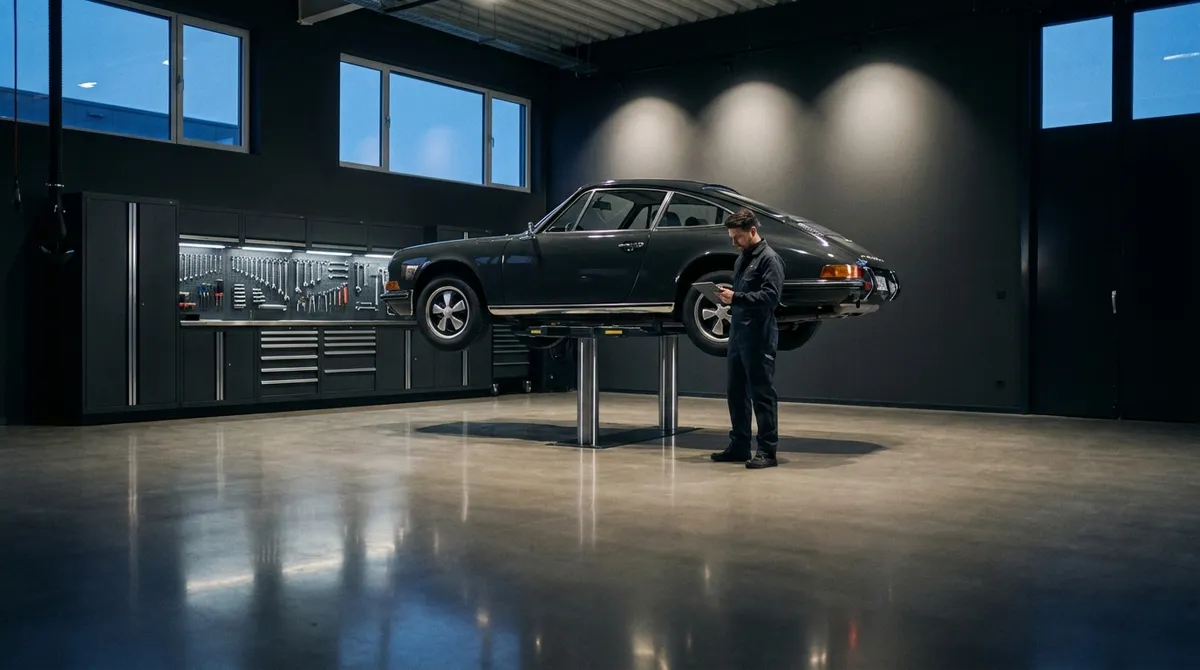
The most sophisticated garages are rarely the most extravagant—they are the most considered. When repair needs arise, discerning homeowners understand that the true luxury lies not in replacing everything, but in restoring what matters with intention, intelligence, and restraint. This guide explores elevated repair strategies that go beyond the obvious quick fixes and lean into durability, quiet performance, and long-term value.
Below are five exclusive insights that transform routine garage repairs into an exercise in precision and quiet confidence.
1. Diagnose Like a Specialist, Not a Hobbyist
Elegant repair begins with disciplined diagnosis. Rather than chasing the most visible symptom—a noisy opener, a temperamental door, a persistent draft—consider the garage as an integrated system where mechanics, structure, and environment interact.
Start with a top-down assessment:
- Structure: Examine the header above the door, jambs, and track anchoring points for hairline cracks, loose fasteners, or subtle warping. Seemingly minor misalignments are often the root cause of binding doors and premature wear.
- Motion: Disconnect the opener (using the emergency release cord) and manually lift the door. A balanced door should stay in place at mid-height. If it slams down or shoots upward, spring tension or cable condition requires attention—forcing an unbalanced door with an opener is a fast track to motor failure.
- Sound profile: Distinguish between grinding (metal-on-metal), squealing (dry rollers or hinges), and thudding (track misalignment or worn bumpers). Each sound type points to specific failure modes.
- Environment: Note temperature swings, humidity, and evidence of pests or water ingress. These conditions silently shape the life expectancy of springs, hardware, and finishes.
This measured approach preserves both safety and sophistication: you intervene exactly where needed, and only where needed.
Exclusive Insight #1: Treat every new symptom as a “systems question” rather than an isolated problem. A door that hesitates may actually be telling you about failing cables, overloaded springs, or an aging opener—resist the temptation to fix only the most visible element.
2. Invest in Silent Hardware as a Performance Upgrade, Not a Luxury
For many homeowners, repairs default to “like-for-like” replacements: steel rollers with more steel rollers, standard hinges with standard hinges. Refined repair takes a different view: each replacement is an opportunity to quiet, smooth, and future-proof the door system.
Key elevated substitutions during repair:
- Nylon rollers with sealed bearings: Replacing old steel rollers with high-grade nylon rollers significantly reduces operating noise and friction. Properly installed, these can extend the life of your opener and reduce the strain on tracks and brackets.
- Heavy-duty hinges and brackets: Thicker-gauge hardware holds alignment longer and resists flexing, particularly on taller or insulated doors. Over time, this translates to fewer “mystery” squeaks and less frequent call-backs to professionals.
- Torsion springs sized for extended cycle life: Many stock springs are rated for roughly 10,000 cycles. Upgrading during a spring replacement to higher-cycle springs (e.g., 20,000–25,000 cycles) transforms a simple repair into a quiet, long-term enhancement.
- Premium fasteners and anchors: Swapping marginal screws for structural fasteners into solid framing provides more stable tracks and reduced vibration. It’s the difference between a door that feels “rattly” and one that feels precise.
Exclusive Insight #2: In any necessary repair, assume you will not revisit that component for a decade. Choose upgraded hardware accordingly, prioritizing quiet operation, higher cycle ratings, and materials that resist corrosion in your specific climate.
3. Elevate Safety Repairs into Discreet Risk Management
Garage systems carry forces and weights that command respect. A refined homeowner approaches safety repairs not with alarm, but with strategic risk management—intervening early, discreetly, and correctly.
Areas where “subtle urgency” is appropriate:
- Springs and cables: Any visible fraying, separation, or rusting cables, and any torsion spring gaps or deformations, demand professional attention. The forces stored in these components are significant; improper handling can be catastrophic.
- Photo-eye sensors: Misaligned or dirty sensors can lead to doors reversing unexpectedly—or worse, failing to reverse. Confirm alignment (indicator LEDs often signal proper operation) and gently clean lenses with a soft cloth. Replace damaged housings promptly.
- Auto-reverse force settings: A properly tuned door should reverse with moderate resistance. If you must push hard against a closing door to trigger reversal, the system is overdue for adjustment. Over-aggressive force settings can damage the door and compromise safety.
- Obsolete or recalled openers: Units lacking modern safety features (such as photo-eyes introduced in the 1990s) should be considered for replacement rather than incremental repair. In this case, refinement is synonymous with modernization.
Exclusive Insight #3: Consider an annual “safety audit” of the garage door system—just as you would with HVAC or electrical. A 20-minute review of springs, cables, sensors, and reversal systems is one of the most sophisticated—and quietly protective—habits a homeowner can adopt.
4. Control Climate and Corrosion with Purposeful Micro-Repairs
Some of the most valuable garage repairs are barely visible. Addressing moisture, air leakage, and subtle corrosion turns the garage into a more stable environment—not only for vehicles, but for tools, finishes, and even adjacent rooms.
Strategic micro-repairs with outsized impact:
- Bottom seal and perimeter weatherstripping: Replacing a brittle or flattened bottom seal can eliminate drafts, dust intrusion, and minor water ingress. Upgraded seals with bulb or T-style profiles conform better to uneven floors.
- Threshold solutions: In areas prone to wind-driven rain or slight slab slopes, a low-profile garage door threshold paired with a fresh bottom seal creates a cleaner, drier interior without elevating the door excessively.
- Targeted rust remediation: Early surface rust on tracks or hardware can be gently removed, treated with a rust converter or primer, and followed with a light protective coating. This prevents more invasive structural replacements later.
- Insulation repairs, not full overhauls: Rather than assuming the entire door must be replaced, selectively repairing loose panels, damaged foam cores, or degraded reflective barriers can improve thermal performance without the cost of a new system.
- Ceiling and wall sealing: In attached garages, sealing gaps around penetrations and along wall plates with appropriate caulk or foam reduces transfer of fumes and temperature extremes into living spaces.
Exclusive Insight #4: Think of each small climate-related repair as a hedge against cumulative damage. A $20 weatherstripping update or rust treatment, executed with precision, quietly extends the life of motors, electronics, stored goods, and finishes throughout the space.
5. Create a Personalized Repair Log for a Truly Intelligent Garage
While most homeowners rely on memory—“When did we last replace that spring?”—a truly refined approach incorporates documentation. Rather than being fussy, a concise repair log is an intelligent tool that turns your garage into a well-managed asset.
What a sophisticated repair record can include:
- Component history: Date and type of major work (springs, opener replacement, cable changes, track rehangs), including part specifications when available.
- Service provider details: Who performed the work, their contact information, and any warranties or guarantees associated with specific repairs.
- Observational notes: Brief notes on recurring noises, seasonal behavior (e.g., more resistance in winter), or one-off anomalies like unexplained reversals. Over time, this forms a pattern that a good technician can interpret quickly.
- Environment and usage: Any notable changes—added insulation, new vehicles, conversion of part of the garage into a workshop or gym—help explain shifts in load and usage.
- Next-action prompts: Simple reminders, such as “Evaluate rollers in 2027” or “Check opener belt wear next service,” keep maintenance proactive instead of reactive.
This record can be kept digitally (a simple note-taking app or a shared document) and referenced before any service call. It signals to professionals that you are serious about the system’s performance, which often leads to more precise recommendations and fewer unnecessary replacements.
Exclusive Insight #5: A thoughtful repair log effectively “teaches” future technicians your garage’s history, reducing diagnostic time, preventing redundant work, and ensuring that each repair builds intelligently on the last.
Conclusion
A premium garage is not defined by its square footage or the labels on the tools along its walls. It is defined by the quality of the thinking that shapes every repair decision. When diagnosis becomes disciplined, hardware upgrades become strategic, safety is managed with quiet rigor, micro-repairs protect against the elements, and history is meticulously recorded, the garage evolves into something far more than a storage space—it becomes a precisely tuned extension of the home.
In the end, the most refined repair solutions do not call attention to themselves. They simply allow the door to glide, the mechanisms to last, and the space to serve—quietly, reliably, and with an understated sense of excellence.
Sources
- U.S. Consumer Product Safety Commission – Garage Door Safety - Guidance on safe operation, entrapment protection, and modern safety requirements for garage door systems
- International Door Association (IDA) – Homeowner Garage Door Safety Tips - Professional association recommendations on inspection, maintenance, and safe repair practices
- Clopay – How to Test Your Garage Door’s Safety Features - Manufacturer’s instructions for testing balance, auto-reverse, and photo-eye performance
- LiftMaster – Choosing the Right Garage Door Opener - Insight into opener types, safety features, and performance considerations from a leading brand
- Energy.gov – Air Sealing Your Home - U.S. Department of Energy guidance on sealing and weatherstripping, relevant to garage comfort and efficiency
Key Takeaway
The most important thing to remember from this article is that this information can change how you think about Repair Solutions.