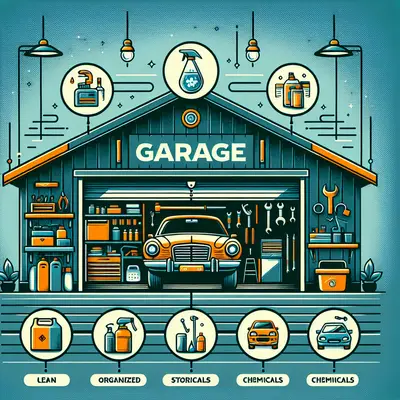
A well‑kept garage is less a storage zone and more an extension of your home’s integrity. When maintenance is treated as a refined practice—rather than a rushed chore—it quietly safeguards vehicles, protects belongings, and preserves the structural calm of your property. This isn’t about obsessing over perfection; it’s about cultivating a garage that works as reliably as a well‑tuned engine, day in and day out.
Below are five exclusive, detail‑driven insights that elevate garage maintenance from “good enough” to genuinely exceptional.
1. Treat the Garage Door as a Moving Facade, Not Just a Mechanism
Your garage door is both a mechanical system and a visual statement. Yet many homeowners treat it solely as hardware—lubricate, press button, repeat—while ignoring the subtler details that determine how long it will operate smoothly and how quietly it will age.
Begin with the door’s balance. Disengage the opener (using the emergency release cord) and lift the door manually to waist height. If it drifts up or down instead of staying in place, the spring tension is off, which accelerates wear on both the opener motor and the door’s tracks. This is not a DIY spring adjustment moment; it’s a cue to schedule professional calibration before a minor imbalance becomes a major repair.
Next, refine the glide. Use a high‑quality, non‑silicone, lithium‑based spray lubricant on hinges, rollers (metal only, not nylon wheels), and bearing plates. Wipe away any excess so dust doesn’t accumulate into abrasive grime. For belt‑ or chain‑drive openers, inspect tension as per the manufacturer’s manual; a slightly slack belt or chain may vibrate, while an over‑tightened one can prematurely wear the motor shaft.
Finally, consider the door’s surface as you would a piece of exterior millwork. Wooden doors benefit from an annual inspection for hairline cracks, bubbling finish, or exposed end grain—early signs that moisture might enter. Steel doors should be checked for rust along bottom edges and near fasteners. Small surface issues, corrected early with cleaning, rust inhibitor, and touch‑up paint, preserve both appearance and structure for years.
2. Design the Space for Climate Stability, Not Just Storage
A garage that swings from hot and humid in summer to icy and damp in winter quietly shortens the lifespan of nearly everything inside—from tools and power equipment to vehicles, paint, and even the structure itself.
Start with the perimeter. Examine weatherstripping around the door and the bottom seal where the door meets the floor. If light or drafts are visible at the sides or along the threshold, you’re losing not only comfort but also exposing the space to moisture and pests. A high‑quality bottom seal and side weatherstripping do more than keep water out; they stabilize temperature and humidity, which slows corrosion, cracking, and warping.
Look up next. The ceiling and shared walls between garage and home should be treated almost like the home’s envelope. If insulation is missing or patchwork, the temperature differential between heated interior rooms and the unconditioned garage can create condensation on cold surfaces, especially the garage door and concrete floor. That moisture, repeated over seasons, can invite rust on tools and vehicles and make the slab more prone to surface spalling.
Ventilation is the third leg of this quiet stability. A simple through‑wall exhaust fan on a timer or humidity sensor can clear out exhaust fumes, volatile organic compounds from stored paints and solvents, and excess moisture after a wet car is parked. In more refined setups, a small, efficient heater combined with basic insulation keeps winter temperatures above freezing, dramatically improving comfort and equipment longevity.
By curating the garage as a moderated climate zone—rather than an exterior outbuilding—you protect both your investments and the structure that houses them.
3. Elevate the Floor from Afterthought to Functional Foundation
The floor is the most abused surface in your garage, and yet it’s often the least considered. Spilled oil, winter road salt, moisture, and the sheer weight of vehicles can quietly transform concrete from a solid base to a stained, pitted, and cracking surface.
Begin with diagnosis. Inspect for three key issues: hairline cracks, surface flaking (spalling), and discoloration that indicates moisture wicking up from below. Hairline cracks that remain stable (no widening or height difference) are usually cosmetic, but they still deserve cleaning and sealing to prevent water intrusion. Flaking concrete often points to freeze‑thaw damage or de‑icing salt exposure; left unchecked, this can deepen and weaken the top layer of the slab.
For homeowners prioritizing a premium, long‑term solution, consider a professionally installed epoxy or polyaspartic coating system. When properly prepared—with mechanical grinding, thorough cleaning, and moisture testing—these coatings create a seamless, non‑porous floor that resists chemicals, road salt, and tire marks while reflecting light and enhancing visibility. Cheaper, roll‑on DIY coatings often fail because preparation is rushed or moisture issues are ignored; in a refined garage, the prep work is non‑negotiable.
If a full coating system isn’t in the plan, a stepped‑up alternative is to apply a penetrating concrete sealer designed for garages and driveways. This invisible protection greatly reduces moisture and salt intrusion while preserving the natural look of concrete. Add thoughtfully placed containment mats under vehicles where snow, ice, and oil are most likely to drop, and you transform a high‑wear surface into a durable, controlled environment.
The difference is subtle but profound: a floor that works with you instead of constantly needing rescue.
4. Curate Storage as a Mechanical System, Not Just “Shelving”
Storage in a garage is often treated as an accumulation of fixes: a shelf here, a hook there, a late‑night wall anchor where the last one failed. A more sophisticated approach views storage as a mechanical system designed to handle specific loads, movement, and access patterns.
Begin by dividing items into use‑based categories: daily, weekly, seasonal, and archival. Daily and weekly tools should live between waist and eye level, where bending and overhead reaching are minimized. Seasonal items (holiday décor, winter or summer tires, camping gear) belong higher, on properly rated overhead racks or top‑shelf systems securely tied into studs or ceiling joists.
The refinement is in load calculation. Too many garages rely on drywall anchors or light‑duty fasteners for heavy bins, ladders, or power equipment. Instead, use systems designed to distribute weight—heavy‑duty wall tracks, integrated rail systems, and overhead platforms with published load ratings. Before installation, verify the capacity of ceiling joists or wall studs and the spacing between them; this ensures the storage system is working with the structure, not against it.
Integrate safety into the layout. Fuel, solvents, and cleaning chemicals should be kept in metal or rated plastic cabinets away from ignition sources and off the floor to avoid contact with water intrusion. Heavier tools or equipment should be stored low and stable, reducing tipping risks. Ladders should be secured in at least two points, minimizing the chance of them becoming projectiles if the garage door is inadvertently knocked or slammed.
The result is not just visual order, but a space where each item has a defined, safe, and mechanically appropriate home—an architecture of storage rather than a pile of improvisations.
5. Build a Preventive Maintenance Ritual That Outperforms Emergency Repairs
Most garage problems announce themselves quietly well before anything “breaks”—slightly louder door operation, a faint oil smell, a small band of corrosion on a tool, a mysterious damp patch near the wall. A mature maintenance strategy listens to those whispers.
Create a short, repeatable ritual anchored to seasons, not crises. Once per quarter, perform a 20–30 minute walk‑through with a specific checklist:
- Listen to the garage door through a full open/close cycle, noting new noises or hesitations.
- Check safety features: photo‑eye sensors (clean and aligned) and auto‑reverse by gently obstructing the closing door with a sturdy object as specified in the opener’s manual.
- Inspect springs, cables, and hardware visually for fraying, gaps, or rust—without touching the springs or loosening hardware.
- Scan for signs of moisture: efflorescence (white, powdery deposits) on concrete, peeling paint at the base of walls, or mildew smell.
- Confirm that fire‑rated doors between house and garage close and latch properly, and that weatherstripping is intact.
Then, once a year, invest in a professional inspection of the door and opener system, particularly if your garage is a primary entry to the home. Trained technicians can measure spring tension, test opener force limits, verify track alignment, and evaluate cable condition in ways that are difficult to match as a homeowner.
Document findings in a simple digital note or spreadsheet: dates, small issues, products used, and any professional service. Over time, you’ll see patterns—how often the bottom seal needs replacement, where rust tends to appear first, or how your door behaves as seasons change. That quiet record is your greatest ally in preventing small annoyances from escalating into urgent, expensive interventions.
Conclusion
A refined garage is not defined by glossy finishes or extravagant upgrades, but by the calm predictability of systems that simply work. When you treat the door as a moving facade, stabilize the climate, respect the floor as a foundation, engineer your storage, and adopt a deliberate maintenance ritual, your garage evolves from a functional backdrop into a discreetly capable asset.
This is the essence of premium maintenance: attentive to detail, respectful of underlying structure, and focused on longevity over spectacle. In that discipline, your garage stops being a vulnerable edge of the home—and becomes one of its quiet strengths.
Sources
- U.S. Consumer Product Safety Commission – Garage Door Safety - Guidance on safe operation, auto‑reverse mechanisms, and injury prevention
- International Association of Certified Home Inspectors – Inspecting Garage Doors - Technical overview of common garage door issues and maintenance considerations
- U.S. Department of Energy – Attached Garage Considerations - Explains how attached garages affect indoor air quality and energy performance
- Portland Cement Association – Concrete in Residential Garages - Best practices for garage floor performance, moisture, and durability
- UL Solutions – Fire and Life Safety in Residential Garages - Detailed discussion of fire risks, rated assemblies, and safety features for garages
Key Takeaway
The most important thing to remember from this article is that this information can change how you think about Maintenance.