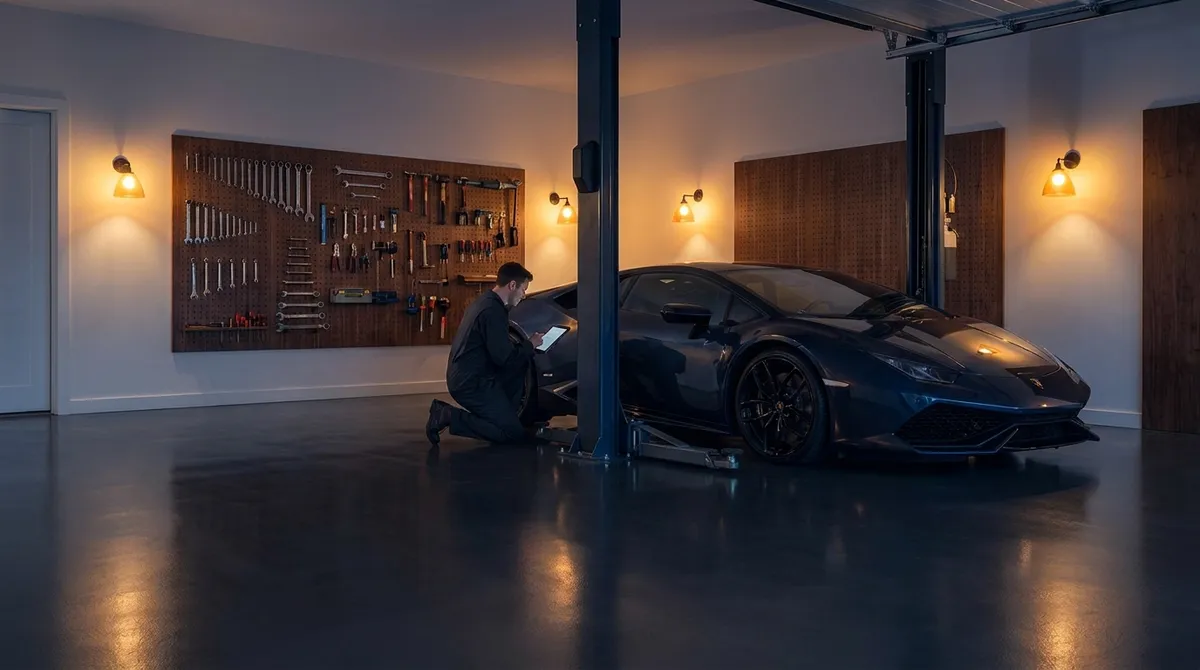
For the discerning homeowner, a garage is not a utility space—it is the prologue to the home itself. When the door shudders, the opener protests, or the track alignment drifts even slightly out of true, the disturbance is more than mechanical. It interrupts the quiet choreography of a well-run household. This guide moves beyond generic fixes and leans into refined, high‑standard repair strategies—offering five exclusive insights that help you restore not just function, but a sense of deliberate calm to your garage.
Understanding the Garage as a System, Not a Set of Parts
Most repair attempts fail in subtle ways because the garage is treated as a collection of independent components—door, springs, opener, tracks—rather than as a single, interdependent system. A premium repair approach begins with system-level thinking.
Instead of simply replacing a broken spring or noisy roller, a seasoned technician will first map the forces at work: spring tension, door weight, track alignment, opener torque, and even the way the door seals at the floor. A slight misalignment in the vertical track can force the opener to “work harder,” leading to premature motor fatigue. A worn bottom seal can change how the door sits in the opening, skewing photo-eye alignment and encouraging habitual overrides of the safety system.
When you approach repairs with this systems mindset, each intervention becomes an opportunity to refine. Replacing a damaged panel? Use that moment to verify track plumb and level. Adjusting spring tension? Re-test the opener’s force and travel limits. Calibrating the system as a whole ensures your garage doesn’t just work again—it works as if it were engineered for your particular home.
Exclusive Insight 1: Precision Balancing as the Foundation of Every Repair
If there is a single, underappreciated repair discipline that separates a merely functional garage from an exceptional one, it is precision door balancing. Springs are often treated as “parts that either work or don’t,” but in reality, spring tension is a fine-tuning instrument.
A correctly balanced door should stay in place when lifted halfway and should neither slam shut nor float upward on its own. When balance is even slightly off, the opener becomes a crutch, doing work the springs should handle. Over time this manifests as burned-out opener motors, stripped gears, and fluctuating travel limits. The homeowner notices “the opener struggling” without realizing the springs are quietly to blame.
A premium-level repair includes:
- Measuring door weight and matching it to the correct spring size and configuration.
- Adjusting tension until the door moves with minimal effort by hand.
- Recalibrating opener travel and force once balance is correct, not the other way around.
This focus on balance ensures that every other repair—new rollers, upgraded opener, reinforced brackets—delivers its full benefit. It is the difference between a door that simply goes up and down, and one that moves with effortless, controlled composure.
Exclusive Insight 2: Listening Diagnostics—Using Sound as a Repair Tool
In refined automotive garages and high-end workshops, technicians are trained to listen. The same principle applies to your home garage door. Unwanted sound is rarely random; it is data.
A high-pitched squeal often signals metal-on-metal contact—usually misaligned hinges, dry rollers, or track rub. A low, rhythmic thud may indicate a flattened roller, a loose hinge, or a panel that’s flexing under stress. A single sharp “pop” as the door moves can point to torsion springs shifting in their cones or mounting plates that aren’t fully secured.
Rather than drowning the system in spray lubricants (which can attract dust and mask underlying issues), a sophisticated repair approach uses a simple sequence:
- Operate the door and listen from different vantage points—inside the garage, outside, and directly under the tracks.
- Note when the sound occurs: at the start, mid-travel, or just before the close.
- Correlate each sound to a specific mechanical movement: hinges pivoting, cables spooling, springs winding, rollers turning.
This calm, methodical listening often reveals the real defect—slightly bent track, over-tightened hinge bolts, misaligned support brackets—long before it evolves into a visible failure. In a premium maintenance rhythm, the ear becomes as valuable as any tool in the toolbox.
Exclusive Insight 3: Strategic Component Upgrades That Double as Long-Term Repairs
Some “repairs” are, in truth, deferred breakdowns. A cracked plastic roller is replaced with another budget roller; a worn hinge is swapped with a similarly light-duty part. Within a year or two, the cycle repeats.
Homeowners who value long-term quiet and reliability should think in terms of strategic component upgrades whenever a repair is required. Instead of merely restoring baseline function, each repair becomes an opportunity to elevate durability and refinement:
- Nylon, sealed-bearing rollers to replace builder-grade plastic or steel. These dramatically reduce noise and friction, easing strain on the opener and tracks.
- Heavy-duty, gauge-upgraded hinges and brackets at high-stress positions (especially near the top of the door and where panels flex most).
- Reinforced struts across wider doors to prevent flexing, reduce panel fatigue, and keep alignment more stable over time.
- Quiet-drive openers (belt or direct drive) with soft-start and soft-stop functions that treat the door more gently at every cycle.
By choosing elevated components at the moment of failure, you transform reactive repair into a curated upgrade plan. The garage becomes progressively quieter, more predictable, and more graceful in motion with each intervention.
Exclusive Insight 4: Environmental Tuning—Repairing for Climate, Not Just for Today
A garage door that seems perfectly tuned on a mild afternoon can misbehave dramatically on a freezing morning or a humid summer evening. Temperature shifts affect metal expansion, seal flexibility, and even sensor reliability.
A sophisticated repair solution doesn’t assume a single static environment. Instead, it anticipates seasonal variation:
- Cold climates: Springs are more brittle in low temperatures; lubricants thicken; seals stiffen. High-quality, cold-weather-compatible lubricants and properly sized springs reduce winter failures. Bottom seals and threshold solutions are chosen not just for draft control, but for their ability to remain pliable in cold conditions so the door can fully seat and latch.
- Hot or coastal climates: UV exposure can degrade vinyl seals and weatherstripping, while salty air accelerates corrosion in cables, springs, and hardware. Here, corrosion-resistant hardware, galvanized or powder-coated components, and UV-stable seals matter as much as the repair itself.
- Variable climates: Photo-eye sensors may be more prone to dust accumulation, sun glare, or intermittent misalignment. Slightly more generous mounting brackets, shading techniques, or premium sensor models can reduce nuisance failures.
When your repair plan is tailored to your region’s climate profile, your garage shifts from “works right now” to “remains composed year-round.” That’s the hallmark of an elevated repair strategy.
Exclusive Insight 5: Codifying a Garage Performance Standard for Your Home
Most homeowners measure garage door performance in one simplistic way: it opens, it closes. The refined homeowner sets a higher bar—and writes it down.
After a significant repair or series of upgrades, create a brief “Garage Performance Standard” for your household. This is not a technical manual; it is a clear expectation of how the door should behave when it is healthy:
- How quietly should it operate? (For example: conversation in the adjacent room remains undisturbed.)
- How smoothly should it move? (No hesitation, lurching, or visible panel flex.)
- What should balance feel like when operated by hand?
- How should the safety reversal respond when the door encounters resistance?
- How quickly and cleanly should the remote and wall control activate the system?
This document becomes your baseline for future repairs. Any deviation—new vibrations, increased operating time, changes in sound profile—is noticed sooner and addressed before it becomes a failure. It also creates a more informed dialogue with any service professional you hire: instead of saying “something feels off,” you can say, “The door is taking longer to start moving and the soft-stop is less clean than it was after the last service.”
In essence, you are treating the garage with the same deliberate standards you might apply to a high-end vehicle or a carefully maintained mechanical watch. It elevates every subsequent repair from reactive to curated.
Conclusion
A garage that simply functions is no longer the ambition for most discerning homeowners. The true objective is a door system that operates with quiet assurance, predictable behavior, and resilience over time. By viewing the garage as an integrated system, prioritizing precision balance, listening diagnostically, using each repair as an opportunity for targeted upgrades, tuning for climate, and codifying your own performance standard, you move beyond “fixing what broke” into a higher category of stewardship.
The result is subtle yet unmistakable: a garage that feels engineered, not improvised—one whose reliability becomes an invisible luxury woven into your daily arrivals and departures.
Sources
- U.S. Consumer Product Safety Commission – Garage Door Safety – Guidance on safe operation, reversal systems, and sensor reliability
- International Door Association (IDA) – Homeowner Garage Door Safety & Maintenance – Industry recommendations on balance testing, component wear, and professional servicing
- Clopay – Garage Door Maintenance Tips – Manufacturer insights on balancing, lubrication, and seasonal considerations for residential doors
- LiftMaster – Garage Door Opener Support & Guides – Technical references on force settings, travel limits, and premium opener features
- Cornell University – Materials in Extreme Environments – Background on how materials respond to temperature and environmental stress, relevant to climate-aware repair decisions
Key Takeaway
The most important thing to remember from this article is that this information can change how you think about Repair Solutions.