A well-kept garage doesn’t announce itself; it simply works—day after day, season after season—without drama, noise, or surprise failures. For homeowners who view their property as a long-term investment rather than a short-lived convenience, the garage is not an afterthought. It is a mechanical hub, an environmental buffer, and often the most-used entry to the home. Thoughtful maintenance here is less about chores and more about safeguarding comfort, preserving hardware, and avoiding the expensive urgency of preventable repairs.
Below are five refined, often-overlooked maintenance insights that reward attention with a quieter, safer, and more enduring garage.
1. Treat the Garage as a Micro-Climate, Not Just a Room
Most garages are exposed to greater temperature swings, humidity fluctuations, and dust intrusion than any other part of the home. When you treat it as a micro-climate rather than just “the space where the car lives,” your maintenance decisions become far more precise.
Begin with air sealing. Inspect the weatherstripping along the sides and bottom of the garage door, but also scrutinize door thresholds leading into the house, electrical penetrations, and any visible gaps along the sill plate. A thin bead of high-quality sealant around these points can dramatically reduce dust, exhaust fumes, and moisture migration into living spaces.
Humidity control is equally important. In humid regions, a small, properly sized dehumidifier—raised off the floor for protection—can help prevent rust on tools, corrosion on door hardware, and warping of stored wood. In colder climates, confirm that the garage is ventilated correctly to avoid condensation on metal surfaces and overhead structure.
The result is not just a more comfortable garage, but a more stable environment for the mechanisms you rely on daily: door springs, bearings, opener electronics, and storage systems that degrade faster in uncontrolled climates.
2. Elevate Lubrication from Task to Strategy
Many homeowners know they “should lubricate the garage door,” but the execution is often haphazard. Premium maintenance elevates lubrication into a strategy that protects critical components rather than simply silencing today’s squeak.
Use a dry-film or lithium-based lubricant specifically formulated for garage hardware. Apply sparingly to:
- Torsion spring coils (or extension spring pivot points), to reduce friction and surface corrosion
- Hinges between door sections, focusing on the pivot pins rather than the entire hinge plate
- Steel rollers with bearings (avoid saturating nylon wheels; target the stems and bearing area)
- The opener rail (if chain-driven) or the trolley rail contact area (for belt or screw drives)
Always wipe away excess product. Over-lubrication attracts dust and grime, which can convert a smooth mechanism into an abrasive paste over time. A thoughtful approach—once or twice per year, depending on usage and climate—keeps mechanical motion controlled, quiet, and far less prone to premature wear.
This subtle discipline is the difference between hardware that simply works and hardware that works elegantly for decades.
3. Use Balance Testing as an Early-Warning System
The balance of a garage door is one of the most underappreciated diagnostics in home maintenance. A door that is properly balanced places minimal strain on the opener and reduces the risk of catastrophic failure, yet many homeowners never evaluate it.
With the door closed, disengage the opener by pulling the emergency release cord. Manually lift the door to about waist height and gently let go. A well-balanced door should remain approximately in place, perhaps drifting slightly but not slamming shut or racing upward. Repeat this at about one-third and two-thirds open to assess consistency.
If the door cannot hold its position and wants to fall or shoot upward, the springs are out of balance or fatigued. Continuing to operate an unbalanced door forces the opener to act as a hoist instead of a guide, overstressing gears, belts, or chains and increasing the risk of failure.
Adjusting or replacing garage door springs is not a DIY experiment; it is high-tension work best left to trained professionals. But the balance test itself is a refined homeowner habit—quick, revealing, and capable of catching problems long before they escalate into a disabled door or damaged opener.
4. Curate Storage to Protect Both Belongings and Mechanics
Sophisticated garage maintenance extends beyond the door and opener to how the space itself is curated. Poorly organized storage is not merely an aesthetic inconvenience; it is a genuine maintenance liability.
First, consider airflow and clearance. Dense piles of boxes pushed against walls or near the door tracks can trap moisture and dust, accelerating rust on metal components and encouraging mildew. Maintain a clean perimeter around tracks, sensors, springs, and the opener head to allow easy inspection and prevent accidental impact damage.
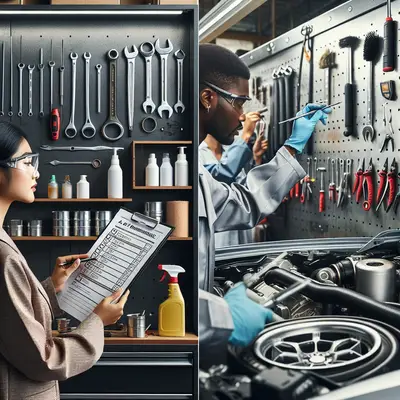
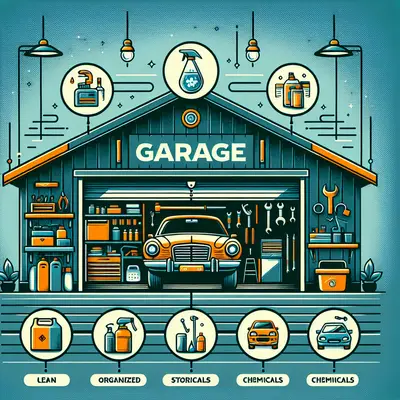
Second, be intentional about what resides in the garage. Solvents, fuels, and harsh chemicals—when stored incorrectly—can corrode nearby metals or damage seals. Store these in sealed containers within ventilated cabinets, ideally away from opener electronics and metal tools. Similarly, avoid leaning ladders, lumber, or bikes against the tracks or torsion tube; a minor bump can misalign the system or create subtle stress points.
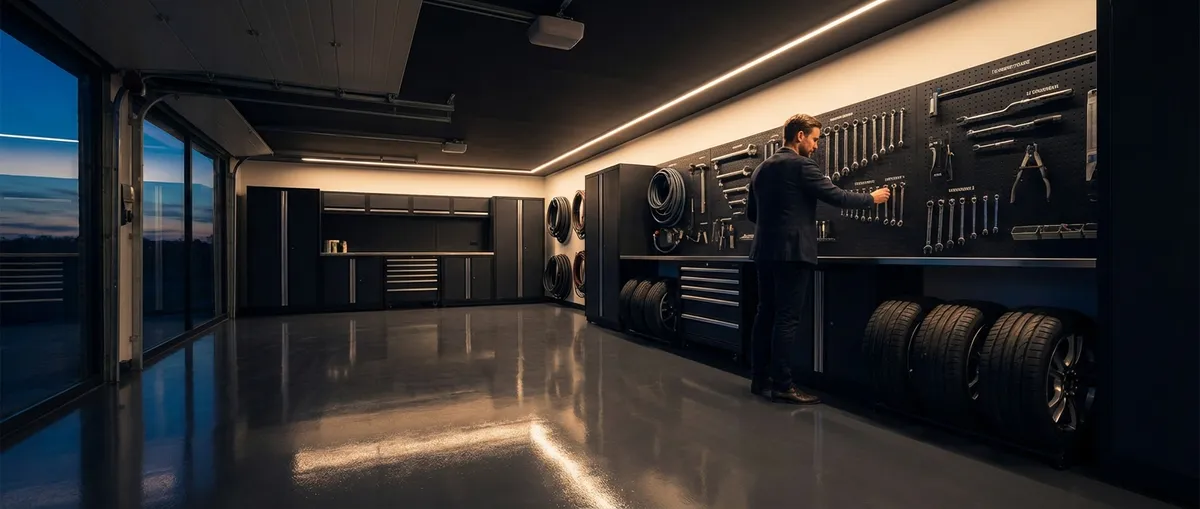
Upgraded shelving, wall storage systems, and overhead racks may seem like luxuries, but they act as structural insurance: they keep weight off vulnerable mechanisms, promote cleaning, and make it far easier to notice leaks, rust, or wear before they become crises.
5. Treat the Opener as a Safety Device, Not Just a Convenience
The garage door opener is frequently misunderstood as a motorized convenience—something that “just works” until it doesn’t. In reality, it is a primary safety device that controls one of the heaviest moving objects in the home.
Begin with the photo-eye sensors. Confirm they are aligned, mounted securely, and free from dust and cobwebs. Test them monthly by closing the door and waving a long object through the beam; the door should immediately reverse. Then, perform a force-reversal test using a solid block of wood placed on the floor beneath the closing path. If the door does not reverse promptly upon contact, the opener’s force settings require adjustment or professional inspection.
Next, consider the opener’s age. Units older than about 20–25 years may lack modern safety features such as rolling-code technology and improved force sensitivity. Even if they still function, they may not meet current safety expectations. Proactive replacement with a modern, quieter, and smarter opener isn’t mere indulgence; it is a preventative safety measure that also enhances daily quality of life.
Finally, treat any change in opener behavior—hesitation, irregular speed, new noises, or intermittent operation—as a signal. Sophisticated maintenance is less about frantic repair and more about honoring these early signs. A prompt inspection often reveals small wiring issues, worn gears, or sensor misalignments that can be corrected long before they lead to a stuck door or a compromised safety system.
Conclusion
A garage that feels composed, quiet, and consistently reliable is rarely the product of chance. It is the outcome of measured decisions: recognizing the garage as its own climate, attending to lubrication with precision, using balance tests to detect hidden strain, curating storage to protect both belongings and mechanics, and respecting the opener as a safety guardian rather than a simple motor.
For homeowners who value refinement in the details, these maintenance practices are not chores; they are a form of stewardship. They keep the garage operating as an invisible ally—protecting vehicles, safeguarding entry to the home, and preserving the integrity of every component that keeps daily life moving smoothly, without incident and without spectacle.
Sources
- U.S. Department of Energy – Air Sealing Your Home – Guidance on sealing gaps and improving building envelope performance, applicable to garages as micro-climates
- International Association of Certified Home Inspectors – Garage Inspection – Professional insights into common garage issues, safety considerations, and maintenance focus areas
- Consumer Product Safety Commission – Garage Door Openers – Background on opener safety standards and the importance of reversal mechanisms
- LiftMaster – Garage Door Opener Safety Checklist – Manufacturer recommendations for testing photo-eyes, force settings, and general opener safety
- Minnesota Extension – Controlling Moisture in Your Home – Practical guidance on managing humidity and condensation, relevant for garages in varying climates
Key Takeaway
The most important thing to remember from this article is that this information can change how you think about Maintenance.