The garage door is often the largest moving element of a home, yet in many properties it remains the least thoughtfully curated. When it works, it quietly orchestrates everyday comings and goings; when it fails, it compromises security, convenience, and even curb presence. For homeowners who expect more than “good enough,” a garage door is not just a barrier—it is an experience to be engineered with intention.
This guide explores refined, technically informed ways to transform a troublesome or dated garage door into a precise, whisper-quiet, and visually elevated entry. Beyond routine advice, you’ll find five exclusive insights that reward attention to detail and prioritize enduring quality over quick fixes.
Rethinking the Garage Door as a Daily-Use System
Treating the garage door as part of the home’s mechanical system—not as a simple exterior panel—changes every decision you make. The door, opener, springs, rollers, tracks, seals, and smart controls function as an ecosystem; a weakness in one component quietly erodes the entire experience.
A premium approach begins with understanding usage patterns. If your garage is your primary entrance, your door may open and close dozens of times a day. That duty cycle demands higher-grade hardware, robust openers, and regular, targeted maintenance. If the space doubles as a workshop or gym, insulation, sound isolation, and light control matter as much as operation.
By thinking in systems instead of parts, you can specify solutions that feel effortless: a quiet motor that never strains, balanced springs that reduce wear, and weatherstripping that shuts out drafts and noise with a satisfying, confident seal. The goal is simple: a door that behaves like well-tuned cabinetry, not a piece of construction equipment.
Quiet Performance Starts with the Hardware You Don’t See
Many homeowners chase quiet operation by replacing the opener alone, only to be disappointed when noise persists. The true refinement lies in the hardware you rarely notice—rollers, hinges, fasteners, and vibration pathways into the home’s structure.
Steel rollers and thin-gauge hinges transmit sound like a speaker cone. Upgrading to nylon or precision ball-bearing rollers, heavier-duty hinges, and properly anchored track brackets dramatically reduces mechanical noise. Even the simple act of isolating the opener from the ceiling joists with vibration-damping mounts can change the acoustic footprint of the entire system.
A high-end belt-drive opener can be almost inaudible in an attached bedroom—if the door is correctly balanced, the track is aligned in three dimensions (not just “close enough”), and the rollers glide rather than scrape. The refinement is not in any single upgrade but in the way these details interact to create a smooth, composed motion from start to finish.
Exclusive Insight 1: Balance Before Power
One of the most overlooked truths in garage door repair is that balance matters more than horsepower. An unbalanced door forces even a premium opener to work harder, shortening its life and increasing noise, vibration, and wear.
Before you consider upgrading the motor, insist on a professional balance evaluation. A properly balanced door should:
- Remain in place when lifted halfway by hand
- Move smoothly without feeling excessively heavy or “jerky”
- Require only moderate force to open and close manually
If the door fails these tests, the springs are not correctly matched or tensioned. Correcting balance with properly sized torsion or extension springs transforms how the entire system behaves. Once balanced, a quieter, lower-horsepower opener often outperforms a high-horsepower unit trying to mask structural imbalances.
Exclusive Insight 2: Insulation Is About Stability, Not Just Warmth
Insulated garage doors are often marketed purely as a way to keep the space warmer in winter. For discerning homeowners, the more valuable benefit is environmental stability—temperature, noise, and even panel integrity.
Insulated doors (especially with polyurethane or high-density polystyrene cores) offer:
- Reduced heat transfer, making adjacent rooms easier to keep comfortable
- Greater rigidity, helping panels resist dents, flexing, and wind pressure
- Superior sound dampening, softening street noise and mechanical operation
If you use your garage as storage for sensitive items, a home gym, or a transitional mudroom, an insulated door paired with quality perimeter weatherstripping and a snug bottom seal creates a noticeably more refined environment. The result is a space that feels integrated with the rest of the home rather than an exposed utility zone.
Exclusive Insight 3: Light, Privacy, and Glazing Are a Design System
Windows in a garage door are not mere decoration; they shape how the space feels and functions. The position, size, and type of glazing can either create a gallery-like glow or expose your belongings to the street.
Consider these design-forward practices:
- High placement: Windows in the top panel preserve privacy while admitting sky-facing light.
- Obscure or frosted glazing: Allows generous daylight while concealing interiors from passersby.
- Insulated glass: Maintains thermal performance and reduces condensation in demanding climates.
- Consistent geometry: Aligns window patterns with existing architectural lines—transom windows, front door lites, or upper-story fenestration—for a cohesive façade.
The ideal result is a garage that feels naturally lit and intentional rather than a dark storage bay or a fully exposed showroom. Subtle choices in glazing quality and configuration can elevate the perceived quality of the entire property.
Exclusive Insight 4: Precision Seal Management for a Cleaner, Drier Garage
Weatherstripping is usually installed once and ignored, yet it quietly determines how much dust, water, and noise infiltrate your garage. For homes with drainage challenges, wind exposure, or pristine flooring, seal management becomes a high-value upgrade.
A refined sealing strategy considers:
- Profile and material of the bottom seal: Heavier, bulb-style rubber seals can adapt to minor floor irregularities better than thin flaps.
- Threshold systems: A bonded floor threshold paired with a compatible bottom seal can prevent wind-driven rain and meltwater from entering, particularly on driveways that slope inward.
- Side and top seals: High-quality vinyl or rubber with UV resistance preserves flexibility and aesthetics over years, not months.
- Transition to interior finishes: Aligning seals with epoxy flooring, tile, or drainage channels creates a visually intentional edge rather than a rough construction joint.
Well-designed sealing doesn’t just keep out the elements—it protects stored items, reduces cleaning, and helps maintain a stable environment for vehicles and equipment.
Exclusive Insight 5: Smart Controls Are Only as Good as Their Security and Calibration
Smart garage controls add convenience and remote oversight, but for a premium home, the expectations are higher: silent reliability, robust security, and tight integration with daily routines.
When implementing smart access, look beyond the app itself:
- Rolling-code technology and frequent encryption updates are non-negotiable for modern openers.
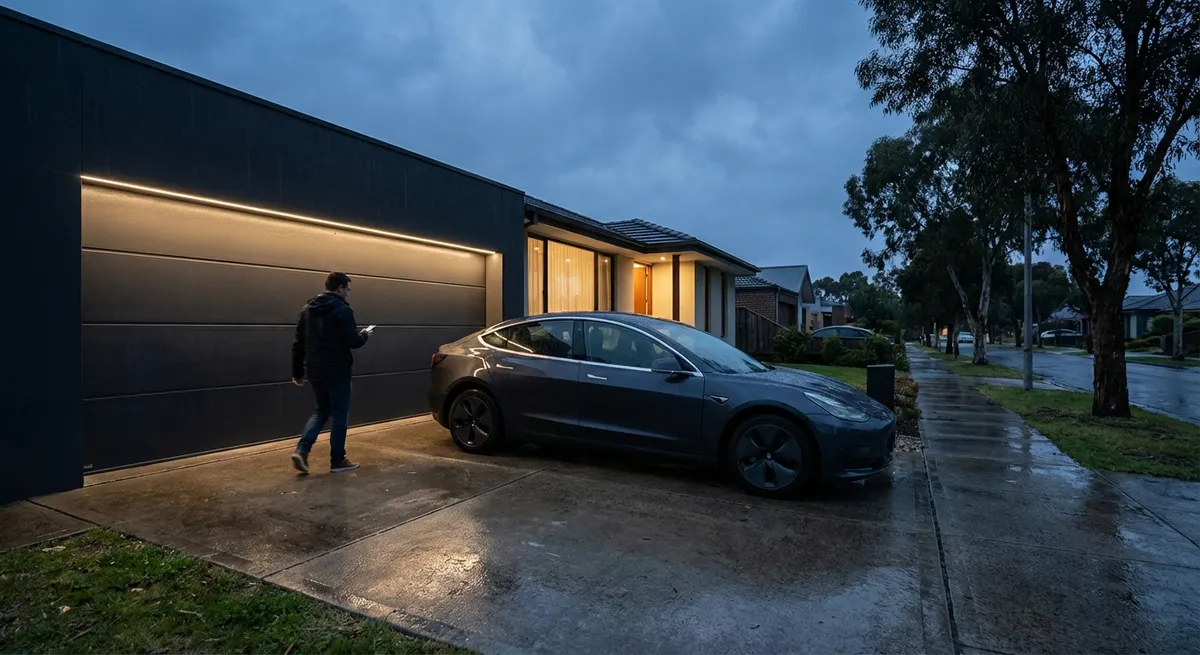
- Geo-fencing and schedules allow your door to close automatically if left open, without relying on memory or manual checks.
- Calibrated safety sensors and auto-reverse settings ensure smooth, confident operation—even with frequent use and varying light conditions.
- Integrated cameras or activity logs provide discreet visibility into comings and goings, valuable for deliveries, service providers, or second homes.
The most elegant systems disappear into your daily life: doors that close themselves when you leave, notifications only when something truly requires attention, and controls that respond instantly without glitches or guesswork.
When to Repair, When to Replace—with Intention
Not every problematic garage door calls for a full replacement. A sophisticated approach weighs long-term value against targeted intervention.
Repair-focused strategies make sense when:
- The door is structurally sound and visually compatible with your architecture
- Components like springs, rollers, and cables are nearing the end of their life but the panels remain in good condition
- Noise and performance issues stem from poor installation or neglected maintenance rather than fundamental design flaws
Replacement becomes the more elegant solution when:
- Panels are warped, rusted, delaminated, or repeatedly damaged
- The door lacks modern safety features or compatible hardware for smart and quiet operation
- The style or proportion undermines the home’s architectural presence
In both scenarios, the priority is not merely “making it work,” but creating a system that will feel composed and reliable for years. That often means selecting higher-grade components, insisting on meticulous installation, and establishing a simple, recurring maintenance routine.
Conclusion
A garage door that simply moves up and down is functional; a garage door that moves quietly, seals decisively, aligns with your architecture, and integrates intelligently into your daily life is something else entirely. By focusing on balance before power, insulation as environmental control, thoughtful glazing, precision sealing, and security-conscious smart controls, you transform a common liability into a quiet strength.
For homes that demand more, the garage door deserves the same level of discernment applied to interiors, lighting, and landscape. When approached with intention and technical rigor, this everyday mechanism becomes one of the most satisfying, invisible luxuries of the entire property.
Sources
- U.S. Department of Energy – Insulated Garage Doors – Explains how garage door insulation affects comfort and energy performance
- International Association of Certified Home Inspectors – Garage Door Safety – Details safety standards, balance checks, and inspection best practices
- Consumer Product Safety Commission – Garage Door Opener Safety – Covers essential safety features, sensors, and auto-reverse requirements
- Clopay Garage Doors – Insulated vs. Non-Insulated Doors – Provides technical comparisons of door construction and benefits
- LiftMaster – Smart Garage Access and Security Features – Outlines capabilities and considerations for connected garage door systems
Key Takeaway
The most important thing to remember from this article is that this information can change how you think about Garage Doors.