A well‑kept garage rarely announces itself. It moves, closes, stores, and safeguards with such quiet competence that you forget how much of your home’s comfort and security depends on it. Yet behind that composure is a delicate interplay of hardware, climate, and daily use—one that rewards the homeowner who maintains it with the same care given to any other refined space.
This is not about cosmetic tidying. It is about preserving precision, eliminating subtle strains before they become failures, and shaping a garage that behaves more like a well‑tuned mechanism than a neglected utility room. The following insights move beyond quick fixes, offering a more exacting approach to maintenance that discerning homeowners will recognize as the difference between “working” and “working effortlessly.”
Insight 1: Treat the Garage Door as a Moving Facade, Not a Utility Panel
Most garages are maintained as though the door were a disposable barrier. In a refined home, the door deserves the same attention as any other exterior architectural element—only this one moves, several times a day.
Begin by inspecting the door as you would a piece of cabinetry or fine millwork. Run your hand along the panels and trim: feel for hairline cracks, early warping, or raised grain in wood, and micro‑dents or flaking finish in steel or aluminum. These subtle changes expose material to moisture and temperature swings, accelerating fatigue and inviting corrosion.
Visually track the door’s motion from fully open to fully closed at least once a month. Instead of simply verifying that it closes, listen for tonal changes: a faint rattle, a sharper clack as it passes a certain point, or a low grinding hum. These shifts often indicate loosening fasteners, misaligned tracks, or an opener beginning to strain. If the movement or sound changes, the system is informing you—silence in this context is a luxury you maintain, not a given.
Finish the inspection by checking the perimeter weatherstripping and bottom seal. In a premium home, failing seals are not just comfort issues, but also energy and cleanliness issues: they allow dust, road salts, insects, and moisture to migrate inward, slowly degrading stored items, tools, and even interior door thresholds.
Insight 2: Calibrate Balance and Tension Before Force and Power
Homeowners often respond to a struggling door by upgrading the opener. The more precise—and more elegant—approach is to verify that the door is perfectly balanced before asking more power to compensate for mechanical neglect.
A properly counterbalanced door should feel weightless in motion. With the opener disconnected (using the manual release), lift the door halfway and release it gently. It should hover in place with only minimal drift. If it slams shut or shoots upward, the spring tension is off. A misbalanced door forces the opener to function as a winch rather than a guide, accelerating wear on gears, chain or belt, and motor.
Torsion springs, cables, and drums are not components for casual experimentation; their stored energy can be significant. The sophisticated approach is not DIY bravado but informed restraint: recognize when adjustment requires a seasoned technician with calibrated tools and the correct hardware.
Once the spring balance is correct, fine‑tune the opener’s force and travel limits according to the manufacturer’s specifications. A door that stops abruptly, reverses randomly, or crushes a piece of scrap wood during safety testing is not merely inconvenient—it is an indicator of miscalibration and a potential safety hazard. Precision in these settings preserves both the lifespan of the mechanism and the safety profile of your home.
Insight 3: Engineer the Garage Microclimate, Not Just the Temperature
Climate control in a premium garage is often approached as a comfort upgrade. In reality, it is a maintenance strategy. The goal is not only warmth or coolness; it is stability—minimizing the expansion, contraction, and condensation cycles that silently damage doors, hardware, and stored possessions.
Humidity is the hidden aggressor. Metal components—springs, hinges, rollers, tracks, and opener hardware—oxidize faster in a damp environment. Cardboard boxes collapse, finishes cloud, and sensitive tools corrode. Aim for a relative humidity in the 30–50% range, using a dehumidifier or integrated HVAC extension if necessary, particularly in regions with seasonal swings.
Air movement is as important as temperature. A well‑placed, quiet ceiling or wall‑mounted fan can reduce condensation on cold surfaces after vehicles bring in snow or rain. This prevents standing moisture at the base of the door and along concrete seams, which can promote spalling, efflorescence, and degradation of bottom seals.
If you store paints, adhesives, or finishes in the garage, remember they are living materials influenced by temperature. Excessive heat can alter viscosity and stability; freezing can ruin them entirely. A modest investment in mild climate stabilization protects not just the garage itself, but everything it holds.
Insight 4: Lubrication as Precision Care, Not a Messy Afterthought
Garage lubrication is frequently treated as a quick spray-and-forget ritual. A more discerning approach recognizes that not all lubricants are equal, and not all components should be coated indiscriminately.
Use high‑quality, non‑detergent garage door lubricants—typically silicone‑based or synthetic formulations designed for metal‑to‑metal contact. Apply sparingly to hinges, rollers (metal rollers and their bearings, not nylon wheels themselves), torsion springs (lightly), and lock hardware. The goal is to reduce friction, not create a dripping film that attracts dust and grit.
Avoid greasing the tracks. Tracks are guides, not friction points; they should be kept clean and free of debris. A lightly wiped, dry track allows the rollers to glide true without the drag and contamination that heavy greases invite. Excess lubricant also has a way of migrating to the door finish and floor, compromising appearance and footing.
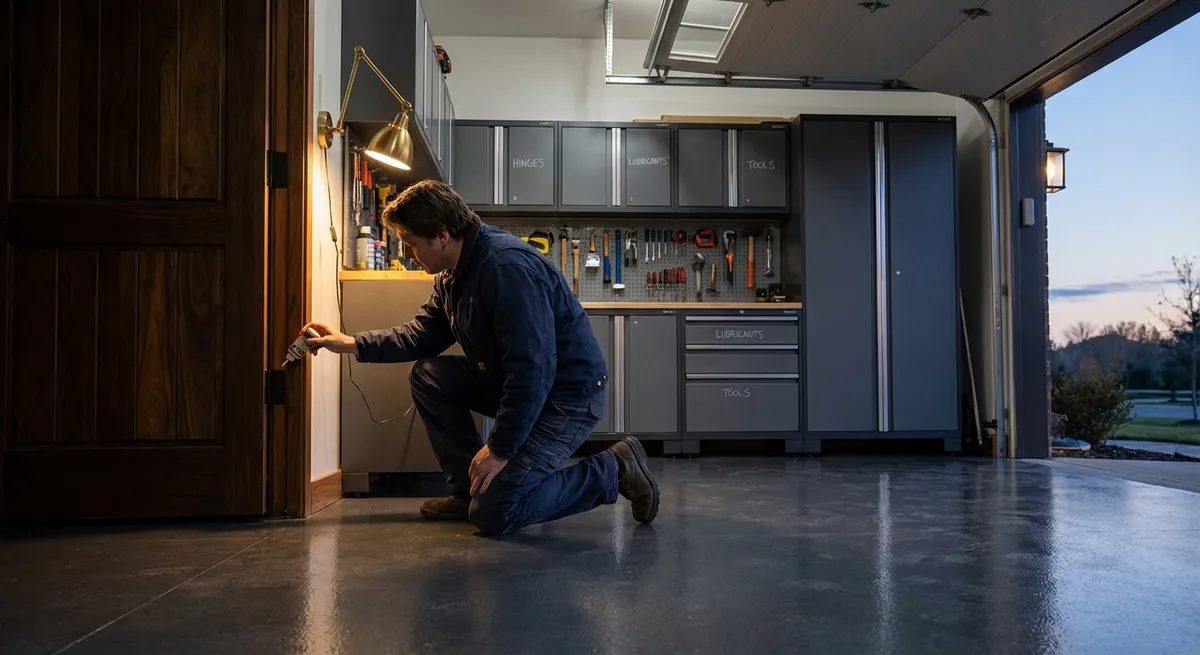
Create a disciplined schedule: a focused lubrication and hardware check once or twice a year is sufficient for most homes. During this routine, inspect fasteners—hinge screws, track bolts, opener mounting brackets—and gently snug any that show even minimal loosening. This is mechanical housekeeping of the highest order: quiet, preventive, and immensely protective over time.
Insight 5: Integrate Safety, Security, and Maintenance Into One Quiet System
In an elevated home, safety and maintenance are not separate concerns; they are integrated into a single expectation of reliability. Your garage is a threshold—physical, digital, and practical—and its upkeep should reflect that.
Begin with the door’s safety systems. Test the photoelectric sensors monthly by passing an object through the beam as the door closes; ensure immediate reversal. Then place a flat piece of wood on the floor and close the door onto it: the door should reverse upon contact. Any hesitation, partial closure, or inconsistent behavior warrants professional attention—not just for compliance, but to maintain the quiet assurance that every cycle is safe.
Next, consider security in tandem with mechanical health. A failing opener, a door that does not fully seat against the floor, or a track misalignment that leaves visible gaps all weaken your home’s perimeter. Ensuring robust locking mechanisms, updated opener technology with rolling codes, and a reliably smooth close is as much about safeguarding valuables and vehicles as it is about preserving daily convenience.
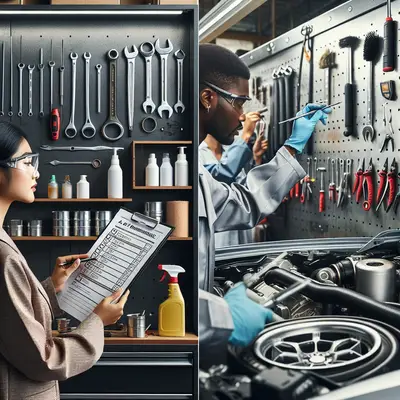
Finally, adopt a simple, written inspection log—annual or semiannual. Record dates, observations, and any service performed. This transforms maintenance from sporadic reaction to an ongoing, curated practice. Over time, you will learn the personality of your garage system: its seasonal changes, its minor noises, its wear patterns. That familiarity is the true mark of a well‑kept, premium garage—one that does not merely function, but performs with understated consistency.
Conclusion
A truly refined garage does not draw attention by failing; it impresses by never intruding on your day. Achieving that level of quiet reliability is not a matter of luck or constant replacement, but of deliberate, intelligent maintenance: balancing the door before boosting power, managing humidity before corrosion appears, lubricating with precision rather than excess, and treating every inspection as you would a checkup for a complex machine you value.
For homeowners who expect more from their spaces, the garage is no longer an afterthought. It is a moving facade, a climate‑sensitive storage environment, and a critical security barrier. When you maintain it with the same care you devote to your interiors, it responds in kind—with smoother motion, longer life, and the calm assurance that, behind the scenes, the mechanics of your home are as composed as they appear.
Sources
- U.S. Department of Energy – Insulation and Air Sealing in Garages – Guidance on garages, insulation, and energy‑related moisture and comfort issues
- International Association of Certified Home Inspectors (InterNACHI) – Garage Door Safety – Detailed overview of garage door components, safety systems, and inspection practices
- Consumer Product Safety Commission – Garage Door Opener Safety – Federal safety information on automatic garage doors and required reversal systems
- Clopay Garage Doors – Maintenance & Troubleshooting Guide – Manufacturer’s recommendations for routine maintenance and performance checks
- University of Minnesota Extension – Controlling Moisture in Buildings – Practical guidance on managing humidity and condensation that applies directly to attached garages
Key Takeaway
The most important thing to remember from this article is that this information can change how you think about Maintenance.