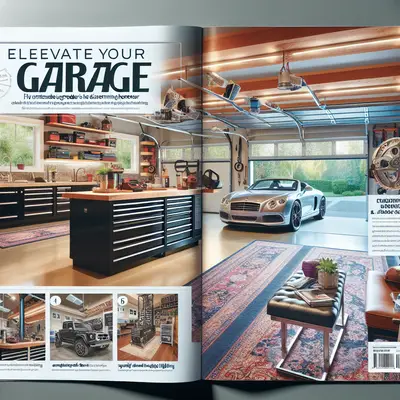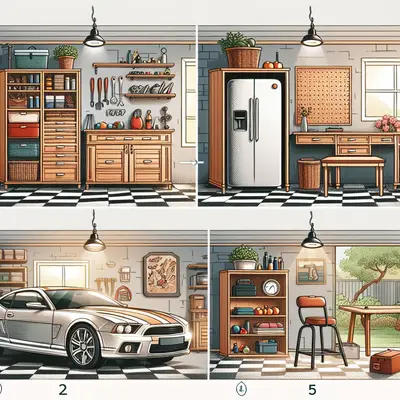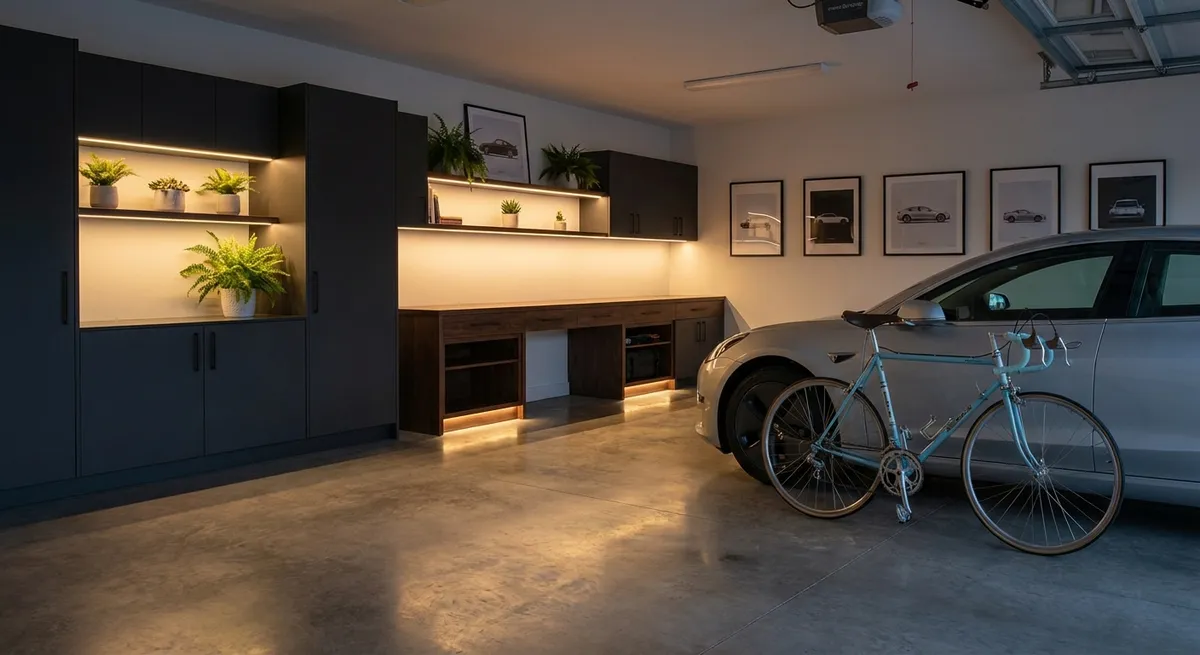
A well-conceived garage is less a storage afterthought and more a quiet command center for the entire home. When planned with intention, it shapes how you arrive, how you work, and how gracefully your house withstands everyday wear. Thoughtful upgrades do not have to be ostentatious; the finest changes are often the ones you notice only when they are absent—a door that glides instead of shudders, lighting that clarifies instead of glares, storage that supports instead of obstructs. This is an exploration of elevated garage improvements for homeowners who expect their most utilitarian space to perform with quiet excellence.
Reframing the Garage as a High-Performance Entry Suite
For many households, the garage is the true front door. Yet its design rarely reflects this status. Treating the garage as an “entry suite” rather than a catch-all transforms both its function and its feel.
Begin with circulation. Map how you and your family actually move—from car doors to interior door, from tool wall to workbench, from freezer to pantry. The goal is to reduce conflict zones: tight spots where car doors collide with storage, or where a stroller competes with a trash bin. Repositioning a single cabinet or swapping a deep shelf for a shallower, wall-mounted system can dramatically improve flow.
Finishes matter as much as layout. A consistent color palette—perhaps a restrained mix of soft gray, warm white, and matte black hardware—brings visual calm to what is typically a chaotic space. Consider painting the interior door to the house in the same color as your formal entry; it subtly signals that this is an intentional arrival point, not a service corridor. Add a discreet bench, a simple catch-all tray, and a narrow coat hook rail, and suddenly the garage begins to behave more like a thoughtfully designed mudroom.
Insight 1: Treat Lighting as a Precision Instrument, Not an Afterthought
Most garages are overlit in the wrong places and underlit where precision matters. Upgrading lighting from a single central bulb to a layered scheme is one of the most transformative—and surprisingly luxurious—changes you can make.
Replace the lone fixture with linear LED lights spaced to match the parking bays. Opt for high color rendering index (CRI) bulbs (90+ CRI where possible); they render colors more accurately, which matters when matching paint, identifying wiring, or spotting fluid leaks. Cool white (4000–5000K) is typically ideal for task clarity without feeling sterile.
Then, add targeted task lighting: a slim LED strip over the workbench, a motion-activated light above the trash and recycling zone, and perhaps a low-level floor wash near steps leading into the house. Motion sensors ensure illumination is there when hands are full and conserve energy when the space is empty.
Finally, consider dimmable fixtures or dual-level lighting. Bright light is essential for work, but a softer level makes late-night arrivals less harsh. This is where the garage begins to feel curated rather than merely lit—light precisely where you need it, at the intensity the moment requires.
Insight 2: Engineer Storage Around Movements, Not Just Square Footage
The usual approach to garage storage is to “use every inch.” The refined approach is to use only the right inches—and to leave emptiness where movement and comfort demand it.
Start with the walls, but resist the temptation to cover all of them. Identify one or two primary “work walls” and concentrate heavy-duty storage there: track systems for frequently used tools, adjustable shelving for bins, and tall cabinets for hazardous materials you prefer out of sight. On other walls, limit storage to shallow solutions—no deeper than a standard clothes hanger—to protect parking space and reduce visual bulk.
The ceiling is your most underused plane, but it requires discipline. Reserve overhead racks for truly infrequent items: seasonal décor, camping gear, or seldom-used luggage. Place them so that trunk lids and SUV hatches can open fully without collision. Ensure that heavier items are stored in the lowest overhead positions, closest to walls, reducing strain and risk when lifting.
Crucially, design for vertical zoning: items used daily (recycling, pet supplies, kids’ sports gear) live between knee and shoulder height. Rarely used items move higher; heavy items move lower. This hierarchy turns storage from a static set of shelves into a highly functional, almost ergonomic system tuned to your routines.
Insight 3: Elevate the Floor from “Concrete Slab” to Durable Foundation
A garage floor quietly bears the brunt of daily life—snowmelt, road salt, hot tires, dropped tools, and the occasional spilled solvent. Upgrading it from raw concrete to a thoughtfully finished surface is both a practical investment and a visual transformation.
High-quality epoxy, polyaspartic, or polyurethane coatings create a sealed, easy-to-clean surface that resists staining and moisture penetration. For climates with snow and salt, this protection can significantly slow concrete degradation. A subtle, light-colored flake or quartz blend helps disguise dust and minor debris while reflecting light to make the space feel brighter.
If you prefer a less permanent option, premium interlocking tiles can deliver comfort underfoot and visual order, especially in combination with color zoning: one color for parking bays, another for a work area, a third for storage. This not only looks intentional but also guides behavior—family members quickly understand where cars, bins, and tools belong.
Pay particular attention to drainage and transitions. A gentle slope toward the garage door, intact expansion joints, and a carefully finished threshold reduce puddling and moisture wicking into interior walls. In refined garages, the floor is not just tougher; it supports cleanliness, safety, and a sense of composed order.
Insight 4: Integrate Quiet Technology as a Service to Daily Ease
Technology in the garage should be felt more than seen—its purpose is to simplify, secure, and silence without calling attention to itself. The most effective upgrades are those you stop thinking about because they simply work.
A modern, belt-drive or direct-drive garage door opener with soft-start and soft-stop capabilities dramatically reduces vibration and noise. Combined with well-balanced springs and properly aligned tracks, the entire door cycle becomes smoother, more controlled, and less stressful on hardware. Add battery backup, and the door remains operable during power outages—less drama, more reliability.
Smart controls extend that reliability. A garage door system that integrates with your phone allows you to confirm from anywhere that the door is closed, grant temporary access to service professionals, and receive alerts if the door remains open. Combined with a smart camera aimed inward (toward the door, not the street), you gain verification without broadcasting your garage’s contents to the outside world.
Even smaller touches matter: a digital torque-limiting driver at your workbench, for example, prevents over-tightening and protects delicate hardware; a smart plug on a secondary refrigerator can monitor energy use and send alerts if temperatures begin to rise. Technology here is not about novelty; it’s about quiet, dependable assistance to the routines you repeat every day.
Insight 5: Protect, Insulate, and Seal as Though It Were Interior Space
The garage is often the weakest link in the home’s thermal envelope and security posture, yet it shares walls—and often air—with your living spaces. Upgrading its “invisible” protections can elevate comfort and safeguard what you store there.
Start with air sealing. Weatherstripping around the garage door, a properly installed bottom seal, and gaskets around the door to the house all reduce drafts, dust, and fumes entering living spaces. If your garage shares a wall or ceiling with conditioned rooms, targeted insulation upgrades can moderate temperature swings, helping your HVAC system work less aggressively.
An insulated, well-fitted garage door provides both thermal and acoustic benefits. Paired with sealed wall penetrations (where pipes, wiring, or ducts enter the garage), this creates a buffer zone: the garage becomes less of an uncontrolled outdoor space and more of a semi-conditioned transition area. This is particularly valuable if you store wine, sensitive tools, or electronics, or if you use the garage for exercise or light workshop tasks.
Security is the other half of this protective strategy. Reinforce the entry door with solid-core construction, quality deadbolt hardware, and a strike plate anchored into framing rather than just trim. Consider whether any windows into the garage should be frosted or film-protected to obscure contents. These measures are not about turning the garage into a fortress; they simply ensure that this critical gateway to your home is not the easiest point of entry.
Conclusion
An elevated garage is not defined by luxury finishes or showpiece vehicles; it is defined by how seamlessly it supports the rhythms of your life. When lighting is tuned to your tasks, storage anticipates your movement, the floor holds up with quiet resilience, technology serves without spectacle, and the envelope protects as diligently as any interior room, the garage ceases to be a compromise space. It becomes an extension of your home’s overall logic and quality.
For homeowners who hold their property to a higher standard, garage upgrades are not about making a forgotten room beautiful for its own sake. They are about engineering an environment where every arrival, every project, and every mundane chore is handled with fewer frustrations and more effortless precision. In that sense, the refined garage is less a makeover and more a recalibration—one that quietly elevates every day you spend in your home.
Sources
- U.S. Department of Energy – Insulation & Air Sealing - Guidance on insulating and sealing spaces, including attached garages, to improve comfort and efficiency
- Energy Star – Garage Door Considerations - Information related to energy-efficient door systems and thermal performance considerations
- U.S. Fire Administration – Garage Fire Safety - Research and recommendations on attached garages, storage practices, and safety upgrades
- International Association of Certified Home Inspectors – Garage Inspection Guidelines - Professional perspective on critical garage systems, safety issues, and best practices
- University of California, Davis – Lighting Design Basics - Foundational principles for effective, task-oriented lighting that can be applied to garage environments
Key Takeaway
The most important thing to remember from this article is that this information can change how you think about Upgrades.