A well‑kept garage does more than store cars and boxes—it safeguards investments, supports daily routines, and quietly signals how the rest of the home is managed. True maintenance is not a scramble when something breaks; it is a refined discipline that anticipates fatigue, manages wear, and keeps the entire space in quiet, predictable order. For homes that expect reliability, the garage deserves the same rigor given to kitchens, HVAC systems, and security.
Below are five exclusive, often overlooked insights that elevate garage maintenance from reactive repair to considered stewardship.
1. Treat the Garage as a Micro‑Climate, Not Just a Room
Most garages sit at the crossroads of hot and cold, dry and damp, indoor and outdoor—and that tension shapes everything from metal fatigue to paint adhesion.
A premium maintenance approach begins by understanding the garage as its own climate zone. Temperature swing, humidity levels, and air movement all impact door hardware, stored items, and even the longevity of your vehicles. Rapid temperature changes, especially in colder regions, accelerate metal contraction and expansion, causing springs to weaken more quickly and door panels to warp or separate.
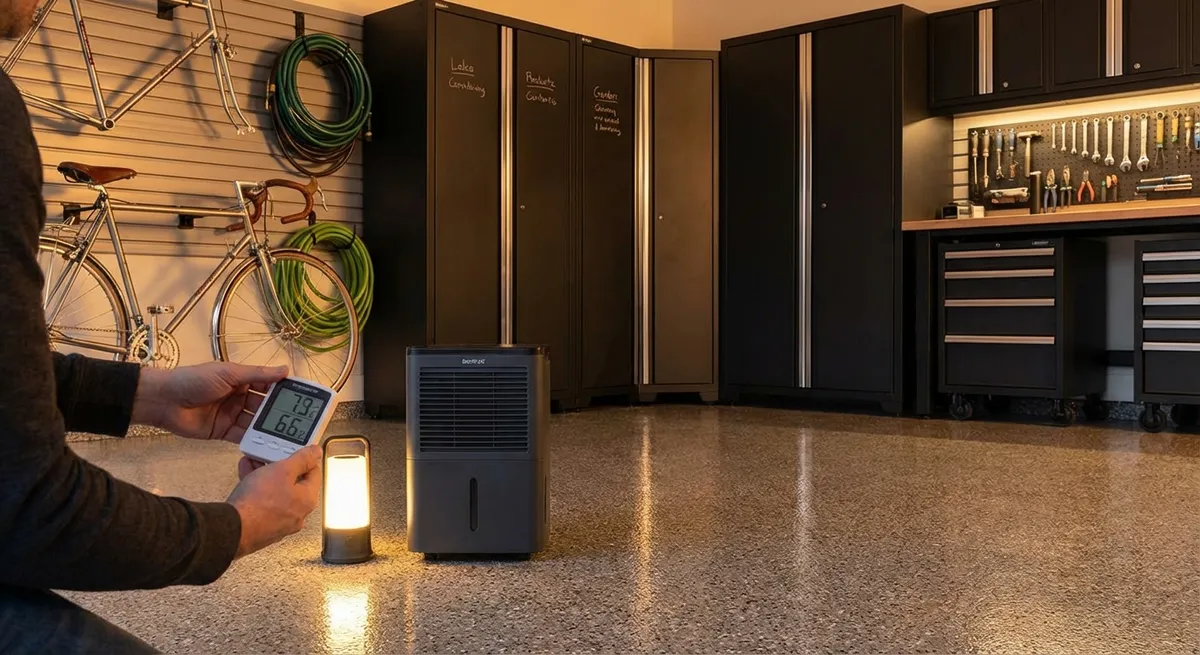
A small, quiet dehumidifier or a well‑sized exhaust fan can dramatically reduce condensation on tracks and hardware. For homes in coastal or high‑humidity environments, anti‑corrosion sprays on hinges, brackets, and torsion springs are not a luxury—they’re protection against invisible salt and moisture. If the garage shares a wall with conditioned living space, simple air sealing around outlets, door frames, and baseboards protects both energy efficiency and indoor air quality.
By monitoring this “micro‑climate” with a basic digital hygrometer and thermometer, you can adjust ventilation, insulation, and weatherstripping before minor rust blooms into structural compromise.
2. Elevate From “Lubrication” to Precision Friction Management
Most maintenance checklists mention “lubricate moving parts,” but the difference between casual spraying and precision friction management is the difference between a door that works and a door that feels effortlessly engineered.
Not all lubricants are equal, and some can quietly degrade performance. A refined approach includes:
- Using a high‑quality silicone or lithium‑based spray on hinges, rollers, and springs—not generic penetrating oils that evaporate quickly and attract dust.
- Avoiding lubricant on the tracks themselves. Tracks should be clean and dry; lubrication here can create grit‑laden sludge that causes rollers to chatter and bind.
- Applying sparingly at pivot points, then wiping away excess. Visible drips are not a sign of thoroughness; they are a magnet for debris.
- Scheduling this work seasonally, especially before winter, when cold amplifies any existing stiffness in metal parts.
Over time, homeowners who adopt this more surgical approach experience quieter operation, less strain on openers, and fewer sudden failures—because the door is not constantly fighting unnecessary resistance.
3. Read Wear Patterns Like a Mechanic, Not a Casual Observer
Most failures announce themselves long before they happen, but only if you know how to read the signs. Instead of waiting for a door to jam or a spring to snap, treat each visual inspection as a diagnostic session.
Key patterns to look for:
- Uneven door gaps: If one side of the door touches the floor before the other, it can indicate cable stretch, track misalignment, or a torsion spring losing balance. This imbalance burdens the opener and can warp panels over time.
- Roller behavior: A roller that wobbles, tilts, or drags instead of gliding suggests failing bearings or bent stems. Nylon rollers with sealed bearings typically offer smoother, quieter operation and longer life than basic metal rollers.
- Cable condition: Fraying strands, rust spots, or uneven cable tension hint at imminent failure. Cables bear immense load; once weakened, they rarely fail gracefully.
- Panel movement: Watch the door travel from fully closed to fully open. Any visible flexing, popping, or twisting is an early warning that joints, fasteners, or reinforcements are no longer working in unison.
By treating these clues as signals rather than curiosities, homeowners can schedule service under their own terms—during business hours, with preferred providers—instead of dealing with urgent failures on a stormy evening.
4. Put the Door Opener on a Protection Plan of Its Own
Garage door openers are often installed and then forgotten until they become noisy, erratic, or unresponsive. Yet the opener is both a mechanical workhorse and an electronic device—two domains that age very differently.
A thoughtful protection plan for the opener includes:
- Annual force and balance checks: Many modern openers allow you to test and adjust the closing force and sensitivity. If the door requires too much force to move, the opener compensates by straining its motor and gears.
- Photocell alignment and cleanliness: Misaligned or dusty safety sensors cause intermittent refusals to close—a common frustration that is actually a safety feature acting on poor inputs. A microfiber cloth and minor realignment restore reliability.
- Surge protection: Because openers contain circuit boards, they are vulnerable to power surges and nearby lightning strikes. A dedicated surge protector or whole‑home surge system dramatically reduces the likelihood of mysterious board failures.
- Drive system care: Belt‑drive systems should be checked for tension and inspected for cracks or stretching; chain‑drive systems need occasional lubrication and tension verification to avoid slap and premature wear.
Treating the opener as a calibrated device—rather than a black box—extends its life, maintains safety functions, and preserves that satisfying, consistent response every time you tap the remote or app.
5. Curate What the Garage Protects, Not Just How It Operates
Maintenance is often framed around mechanics—springs, tracks, motors. Yet for many properties, the true value inside the garage lies in what is stored there: vehicles, tools, equipment, seasonal furnishings, and sometimes fine bicycles or hobby collections.
A more elevated maintenance philosophy asks: how well is the garage preserving those assets?
Consider these refinements:
- Floor protection as asset insurance: High‑quality epoxy or polyaspartic coatings, or even well‑chosen modular tiles, do more than look clean. They resist oil, road salt, and moisture that would otherwise wick into concrete and evaporate into the garage environment, corroding metal frames and fasteners.
- Zoned storage with airflow: Dense, overpacked shelving against exterior walls traps moisture and hides early signs of leaks, pests, or mold. A slight gap behind storage, plus ventilated shelving, lets the structure “breathe” and makes inspections meaningful.
- Elevated storage in flood‑prone or snow‑heavy regions: Simple elevation of expensive equipment and boxes—via wall‑mounted systems or ceiling racks—protects from minor water intrusion, melting snow from vehicles, and chemical spills.
- Lighting as a maintenance tool, not just a convenience: Well‑designed LED lighting (including task lighting above work zones) makes it possible to see fine cracks, slow leaks, and subtle discoloration on walls or the floor that signal emerging problems.
When the garage is curated with the same intention as a walk‑in closet or pantry, maintenance becomes less about “fixing” and more about quietly preserving value—day after day, season after season.
Conclusion
A garage that operates smoothly is pleasant; a garage that has been thoughtfully preserved is strategic. By looking beyond emergency repairs and embracing subtle, preventive practices, homeowners transform the garage from a vulnerable gap in the home’s defenses into a robust, quietly sophisticated asset.
The difference is not in dramatic renovations but in considered choices: climate awareness, precise friction management, intelligent diagnostics, disciplined care of the opener, and a curated environment for everything the garage protects. Over time, this preservation mindset pays dividends in reliability, safety, and a daily experience that feels composed rather than improvised.
Sources
- U.S. Department of Energy – Insulation and Air Sealing – Guidance on managing temperature and air leakage that informs garage “micro‑climate” strategies
- International Association of Certified Home Inspectors – Garage Doors and Openers – Detailed overview of inspection points, safety systems, and common failure modes
- Consumer Product Safety Commission – Garage Door Safety – Official safety recommendations for automatic garage door systems and sensors
- Clopay Garage Doors – Maintenance Tips – Manufacturer guidance on lubrication, inspection intervals, and component care
- LiftMaster – Garage Door Opener Care & Troubleshooting – Practical information on maintaining opener performance, force settings, and safety features
Key Takeaway
The most important thing to remember from this article is that this information can change how you think about Maintenance.