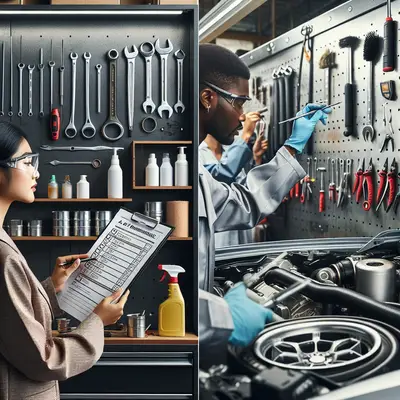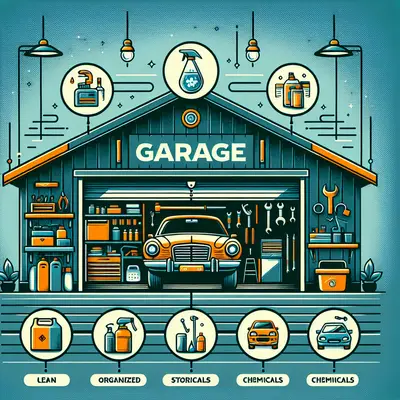
For the discerning homeowner, the garage is not merely a storage annex or a passageway for vehicles. It is a mechanical gateway, a buffer between the exterior world and the calm precision of the home. When it is maintained with intention, the garage becomes silent, reliable infrastructure—never drawing attention, yet quietly elevating daily life. When it is neglected, it does the opposite: noise, misalignment, leaks, and small failures accumulate until they demand urgent, disruptive repair.
This guide explores a more refined approach to garage maintenance—one that privileges foresight over reaction, precision over improvisation, and durability over quick fixes. Within it are five exclusive insights that many homeowners do not receive from standard service visits, yet they profoundly influence how smoothly a garage performs over time.
Why Thoughtful Garage Maintenance Matters More Than Repairs
Repairs are transactional: something breaks, someone fixes it, and life resumes. Maintenance, when executed at a higher standard, is architectural—it shapes how the system will behave for years to come.
A garage door cycles more than almost any other mechanical feature in the home. In many households, it is opened and closed dozens of times per day, often becoming the primary entrance. The opener, springs, tracks, rollers, and seals form a finely balanced system that is constantly under tension and vibration. Small deviations—an unbalanced door, slightly misaligned tracks, a drying weather seal—begin as nearly invisible details and end as costly failures or premature replacements.
Thoughtful maintenance situates the garage within the entire home ecosystem: humidity control, insulation, security, energy efficiency, sound transmission, and long-term structural integrity. It moves beyond "is it working?" to "is it working quietly, safely, and with the least possible strain on every component?" That shift in perspective is where longevity and refinement originate.
Exclusive Insight #1: Treat Door Balance as the System’s “Vital Sign”
Most service calls focus on the visible symptom—noise, jerky motion, or a door that won’t close fully. Yet the true state of the system is often encoded in one subtle metric: door balance.
A properly balanced door, when disconnected from the opener and lifted halfway, will hover in place with minimal force. If it surges upward, slams downward, or cannot hold position, the spring tension is off. This imbalance forces the opener to work as a winch rather than a guide, shortening the motor’s lifespan, stressing gears, and increasing the risk of cable issues or track misalignment.
Refined maintenance puts balance checks at the center of every inspection, not as an afterthought. When springs are precisely calibrated to the actual weight of the door—including glass inserts, insulation, decorative hardware, or after-market reinforcement—the opener glides instead of strains. The result is quieter operation, fewer failures, and a door that continues to feel composed rather than labored.
For safety reasons, adjusting torsion or extension springs is work for trained professionals; however, homeowners can regularly perform the simple balance test and note changes over time. Think of it as checking the pulse of the door—if it changes, the system is telling you something important, long before louder problems appear.
Exclusive Insight #2: Precision Lubrication Is a Quiet Luxury, Not a Messy Necessity
Across many garages, lubrication is approached as a one-step, spray-everything exercise. The outcome is often greasy residue, stained floors, and components that are actually more vulnerable to dust accumulation and premature wear. A more sophisticated method recognizes that not all moving parts want the same treatment—and some should never be lubricated at all.
High-quality, garage-specific silicone or lithium-based lubricants should be applied with care to:
- Hinges at each panel joint (a drop at each pivot, not a coating over the entire hinge)
- Steel rollers with exposed bearings (avoiding plastic wheels)
- Torsion springs (a light, even coating to reduce friction and corrosion)
- Lock mechanism cylinders (with a product appropriate for locks, not general-purpose grease)
Equally important: some components should be kept clean and dry. Tracks should not be greased; they should be free of debris and wiped with a dry or slightly damp cloth. Greasy tracks attract dirt and can cause rollers to slide rather than roll, increasing noise and strain. Photo-eye sensors and weather seals should also be cleaned rather than coated—precision cleaning often solves problems typically blamed on “mechanical failure.”
By moving from indiscriminate spraying to targeted, minimal lubrication, you preserve smooth movement while avoiding the sticky build-up that undermines long-term performance. The result is a door that feels engineered, not merely functional.
Exclusive Insight #3: Temperature, Humidity, and the Hidden Life of Garage Materials
Many garages quietly fail because their environment is treated as incidental. Yet temperature swings, moisture, and air leakage reshape how metal, wood, concrete, and electronics behave across seasons.
In climates with high humidity or significant temperature variation, unconditioned garages invite condensation on metal surfaces—springs, tracks, hardware, and opener components. Over time, this subtle moisture encourages rust, stiffening, and increased friction. Wood framing around the door may swell, shift, and then contract, altering alignment and seal compression in ways that can make a door drag or bind.
Refined maintenance accounts for this by:
- Ensuring the bottom weather seal and side/top seals are intact, flexible, and correctly compressed
- Sealing gaps where wind-driven rain or snow can infiltrate and pool near tracks or hardware
- Considering a moderate level of climate control—such as a well-placed dehumidifier, modest insulation, or controlled ventilation—to stabilize the environment
- Periodically checking metal components for early signs of corrosion and addressing them before they seize or fatigue
For homes with attached garages, this environmental control has secondary benefits: reduced heat loss, more stable adjacent room temperatures, and better performance of any storage systems, appliances, or vehicle charging stations located in the space. You are not merely protecting the door—you are protecting everything that depends on that microclimate.
Exclusive Insight #4: Opener Intelligence Extends Beyond “Smart” Features
Smart garage openers are often sold on the promise of app controls, remote monitoring, and integration with home assistants. While convenient, the more meaningful sophistication lies in how the opener is configured to protect the door and itself.
An opener that is properly tuned will:
- Use just enough force to move the door smoothly, without aggressive starts or hard stops
- Detect obstructions sensitively, reversing promptly to prevent damage or injury
- Operate within speed settings that respect the door’s weight, age, and hardware condition
Many openers are installed and left at factory settings, which are intentionally conservative but rarely optimized. Over time, as the door’s weight subtly changes (due to moisture content, reinforcement, or minor hardware adjustments), the force and limit settings may drift from ideal. The result is extra stress, louder operation, or incomplete closure that homeowners may misinterpret as a failing motor.
High-quality maintenance includes a deliberate recalibration of opener settings after mechanical adjustments. When the opener and door are tuned as a single system, the perceived effort disappears: the door opens in a fluid, measured motion, and the motor sound becomes a background hum rather than a focal point. The “smart” part of the system isn’t only the Wi-Fi connectivity—it is the harmony between mechanics and control.
Exclusive Insight #5: Proactive Hardware Upgrades Are Often More Elegant Than Repairs
Most garages wait for something to fail before components are replaced. From a refined maintenance perspective, that is the least elegant moment to introduce new hardware: urgency limits choice, and the goal becomes speed of restoration rather than quality of improvement.
There is a quieter, more strategic approach: replacing minor hardware before it becomes problematic, choosing materials and designs that elevate both aesthetics and durability. Examples include:
- Upgrading to sealed-bearing nylon rollers that glide more quietly and resist wear better than basic steel rollers
- Specifying heavy-duty hinges and brackets on frequently cycled doors, particularly in households where the garage is the main entry route
- Choosing corrosion-resistant fasteners and hardware in coastal or high-humidity environments to prevent binding and premature fatigue
- Replacing aging, flattened weather seals with high-quality, UV-resistant profiles that improve insulation, sound control, and water management
These are small interventions, typically scheduled during routine maintenance visits rather than emergency appointments. Yet they shift the character of the garage: the door feels more composed, drafts diminish, road noise softens, and the visible details align with the standard of the rest of the home.
By viewing the garage as worthy of proactive curation, not just rescue, homeowners move beyond merely “functional” and into a category of performance that feels quietly luxurious.
Conclusion
A garage that works is ordinary; a garage that works effortlessly, quietly, and predictably is something else entirely. The difference rarely comes from a single dramatic upgrade. It emerges instead from a series of precise, informed decisions: maintaining balance as a priority, lubricating with restraint and intention, managing the environment, tuning opener intelligence, and upgrading hardware before it pleads for attention.
For homeowners who expect more from every corner of their property, the garage deserves to be treated not as a utilitarian afterthought, but as a finely calibrated mechanism. When maintenance is elevated to that level, the garage stops demanding notice—and in its composure, it quietly defines the standard for the rest of the home.
Sources
- U.S. Consumer Product Safety Commission – Garage Door Safety – Official guidance on safe operation, balance, and automatic reversal systems
- International Association of Certified Home Inspectors – Garage Door Safety Checklist – Detailed breakdown of components, common failure points, and inspection best practices
- Cornell University – Corrosion of Metals – Technical discussion of how humidity and environmental conditions affect metal components over time
- U.S. Department of Energy – Attached Garages and Indoor Air Quality – Explores how garage sealing and environmental control influence the broader home
- LiftMaster – Garage Door Opener Owner’s Manual Library – Manufacturer documentation on force settings, safety sensors, and proper opener adjustment
Key Takeaway
The most important thing to remember from this article is that this information can change how you think about Maintenance.