A well‑kept garage is rarely an accident. It is the result of quiet, deliberate choices that prevent minor flaws from becoming disruptive failures. For homeowners who expect their spaces to function with the same refinement as the rest of the residence, maintenance is less about quick fixes and more about a disciplined ritual. The difference shows in how the door moves, how the space sounds, and how reliably it responds when the rest of the house is still.
Below are five exclusive, often overlooked insights that elevate garage care from routine upkeep to a higher standard of performance and longevity.
1. Treat the Garage Door as a Moving Façade, Not Just a Mechanism
Most homeowners think of the garage door as hardware; discerning owners recognize it as a moving part of the home’s architectural envelope. That mindset shift changes how you maintain it.
Begin with the panel surfaces. For steel doors, a gentle, pH‑neutral wash followed by a high‑quality automotive wax twice a year helps repel moisture, road salt, and airborne pollutants that quietly accelerate corrosion. For wood, a scheduled inspection of the finish—checking for micro‑cracking, UV fading, and hairline separations at joints—allows you to re‑seal or re‑stain before water intrudes and swells the grain.
Pay attention to alignment as you would to a front door or window. Subtle racking—where the door appears a few millimeters off at one corner—may signal track distortion or fasteners loosening in the framing. Left unaddressed, this accelerates wear on rollers, strains the opener, and invites drafts and pests. Periodically standing outside at dusk and slowly operating the door while watching the reveal (the gap between the door and jamb) can reveal imbalances that are easy to adjust when caught early.
2. Calibrate Balance Before You Chase Noise or Power Issues
When a door begins to sound strained or the opener feels underpowered, many homeowners immediately consider a stronger motor or new hardware. Often, the core issue is simpler and more elegant: the door is out of balance.
A properly balanced door, with the opener disconnected, should be liftable by hand with moderate effort and should rest mid‑travel without crashing down or shooting upwards. If it slams shut or rises on its own, the torsion or extension springs are no longer correctly counterbalancing the door’s weight.
This matters for two reasons. First, an imbalanced door is inherently unsafe; it can fall with surprising force. Second, it causes the opener to work far harder than intended, shortens the lifespan of gears and logic boards, and can create the grinding or straining sounds many interpret as motor trouble.
Refined maintenance, therefore, begins with balance. Spring adjustments are not a DIY project—they are under high tension and can be dangerous without proper tools and training. But what you can do is perform quarterly balance checks, observe any drift from neutral, and treat that as a trigger for a professional tune‑up. This proactive approach often prevents both mid‑winter failures and unnecessary equipment replacements.
3. Upgrade the “Small” Components That Dictate Daily Elegance
In many garages, the most disruptive issues originate not from the door or opener, but from minor components that quietly degrade: rollers, hinges, seals, and fasteners. Homeowners who value a premium experience treat these parts as carefully chosen elements, not generic consumables.
Rollers are an excellent example. Basic plastic wheels with worn bearings generate noise, vibration, and friction. High‑quality, sealed‑bearing nylon rollers glide more smoothly, reduce stress on the opener, and create a soft, composed motion you can feel and hear. They are a modest upgrade with outsized daily impact.
Similarly, weather seals and bottom astragals (the rubber or vinyl strip at the bottom of the door) deserve more attention than they usually receive. When they harden, crack, or deform, you invite water intrusion, pests, dust, and unnecessary heat loss. Selecting a high‑grade, UV‑resistant seal tailored to your climate and replacing it before visible failure preserves both comfort and the condition of anything stored in the garage.
Even fasteners matter. Periodic re‑tightening with the correct driver—not over‑torquing—prevents track misalignment, vibration, and the creaks that telegraph neglect. Choosing corrosion‑resistant hardware for coastal or high‑humidity environments ensures that the door’s movement remains crisp and predictable instead of gradually binding against rusted components.
4. Manage Climate and Air Quality Like a Secondary Living Space
For many homes, the garage is the liminal space between street and interior—a buffer that stores vehicles, tools, seasonal items, and in some cases, high‑value equipment. Treating it as merely “unfinished” underserves its role and accelerates wear on everything inside it.
Thoughtful maintenance begins with air sealing and insulation. Inspect the perimeter weatherstripping, side and top seals, and the interface between the garage and the home’s conditioned areas. Gaps not only leak energy; they allow exhaust fumes and volatile organic compounds (VOCs) from stored paints, solvents, and fuels to migrate indoors. Ensuring a tight envelope, coupled with adequate ventilation, protects both your vehicles and your indoor air quality.
Climate management also extends to humidity and temperature control. In regions with extreme seasonal swings, uninsulated or poorly sealed garages foster condensation on metal door components, tracks, and tools. Over time, this promotes rust, warps wood, and can even affect the electronic reliability of openers and smart controllers. A modest investment in insulation appropriate to your climate, combined with a humidity‑aware ventilation strategy or dehumidifier where appropriate, helps preserve both the structure and contents.
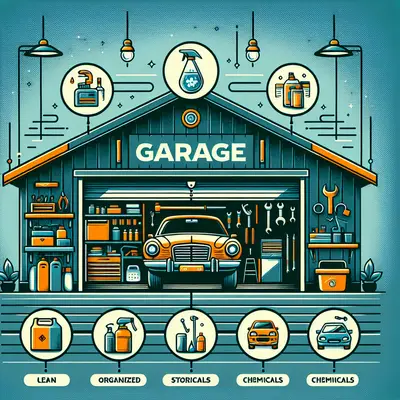
Finally, consider storage practices part of maintenance. Elevating sensitive items off the floor, using closed cabinets for chemicals, and organizing power tools and chargers away from sources of moisture or direct sunlight reduces accidental damage. A well‑ordered garage is not simply aesthetic—it simplifies inspections, reveals leaks or cracks quickly, and prevents long‑term issues from staying hidden behind clutter.
5. Align Modern Technology with a Thoughtful Inspection Routine
Smart openers, battery backups, and app‑based control systems can dramatically enhance convenience, but they work best when anchored to an intentional inspection calendar. The most refined garages blend technology with disciplined, low‑tech observation.
At least twice a year, perform what is effectively a “garage audit.” This includes:
- Visually inspecting cables for fraying, kinks, or flattened segments.
- Examining hinges and brackets for hairline cracks, elongation of screw holes, or signs of metal fatigue.
- Running the opener through a full cycle and listening critically for changes in pitch or rhythm.
- Testing safety features: photo‑eye sensors, auto‑reverse on contact, manual release function, and battery backup where installed.
Use your smart system’s usage logs and alerts as supporting data, not substitutes for this hands‑on review. A change in operating time, an increase in force needed to close, or intermittent connectivity issues may point to mechanical resistance, sensor misalignment, or even electrical problems in the circuit rather than “just” a Wi‑Fi glitch.
Maintaining firmware updates and replacing opener backup batteries on a fixed schedule rather than waiting for failure preserves the sense of quiet reliability that defines a premium home. When the power flickers, the garage should remain composed—opening and closing smoothly, sensors correctly aligned, lighting functioning, and manual releases unobstructed.
By pairing smart tools with a structured inspection ritual, you ensure that technology enhances, rather than distracts from, the core objective: a garage that works flawlessly, every time.
Conclusion
Exceptional garage maintenance is less about dramatic overhauls and more about subtle, consistent care: viewing the door as part of the home’s façade, confirming balance before adding power, elevating small components, controlling climate with intention, and aligning technology with a disciplined inspection routine. These five habits offer a quiet but measurable return—fewer surprises, longer equipment life, and a space that performs to the same standard as the rest of a well‑considered home.
For homeowners who value refinement, the garage is not a forgotten utility zone; it is a working extension of the residence. When maintained with this perspective, it becomes an asset that functions gracefully in the background, day after day.
Sources
- U.S. Consumer Product Safety Commission – Garage Door Safety - Covers essential safety considerations for garage door operation and maintenance
- International Association of Certified Home Inspectors – Garage Inspection Guidelines - Provides professional insight into common garage door and opener defects and proper inspection practices
- Clopay Garage Doors – Care and Maintenance Recommendations - Official manufacturer guidance on cleaning, finishing, and maintaining various garage door materials
- U.S. Department of Energy – Attached Garages and Indoor Air Quality - Explains the relationship between garages, air sealing, and protecting indoor air quality
- Cornell Cooperative Extension – Controlling Home Humidity - Discusses strategies for managing humidity in residential spaces, relevant to preserving garage structures and contents
Key Takeaway
The most important thing to remember from this article is that this information can change how you think about Maintenance.