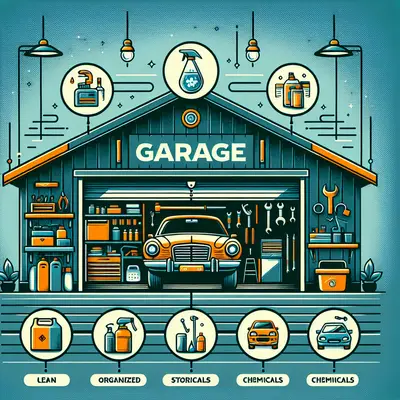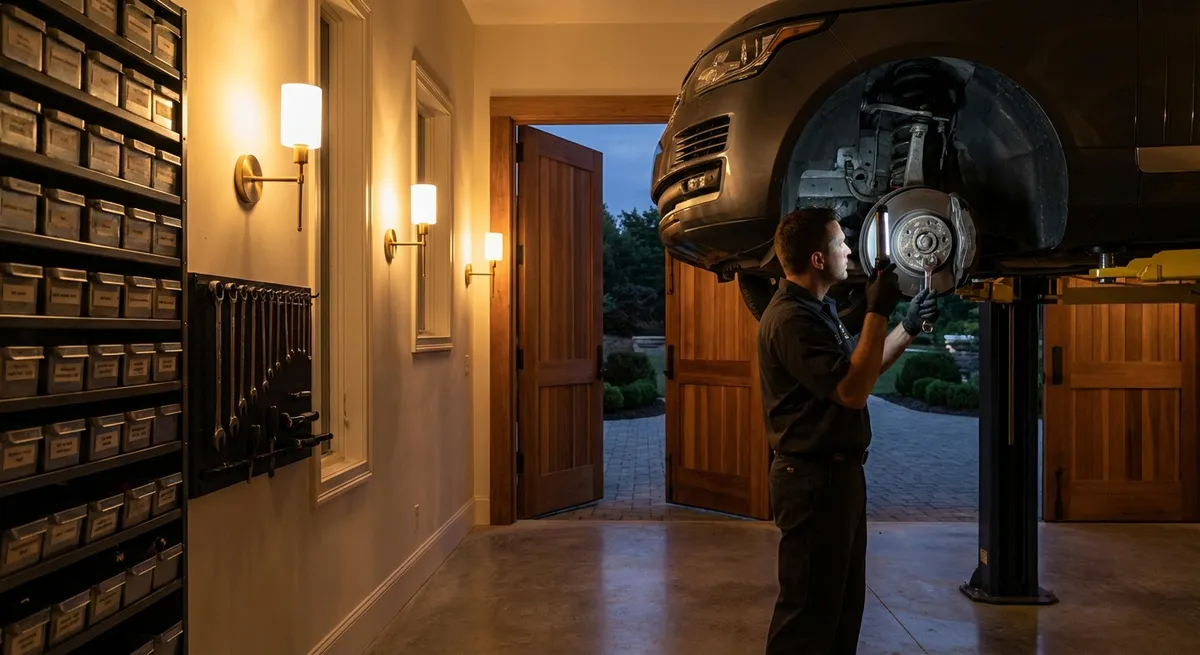
A well‑kept garage is not merely a storage zone or a threshold for your car—it is a calibrated interface between the exterior world and the privacy of your home. When maintained with intention, it becomes silent security, effortless access, and refined order all at once. When neglected, it turns into drafts, noise, leaks, and unwanted repair bills. This is the difference between a garage that merely functions and one that upholds the standard of the rest of your home.
Below are five exclusive, often-overlooked insights that elevate garage maintenance from reactive fixes to a quiet, ongoing standard of integrity.
1. Treat the Garage as a Micro-Climate, Not Just a Room
Most homeowners treat the garage like a hallway: a pass‑through space unworthy of the same care as the interior. In reality, it is a micro‑climate—colder, hotter, and more humid than the rest of your home—and that environment directly affects everything from door hardware to stored belongings.
By viewing your garage as a controlled envelope, you start asking the right questions: Is the slab wicking moisture? Are temperature swings stressing torsion springs? Is condensation creating the perfect setting for rust, mold, or warping? Strategic sealing of the slab-to-wall joint, adding a modest but continuous air barrier at shared walls, and installing properly sized weatherstripping at the door perimeter can dramatically reduce moisture ingress and thermal extremes.
This is not about turning the garage into a fully conditioned space; it’s about tempering extremes so components last longer and mechanisms operate with consistency. That single mental shift—from “room” to “micro‑climate”—often prevents the subtle deterioration that leads to sudden failures.
2. Calibrate, Don’t Just Lubricate, Moving Components
Most garage maintenance advice stops at “lubricate hinges and rollers once or twice a year.” That is necessary, but insufficient for a garage that is expected to work flawlessly for years.
Calibration is the refined layer above lubrication. It includes verifying spring balance so the door can be manually lifted with minimal effort, confirming that the opener does not strain at any point in the travel, and ensuring the door tracks are not just “straight” but also plumb and parallel under load. A door that is even slightly out of balance can shorten opener life, increase noise, and fatigue hardware long before its time.
A homeowner with a premium mindset will schedule a periodic professional balance check, much like a wheel alignment on an automobile. In between those visits, simple homeowner checks—such as disconnecting the opener and verifying manual lift effort, or listening for subtle changes in sound during operation—can catch imbalances early. The standard is not “the door still opens,” but “the door operates without strain.”
3. Manage Sound as a Performance Metric, Not a Side Effect
Noise in the garage is often dismissed as an annoyance. For a demanding home, it is a performance metric. Sound reveals misalignment, insufficient damping, or poor material pairing long before visible damage appears.
A garage door that once glided but now rattles or clanks is giving you data: metal-on-metal contact where there should be nylon isolation, a track that’s slightly skewed, a bracket that’s begun to loosen, or a roller whose bearing is starting to seize. Similarly, an opener that develops a new hum, whine, or vibration is announcing emerging wear in the drivetrain, mounting hardware, or motor.
Using sound as a diagnostic tool means periodically operating the door with intention: lights off, distractions minimized, and your attention on where vibration originates—header, track, motor, or panels. Homeowners who take noise seriously often intervene earlier, with simple remedies like tightening track bolts to manufacturer torque recommendations, adding rubber isolation pads between opener mounts and structure, or upgrading steel rollers to quiet, sealed-bearing nylon rollers. The result is not just a quieter garage—it is one that ages gracefully.
4. Protect the Perimeter: Weather, Pests, and Fine Dust
The perimeter of the garage—thresholds, side seals, and wall junctions—is where refined homes separate themselves from merely functional ones. Small gaps that admit water also admit insects, rodents, road salt, and fine dust that accelerates corrosion and contaminates stored items.
The door bottom seal, often ignored until it visibly tears, is in fact a critical barrier. High-quality, UV-resistant rubber or vinyl with a proper double-fin or bulb profile can dramatically reduce ingress of water and debris. Likewise, side and top weatherstripping should be evaluated not just for presence but for elasticity, uniform contact with the door, and resistance to warping.
For homes in areas with blowing dust, wind‑driven rain, or high pest pressure, an integrated strategy may include a threshold seal adhered to the concrete, fine-mesh screens over weep holes and wall penetrations, and carefully sealed cable and conduit entries. When executed well, the garage remains crisp, clean, and dry with minimal ongoing effort, reinforcing the sense that the home’s envelope is continuous and uncompromised.
5. Consider Storage, Loads, and Structure as One System
Garage maintenance is not limited to doors and openers; it extends to how loads are applied to the walls and ceiling. Overloaded shelves, improperly anchored ceiling storage, and ad‑hoc racking systems can silently stress framing and fasteners, setting the stage for future failures that feel “sudden” but have been years in the making.
The discerning homeowner treats storage decisions as structural decisions. Overhead racks are anchored into framing members, not drywall; heavy items are kept low and close to load‑bearing walls; and wall‑mounted systems are installed with appropriate hardware for the substrate—masonry anchors in concrete, lag screws into studs, and never generic plastic plugs where real shear forces exist.
Periodic inspections should focus on more than dust: look for hairline cracks radiating from anchors, deflection in shelves, slight sag in overhead racks, or fasteners that have begun to pull away. By aligning storage with structure, you not only protect the building but also preserve clear, safe paths for vehicles and people—a hallmark of a garage that is both elegant and dependable.
Conclusion
A premium garage is not defined by the brand of opener or the finish on the floor; it is defined by the standard to which it is maintained. When you treat the garage as a micro‑climate, calibrate moving components, manage sound as a diagnostic tool, protect the perimeter with intention, and align storage with structural realities, you are no longer “fixing” a garage—you are curating one.
The reward is quiet reliability: a door that moves with composure, hardware that ages slowly, and a space that feels as considered as the rest of your home. In that kind of garage, maintenance is not an emergency response; it is an ongoing expression of how you expect your home to behave.
Sources
- U.S. Department of Energy – Air Sealing Your Home – Guidance on sealing gaps and managing air movement between garage and living spaces
- International Association of Certified Home Inspectors – Garage Inspections – Best practices and safety considerations for attached garages
- Home Innovation Research Labs – Moisture Management in Basements and Slabs – Background on slab moisture behavior and its impact on adjacent spaces like garages
- Occupational Safety and Health Administration (OSHA) – Materials Handling and Storage – Principles for safe storage loads and anchoring that translate well to garage shelving and overhead racks
- Clopay Garage Doors – Garage Door Maintenance Guide – Manufacturer-specific recommendations for inspecting and maintaining garage door components
Key Takeaway
The most important thing to remember from this article is that this information can change how you think about Maintenance.