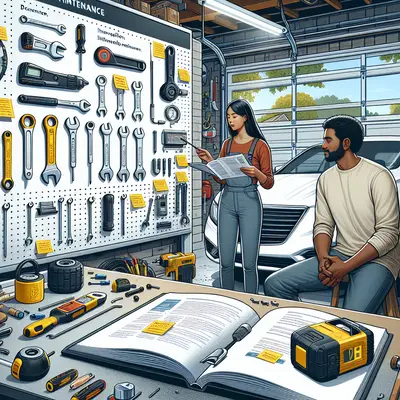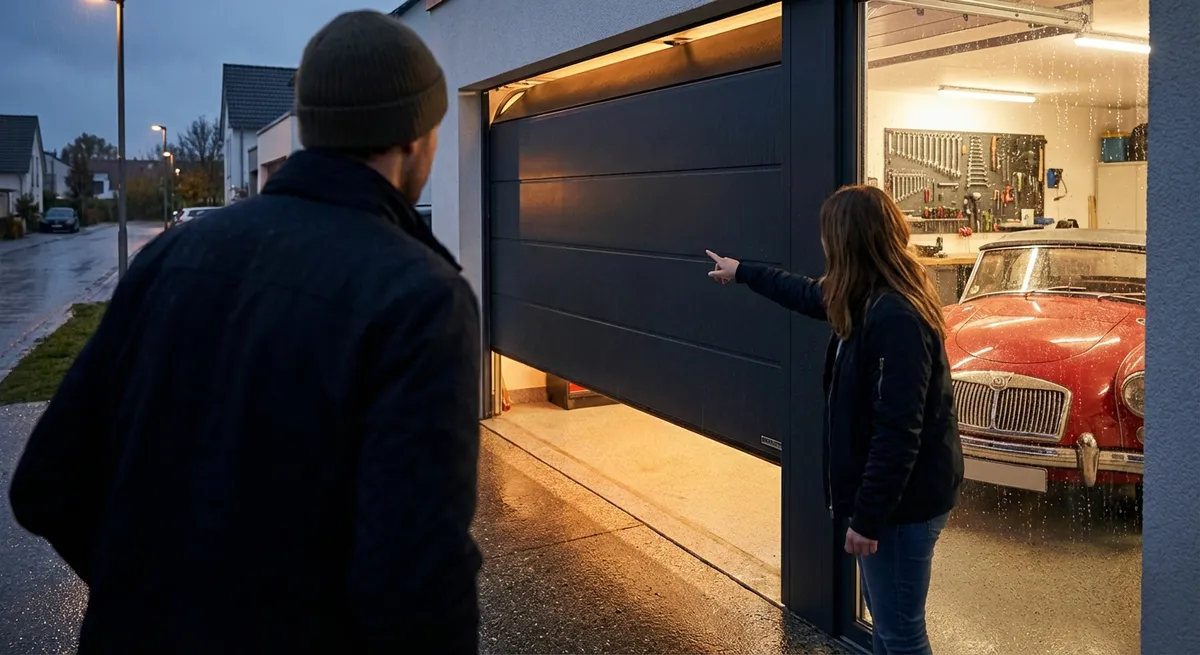
Most homeowners only think about their garage door when it malfunctions—when it shudders, hesitates, or refuses to close on a rainy night. Yet the modern garage door is a primary façade, a daily-used mechanism, and a quiet guardian of security. Treating it as an afterthought is an expensive habit. When approached with care, your garage door can shift from a functional backdrop to a finely tuned system that performs with elegance, safety, and longevity.
This guide focuses on refined, high‑value decisions—subtle but meaningful upgrades and maintenance strategies that sophisticated homeowners appreciate. Within it are five exclusive insights that move beyond basic “lubricate the tracks” advice, and into the realm of performance, acoustics, resilience, and design integrity.
Understanding the System, Not Just the Door
A garage door is not a single object; it is a system of interdependent components—door sections, torsion springs, cables, rollers, tracks, opener, sensors, and control electronics. When any piece is mis‑matched or neglected, the entire system underperforms.
Many repair visits focus narrowly on the symptom (a broken spring, a loud chain, a door off‑balance) instead of the underlying system behavior. A premium approach starts with a whole‑system assessment:
- Balance and weight distribution: A well‑balanced door can be lifted by hand with minimal effort and should stay in place when partially raised. If not, the springs are incorrectly tensioned or improperly sized.
- Track geometry: Slight misalignments create drag, vibration, and early wear on rollers and opener components.
- Opener calibration: Force, travel limits, and soft-start/soft-stop features must be tuned to that specific door, not left at factory defaults.
- Safety redundancy: Photoelectric sensors, mechanical reversal, and manual release need to be tested regularly, not assumed to be working.
Seeing your garage door as a coordinated system allows you to make smarter repair and upgrade decisions that extend life, improve daily experience, and reduce surprises.
Insight 1: Spring Selection as a Strategic Investment
Springs are the unglamorous heart of your garage door. They carry the door’s weight, govern its movement, and quietly determine how often you will be calling for repairs. Most standard installations use springs rated for about 10,000 cycles—roughly 7–10 years for many households, less for high‑use homes.
A more refined approach is to treat spring selection as a strategic investment, not a commodity choice:
- Higher‑cycle springs (20,000–30,000 cycles) dramatically reduce failure frequency for multi‑vehicle or high‑traffic homes.
- Correct spring sizing is essential. An undersized or oversized spring strains the opener, causes jerky motion, and accelerates wear on cables and bearings.
- Paired or multi‑spring systems distribute load more evenly, offering smoother motion and a more controlled failure mode should one spring break.
- Precision winding and documentation (recording wire size, length, and inside diameter) ensure future replacements are exact, not approximate.
Homeowners who opt for premium springs often find that the system becomes quieter, the opener works less aggressively, and emergency breakdowns at inconvenient times become rare. The upfront cost difference is modest compared with the long‑term savings and consistency of performance.
Insight 2: Upgrading the “Invisible” Hardware for Visible Results
The most transformative garage door upgrades are often unseen: hardware refinements that dramatically improve feel, sound, and durability without changing the door’s outward appearance. Discerning homeowners increasingly prioritize these “invisible” enhancements:
- Nylon or precision ball‑bearing rollers: Swapping basic steel rollers for high‑quality nylon or sealed bearing rollers lowers friction and noise. The door glides rather than clatters, and the opener no longer strains against resistance.
- Heavy‑duty hinges and brackets: Thicker‑gauge hardware maintains panel alignment under stress, reducing flexing and preventing the subtle warping that leads to air leaks, noise, and binding.
- Reinforced struts on wide doors: Long, double‑car doors benefit from horizontal reinforcement that limits sag and keeps the door’s shape true over years of operation and seasonal temperature swings.
- Upgraded bearings and end plates: Smoother rotation of the torsion shaft reduces the subtle vibration that gradually loosens fasteners and fatigues metal components.
These hardware decisions are often missed in quick, budget‑driven repairs. Yet for homeowners who value a precise, controlled, and enduring motion, they are exactly where attention should be focused.
Insight 3: Intelligent Opener Pairing and Acoustic Tuning
Most homeowners choose an opener based on horsepower and price. A more thoughtful approach considers how the opener, the door’s weight, and the home’s architecture interact—especially in homes with bedrooms above or adjacent to the garage.
A refined installation will address:
- Drive type and environment
- Belt drives offer smoother, quieter motion ideal for attached garages.
- Direct‑drive or wall‑mounted (jackshaft) units isolate vibration from the ceiling structure, reducing noise in living spaces.
- Matched power, not excess power
- Vibration isolation
- Smart controls and soft‑start/stop
Many openers are over‑sized, compensating for poorly balanced doors. A properly balanced door needs modest motor power; calibrating the system prevents the door from slamming or over‑accelerating.
Rubber isolation mounts, strategically placed fasteners, and attention to mounting points on joists instead of unsupported drywall can meaningfully reduce structure‑borne sound.
Advanced openers modulate speed at the beginning and end of travel, which reduces mechanical shock, extends component life, and conveys a sense of deliberate, controlled motion.
The result is not only a quieter garage but a system that feels more like a precision appliance than a crude mechanism—one that integrates seamlessly into an upscale home.
Insight 4: Weather, Air, and Light Control as Performance Criteria
For many households, the garage is the largest unconditioned buffer space between the exterior and the living area. Treating it as such pays dividends in comfort, energy efficiency, and even the longevity of stored items and vehicles.
Subtle but high‑impact refinements include:
- Premium perimeter seals and thresholds: Properly chosen and installed bottom seals, side weatherstripping, and threshold strips dramatically reduce drafts, pests, and wind‑blown moisture. Thicker, higher‑quality materials maintain their shape and elasticity far longer than basic vinyl.
- Thermally efficient door construction: Insulated steel or composite doors with polyurethane cores provide better R‑values and greater structural rigidity than thin, non‑insulated doors. The door becomes a more stable barrier, with resistance to dents and warping.
- Glazing with purpose: Windows, when specified thoughtfully (laminated glass, double‑pane, or frosted for privacy), bring natural light without compromising security or thermal performance.
- Attention to air pathways: A tight garage door reduces uncontrolled air movement, making any adjacent conditioned spaces more stable in temperature and comfort.
These adjustments are not cosmetic. Over time, they influence heating and cooling loads, moisture levels, and even the lifespan of tools, paints, and other sensitive items commonly stored in the garage.
Insight 5: Proactive Diagnostics and Data‑Informed Maintenance
Rather than waiting for visible failure—a snapped spring, a cable off the drum, a non‑responsive opener—sophisticated homeowners adopt an inspection routine that mirrors how one might treat a fine automobile.
A disciplined, data‑informed approach can include:
- Scheduled visual checks every few months for frayed cables, cracked hinges, rust on springs, and loose fasteners.
- Cycle‑based maintenance: Keeping a simple log of opener cycles (many smart openers track usage) and servicing the door proactively at defined cycle counts instead of arbitrary time intervals.
- Performance signatures: Noting changes in sound, speed, or smoothness as early indicators; a new rattle or hesitation usually precedes a failure by weeks or months.
- Professional load and balance tests: Periodic assessments by a qualified technician to verify that the door remains properly counterbalanced and that spring tension and opener force are still within safe specifications.
- Firmware and security updates for smart openers, ensuring rolling codes, app access, and cloud connectivity remain secure and reliable.
This mindset shifts garage door care from reactive to preventive, reducing emergency service calls and ensuring that when you need the door most—during a storm, a late‑night arrival, or a power outage—it behaves predictably.
Conclusion
A garage door that simply “goes up and down” is a low bar. For homes that value performance, discretion, and longevity, the garage door deserves the same strategic attention given to architectural lighting, climate control, or security systems. By investing in correctly specified springs, invisible hardware upgrades, thoughtfully matched openers, refined environmental control, and proactive diagnostics, you transform a humble mechanism into a quietly capable system that serves the home with consistency and grace.
In doing so, you not only minimize disruption and long‑term costs; you enhance the daily experience of arriving home—turning a routine gesture, the opening of the garage door, into an effortless, finely tuned moment that aligns with the rest of your home’s standards.
Sources
- U.S. Consumer Product Safety Commission – Garage Door Safety Guidelines - Authoritative guidance on garage door opener safety features, sensors, and testing practices
- International Association of Certified Home Inspectors (InterNACHI) – Garage Door Inspection - Detailed technical overview of garage door components, common defects, and inspection protocols
- U.S. Department of Energy – Insulated Garage Doors and Energy Efficiency - Explains how door construction and insulation influence energy performance and comfort
- Cornell University – Occupational Safety: Overhead and Garage Doors - Covers mechanical risks, safe operation, and maintenance considerations for overhead doors
- LiftMaster (Chamberlain Group) – Smart Garage Door Openers - Manufacturer information on opener types, smart features, and noise-reduction technologies
Key Takeaway
The most important thing to remember from this article is that this information can change how you think about Garage Doors.