The garage door is often the largest moving element of a home’s exterior—yet it’s frequently treated as an afterthought. For discerning homeowners, a malfunctioning, noisy, or visually tired garage door is more than an inconvenience; it’s a disruption to the quiet choreography of daily life. This guide approaches garage door repair and refinement as a design-driven, performance-focused discipline, revealing how thoughtful interventions can restore both function and elegance.
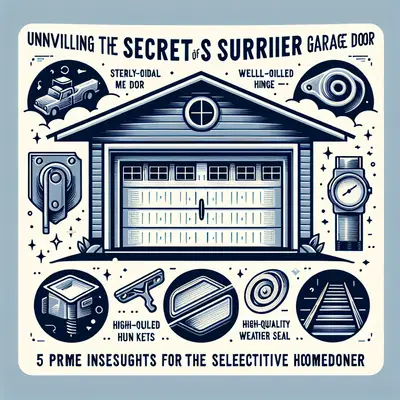
Below are five exclusive, often-overlooked insights that elevate garage door repair from “fixing a problem” to “finely tuning a system” worthy of an exceptional home.
1. The Hidden Geometry of a Perfectly Balanced Door
A well-balanced garage door does not simply “go up and down”—it moves with controlled neutrality. When properly calibrated, a door should be light enough to lift by hand with minimal effort and should stay in place when stopped halfway.
Imbalance is subtle at first: the opener sounds strained, the door hesitates or slams slightly on closing, or one side appears to travel faster than the other. Many homeowners assume the opener is failing when, in fact, the spring system is no longer correctly counterbalancing the door’s weight.
Professional technicians use door weight data, spring charts, and tensioning protocols to match springs precisely to the door’s actual mass and hardware configuration. On premium homes, this may involve re-specifying torsion springs to account for upgraded insulated or full-view doors, not just replacing “like for like.” Once balance is restored, auxiliary components—cables, drums, and bearings—operate under significantly less stress, extending lifespan and reducing the risk of sudden failure. The result is a door that moves with quiet composure, rather than brute force.
2. Acoustic Refinement: Turning Harsh Clatter into Controlled Quiet
For a refined residence, sound is as important as sight. A screeching or rattling garage door can undermine even the most thoughtfully designed entry sequence. Acoustic refinement begins with identifying the true sources of noise: metal-on-metal contact, worn rollers, misaligned tracks, an aging opener, or vibration transferred into the framing.
Upgrading to nylon or precision-bearing rollers, verifying track plumb and alignment, and correctly tensioning the opener’s chain or belt can transform the sonic profile of a door. Vibration isolation—using properly mounted opener brackets, anti-vibration pads, and secure structural attachment—prevents the opener’s motor hum from echoing through the home’s framing.
For high-end garages below or adjacent to living spaces, pairing a well-tuned door with a modern belt-drive or direct-drive opener is especially impactful. When executed correctly, the sound of the door becomes a muted, controlled motion: a discreet indication of activity rather than a disruptive event.
3. The Opener as a Security and Lifestyle System, Not Just a Motor
Many homeowners see the opener purely as the mechanism that lifts the door. In a sophisticated setting, however, it functions as a central node for security, automation, and everyday convenience.
Contemporary openers offer secure, rolling-code technology that resists signal interception, along with smartphone integration that allows you to confirm door status, receive alerts, and operate the door remotely. For homes with frequent service providers or deliveries, temporary digital access can replace physical remotes, reducing the risk of lost or cloned transmitters.
Battery backup is another underappreciated refinement. In neighborhoods prone to grid fluctuations or storms, a battery-backed system quietly preserves access when power fails, maintaining both convenience and safety. When integrating with broader smart home systems, professional configuration is crucial: sensitivity settings, travel limits, and auto-close features must be tuned with both security and occupant safety in mind.
The true luxury lies not merely in connectivity, but in a system that works invisibly and reliably—protecting the home while receding into the background of daily life.
4. Hardware as Jewelry: Subtle Upgrades That Transform the Experience
Beyond the door panel itself, the hardware you rarely notice exerts enormous influence on performance and perceived quality. This includes hinges, brackets, struts, reinforcement plates, and weather seals. On premium properties, these components deserve the same level of scrutiny as visible fixtures.
Reinforcement plates at the opener arm connection point prevent flexing and cracking of the door section—especially on wider or heavier doors. Structural struts along the top or multiple sections maintain the door’s rigidity, reducing flex, vibration, and premature fatigue. High-grade, low-temperature-rated weather seals preserve a tight, consistent perimeter, contributing to both energy performance and a clean visual line.
Even the selection of fasteners matters. Corrosion-resistant hardware, correctly torqued and periodically inspected, provides consistency over time, particularly in coastal or high-humidity regions. Thoughtful hardware specification elevates the door’s entire movement—from the way it starts, pivots, and seals, to the quiet assurance with which it returns to rest.
5. Diagnosing by Symptom: Reading the Door Like a Professional
The most refined repair strategy begins with accurate interpretation of symptoms. Rather than addressing issues piecemeal, homeowners benefit from understanding what specific behaviors frequently signal:
- Door reverses unexpectedly on closing
Often indicates misaligned safety sensors, obstructed tracks, excessive opener force sensitivity, or binding from track misalignment.
- One corner of the door touches the floor before the other
Suggests cable issues, torsion spring imbalance, or uneven track mounting—not merely a “crooked floor.”
- Door feels heavy or won’t stay partially open when operated manually
Typically a spring tension or specification issue, even if the springs appear intact.
- Grinding or scraping at specific points in travel
Points to localized track damage, bent hinges, or rollers binding at a misaligned section.
- Sudden loud “bang” from the garage, with the door now inoperable
Commonly a broken torsion spring—a high-risk repair that should not be attempted by homeowners.
By recognizing these patterns early, you can engage a qualified professional before minor imbalance becomes outright failure. For high-value homes, it is wise to treat the garage door system as you might a vehicle or HVAC system: worthy of periodic, documented inspection rather than only emergency interventions.
Conclusion
A garage door worthy of an elevated home is not simply “working” or “broken.” It is balanced, quiet, secure, and visually integrated—performing its daily routine with the same poise as the rest of the residence. Intelligent repair is less about quick fixes and more about holistic refinement: tuning geometry, acoustics, security, hardware, and diagnostics into a cohesive, long-lived system.
When treated as architectural equipment rather than a utility afterthought, your garage door can move from being the weak link of the façade to a quietly impressive expression of how seriously you take the details that shape everyday living.
Sources
- U.S. Consumer Product Safety Commission – Garage Door Safety - Covers safety standards, common hazards, and key protective devices such as photoelectric sensors
- International Door Association – Homeowner Resources - Provides best practices on maintenance, balance, and working with qualified professionals
- LiftMaster Official Site – Garage Door Opener Features - Details on modern opener technologies, security features, and connectivity options
- Clopay – Garage Door Maintenance Guide - Manufacturer guidance on lubrication, balance checks, and routine care for sectional doors
- U.S. Department of Energy – Insulated Garage Doors - Explains the performance impact of door construction and sealing on comfort and energy efficiency
Key Takeaway
The most important thing to remember from this article is that this information can change how you think about Garage Doors.