A well‑kept garage does more than store vehicles and spillover belongings—it quietly supports your home’s value, daily comfort, and long‑term resilience. When maintenance is deliberate rather than reactive, the garage transforms from a forgotten utility zone into a dependable asset that simply does its job, year after year, without drama. This is where refined attention pays dividends: in temperature that behaves, doors that move without protest, and finishes that age with dignity rather than decay.
Below are five exclusive, often‑overlooked insights that discerning homeowners appreciate when they’re ready to treat the garage as part of the home’s core infrastructure—not an afterthought.
Seeing the Garage Envelope as a System, Not a Box
Most homeowners treat the garage as a sealed box at the edge of the house. In practice, it behaves more like an extension of the building envelope—walls, ceiling, doors, and concrete slab all interacting with exterior climate and interior comfort.
A refined maintenance approach begins with understanding how air, moisture, and temperature move through this space. Cracked weatherstripping at the bottom of the door is not a minor cosmetic issue; it invites wind‑driven rain, pests, and unconditioned air that can undermine the efficiency of adjacent living areas. Gaps around side doors and windows, unsealed penetrations for electrical or plumbing lines, and uninsulated attic hatches turn the garage into a thermal and air‑leak corridor.
Effective maintenance means inspecting the entire perimeter as a unified system at least once a year. That includes the interface between garage and house—shared walls, doors that open into the home, and any ductwork passing through. Small investments in door sweeps, updated weatherstripping, and judicious sealing of penetrations can dramatically stabilize the garage climate. The outcome is subtle but meaningful: a space that feels less harsh in winter, less suffocating in summer, and less prone to the condensation that quietly damages tools, vehicles, and stored belongings.
The Concrete Slab: Protecting the Foundation You Park On
The garage slab is often the most abused surface on the property. It endures vehicle weight, road salt, dripping snow, spilled chemicals, and the grinding action of sand and gravel under tires. Yet its maintenance is typically limited to the occasional sweep. A more elevated standard treats the slab as a structural component worth preserving.
Regularly inspecting the slab for hairline cracks, spalling (surface flaking), or areas that stay damp longer than they should can reveal early signs of moisture intrusion or settlement. Addressing narrow cracks with appropriate concrete repair products prevents water ingress that can widen the damage through freeze–thaw cycles. In colder regions, rinsing away road salt during the winter and early spring is a deceptively powerful habit; chloride exposure is a well‑documented contributor to concrete deterioration and corrosion of any embedded reinforcement.
For homeowners seeking both protection and refinement, a professionally installed high‑quality coating—such as a properly prepared epoxy or polyaspartic system—offers more than aesthetics. It creates a barrier against chemicals, makes cleanup simpler, improves light reflectivity, and allows subtle issues (like new cracks or moisture spots) to be spotted sooner. The key is preparation: surface grinding, moisture testing, and repair of defects before coatings are applied. When maintained with periodic cleaning and prompt attention to chips, the slab becomes a long‑lived, low‑maintenance platform instead of a slowly crumbling afterthought.
Calibrated Motion: Treating the Door and Opener as Precision Equipment
Garage doors and openers are often the largest moving assemblies in a home, yet they tend to be maintained as if they were unremarkable hinges and switches. A refined approach views them as calibrated mechanical systems—part safety device, part daily convenience—and maintains them accordingly.
Balance is the first principle. A properly balanced door will stay in place when lifted halfway by hand (with the opener disconnected). If it drops or surges upward, the torsion or extension springs are no longer correctly calibrated. Continuing to operate an unbalanced door forces the opener to work beyond its intended load, accelerating wear, increasing noise, and, in extreme cases, inviting failure. Spring adjustments are not a DIY exercise; they are performed under high tension and should be handled by trained technicians using appropriate tools and safety practices.
Beyond balance, lubricating the correct components once or twice a year—rollers, hinges, and springs—with a garage‑rated lubricant keeps motion quiet and smooth. Hardware fastening the tracks and hinges to walls and ceiling should be checked and snugged, particularly in garages subject to vibration from heavy vehicles or nearby roadways. Equally important is periodic testing of safety features: photo‑eye sensors, auto‑reverse mechanisms, and emergency releases. When maintained with this level of care, the door’s operation becomes nearly invisible: no jerks, no shrieks, just a quiet, measured motion that reinforces the impression of a well‑run home.
Moisture Management: Safeguarding Air Quality and Stored Belongings
Moisture is the subtle adversary of the garage—rarely dramatic, frequently neglected, and capable of significant long‑term damage. Elevated humidity and recurring dampness can corrode tools, compromise electrical components, foster mold on stored items, and degrade the integrity of drywall and insulation on shared walls.
Thoughtful maintenance starts by tracing moisture to its source. Snow melting off vehicles, condensation on cold concrete, minor seepage at the slab perimeter, and poorly directed downspouts all contribute. Installing a simple containment strategy—floor mats or trays in vehicle parking zones, and thoughtful drainage paths—prevents meltwater from spreading across the slab. Ensuring that gutters and downspouts move water away from the garage foundation reduces hydrostatic pressure and unwanted moisture migration through the slab or walls.
Ventilation is the other half of the equation. Where codes permit, adding a quiet, timer‑controlled or humidity‑sensing exhaust fan can significantly improve air turnover, especially in attached garages. In humid climates, a dedicated dehumidifier set to a modest target relative humidity (often 50–60%) can extend the life of stored items and minimize musty odors. Periodic inspection of the garage–house door weatherstripping and threshold guards against exhaust fumes, moisture, and odors migrating into living areas. The result is not just a drier garage, but a healthier boundary between home and vehicles.
Strategic Organization as Preventive Maintenance
It is easy to dismiss garage organization as purely aesthetic. In practice, order is a maintenance tool. A cluttered floor and overstuffed corners conceal problems; a thoughtfully organized garage reveals them early, when they are still simple and inexpensive to address.
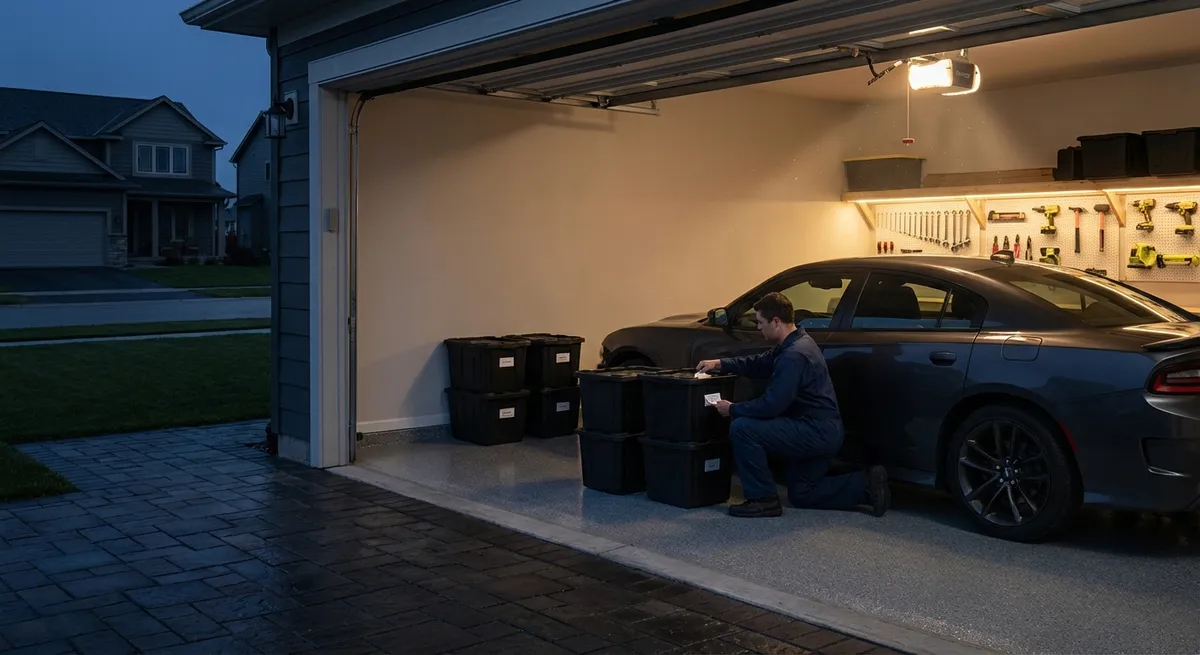
Raising storage off the floor—via wall‑mounted systems, sturdy shelving, and overhead racks designed for the loads they will carry—keeps belongings away from minor water intrusion and allows for full visibility of slab edges and lower wall sections. This makes it much easier to detect the first hint of efflorescence (white mineral deposits), rust stains, or insect activity. Transparent storage containers for seldom‑used items can reveal condensation or pests at a glance.
Grouping items by use—automotive, yard care, seasonal décor, hobby equipment—not only improves daily function but reduces the impulse to stack belongings haphazardly in front of electrical panels, outlets, or access hatches. Keeping critical systems unobstructed is both a safety requirement and a maintenance advantage; access for inspection, repair, or emergency shutoff is never delayed by a maze of boxes. When organization is approached as an extension of the home’s operating standards, the garage becomes easier to clean, easier to inspect, and far less likely to surprise you with hidden issues.
Conclusion
The most satisfying garages rarely call attention to themselves. They open and close without complaint, protect what they store, and quietly support the home’s comfort and value. Achieving that level of unobtrusive reliability is not a matter of expensive overhauls, but of considered maintenance: treating the garage envelope as a system, respecting the slab as structural, maintaining the door and opener as precision equipment, managing moisture intentionally, and using organization as a practical diagnostic tool.
For homeowners willing to apply the same standards to the garage that they do to kitchens, baths, and living spaces, the reward is subtle but unmistakable: a space that feels composed, resilient, and ready—whether it’s sheltering a daily‑driver, housing a project car, or simply standing guard as the home’s quiet asset.
Sources
- U.S. Department of Energy – Air Sealing Your Home – Explains how sealing gaps and cracks (including in garages) improves comfort, efficiency, and durability
- Portland Cement Association – Concrete Durability – Covers how moisture, chemicals, and deicing salts affect concrete slabs and best practices for protection
- International Association of Certified Home Inspectors – Garage Inspection – Provides guidance on common garage defects, safety concerns, and maintenance priorities
- U.S. Environmental Protection Agency – Mold and Moisture – Discusses how moisture problems in building spaces like garages can lead to mold and how to prevent it
- Occupational Safety and Health Administration (OSHA) – Garage Door Safety – Outlines safety considerations and proper maintenance practices for overhead doors and related equipment
Key Takeaway
The most important thing to remember from this article is that this information can change how you think about Maintenance.