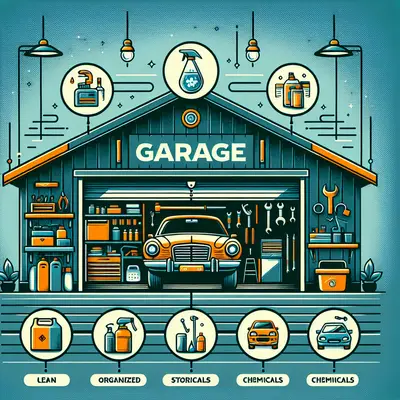
In most homes, the garage is the least glamorous square footage—and often the most valuable. It shelters vehicles that cost more than some living rooms, houses tools and equipment that define a lifestyle, and increasingly serves as an entry foyer, workshop, and storage vault all at once. Treating the garage as a quiet asset rather than a forgotten utility space reframes maintenance from chore to protection strategy. The result is not merely a cleaner garage; it is smoother operation, lower risk, and a standard of reliability that feels decidedly premium every time the door glides open.
This guide explores a more meticulous approach to garage maintenance, with five exclusive insights that go beyond the usual “lubricate the tracks and organize the shelves.” These are details that homeowners who expect longevity, precision, and confidence from their space will appreciate—and that most basic checklists never mention.
Elevating the Seal: Controlling Air, Water, and Dust at the Threshold
The line where driveway meets garage floor is one of the most overlooked—and most consequential—maintenance points in the entire home. That slim strip of rubber or vinyl at the base of your garage door does far more than keep out leaves. When properly selected, fitted, and maintained, it subtly governs temperature stability, moisture intrusion, and even indoor air quality.
A high-quality bottom seal and threshold system can reduce drafts that pull conditioned air from adjoining rooms, protect against wind-driven rain and snow melt, and prevent fine dust and road salt from migrating deeper into the garage. Over time, cheaper seals harden, shrink, and crack, creating uneven contact points that compromise the entire barrier. A more discerning approach includes:
- Selecting a seal material compatible with local climate swings (EPDM rubber, for instance, resists UV and temperature extremes far better than basic vinyl).
- Checking for light infiltration under the door at night—a simple yet precise test of seal integrity.
- Cleaning the seal track regularly so grit does not cut or deform the gasket.
- Considering a raised threshold strip bonded to the concrete for garages prone to windblown rain or minor driveway ponding.
This modest strip of material, calibrated and cared for, is a first defense against corrosion, mold, and premature wear on everything stored within the garage.
The Hidden Geometry of Door Alignment
Most homeowners think of garage doors in terms of power: horsepower of the opener, speed of operation, or lifting strength. In practice, geometry is often more important than muscle. A well-maintained garage door operates in quiet balance—its weight evenly distributed across springs, rollers, and tracks, allowing the opener to act more as a guide than a workhorse.
Subtle misalignments slowly introduce stress into the system. A track that is out of plumb by a few millimeters, a roller that has begun to wobble on its stem, or an improperly tensioned spring can all cause the door to rack slightly as it travels. Over time, this leads to:
- Irregular wear on rollers and hinges
- Strain on the opener’s motor and drive mechanism
- Gaps along the sides or top that undermine security and weather sealing
- Increased noise, which is often the first clue of a deeper mechanical imbalance
An elevated maintenance routine looks for these geometric issues before they become failures. That means visually checking that both tracks are parallel and equally spaced from the door, feeling for “sticky” spots as the door is moved manually, and watching the door’s top edge—does it remain level as it travels, or does one side lead the other? While spring adjustment is best left to a professional due to stored energy and safety concerns, this kind of observation allows you to schedule service before parts are stressed into early replacement.
In a refined garage, the standard is simple: the opener should not be compensating for mechanical misalignment; it should be guiding an already balanced, smoothly traveling door.
Climate as Preservation: Treating the Garage Like a Controlled Environment
A garage rarely receives the climate-control attention afforded to the main living areas—but the items stored within it often deserve precisely that level of care. Temperature and humidity swings accelerate corrosion on tools, introduce condensation on vehicles, warp stored wood, and can even compromise paints, adhesives, and cleaning agents.
Treating the garage as a controlled environment does not necessarily require full HVAC integration. Instead, it calls for intelligent moderation:
- Humidity control: In coastal or humid regions, a quality dehumidifier set to a controlled range (often 45–55% relative humidity) dramatically reduces the risk of rust on tools, fasteners, and machinery.
- Targeted insulation: Insulating the garage door, shared walls, and ceiling beneath living spaces above helps stabilize temperature swings, reducing condensation on cold vehicle surfaces in winter.
- Thoughtful ventilation: A well-positioned exhaust fan or passive vent can prevent trapped fumes from fuel, solvents, or vehicle emissions without compromising security.
- Zoned storage: Placing sensitive items—power tools, finishing supplies, electronics—on interior walls, away from exterior doors and windows, subtly shields them from the most extreme temperature fluctuations.
Over time, this climate-aware approach extends the life of vehicles, tools, and finishes, turning the garage from a harsh transitional zone into a stable, protective envelope.
Precision Storage: Protecting Tools, Tires, and Surfaces from Slow Damage
Disorder in the garage is often treated as an aesthetic problem. In reality, it is a maintenance problem—one that silently depreciates valuable equipment. Tools stacked in cluttered drawers, extension cords crushed beneath boxes, and tires stored in sunlit corners all experience forms of slow, avoidable damage.
A more intentional storage strategy focuses less on visual minimalism and more on mechanical preservation:
- Tools: Foam inlays or custom organizers that keep each tool in a fixed orientation prevent metal-on-metal abrasion and make it immediately obvious when something is missing. A thin layer of corrosion inhibitor on precision tools, paired with enclosed storage, dramatically slows rust.
- Tires: Off-season tires prefer darkness, clean surroundings, and moderate temperatures. Storing them vertically on dedicated racks or horizontally in short stacks with proper support prevents deformation. Tire covers protect from UV exposure, which can prematurely age rubber.
- Power equipment: Mowers, string trimmers, and pressure washers last longer when fuel is stabilized, tanks are stored either nearly full (for short-term storage) or drained per manufacturer guidelines, and cords/hoses are coiled without sharp bends that stress internal conductors or fibers.
- Floor surfaces: Drip trays beneath vehicles and work areas capture oil, brake fluid, and chemicals before they etch into concrete or premium coatings, preserving both function and appearance.
In a garage refined for longevity, every high-value item has a designated position designed around how it ages—not just where it happens to fit.
Safety as a System, Not a Checklist
Most basic garage safety advice focuses on obvious hazards: keeping flammables away from open flames, not overloading outlets, and securing heavy items. A more sophisticated stance treats safety as a system, where small, well-considered interventions work together to prevent the kinds of incidents that truly matter: structural damage, fire, injury, and security breaches.
Consider a more elevated safety framework:
- Door safety sensors validated, not just present: Periodically test auto-reverse and photo-eye sensors with a rigid object and by breaking the beam—not only to comply with modern standards, but to ensure the system reacts quickly and consistently.
- Fire-aware storage: Combustibles (fuels, solvents, finishes) housed in a metal cabinet away from ignition sources, with clear labeling and MSDS sheets accessible, goes well beyond basic “out of reach” storage and aligns more closely with commercial best practices.
- Electrical discipline: Inspecting extension cords for heat under load, replacing aging power strips with surge-protected, properly rated units, and respecting dedicated circuits for heavy-draw equipment collectively reduce the risk of overheating and fire.
- Structural redundancy: Overhead storage systems secured into joists with load calculations in mind—not just “it seems strong enough”—minimize the risk of catastrophic failure. Paired with periodic visual checks for sagging or hardware loosening, this turns ceiling storage from a potential hazard into a confidently robust solution.
- Discreet security enhancements: Reinforced side-door locks, motion-activated lighting, and privacy treatments on garage windows protect not only the contents but the integrity of the home’s perimeter. Many break-ins begin with the garage; small upgrades here can have outsized impact.
In a premium garage environment, safety is not an afterthought. It is an integrated design goal—quiet, unobtrusive, but rigorously maintained.
Conclusion
A truly well-maintained garage does more than open and close on command. It preserves the value of what you store, operates with unforced ease, and remains quietly ready for whatever you ask of it: daily commutes, weekend projects, seasonal storage, or emergency access. By elevating focus from basic checklists to refined details—threshold sealing, alignment geometry, environmental control, preservation-minded storage, and systemic safety—you transform the garage from a tolerated utility into a dependable asset.
The difference is felt not only in fewer breakdowns, but in a quality of daily experience: the confident silence of a balanced door, the absence of condensation and rust, the reassuring orderliness of tools and equipment ready for use. Maintenance, approached with this level of care, becomes less about fixing what’s wrong and more about protecting what matters.
Sources
- U.S. Department of Energy – Garages and Insulation Guidance – Explains how attached garages affect home energy efficiency and comfort, including insulation and air sealing considerations.
- International Association of Certified Home Inspectors (InterNACHI) – Garage Inspection Guidelines – Professional reference on common garage safety, structural, and mechanical issues inspectors look for.
- Consumer Product Safety Commission – Garage Door Safety – Provides safety information on automatic garage doors and the importance of functional sensors and auto-reverse systems.
- National Institute for Occupational Safety and Health (NIOSH) – Preventing Falls, Strains, and Overexertion in Construction – Offers best practices on storage, lifting, and overhead work that translate directly to safe garage storage and installation practices.
- University of Missouri Extension – Home Storage of Hazardous Materials – Covers safe storage of household chemicals and flammables, relevant to organizing and safeguarding materials commonly kept in garages.
Key Takeaway
The most important thing to remember from this article is that this information can change how you think about Maintenance.