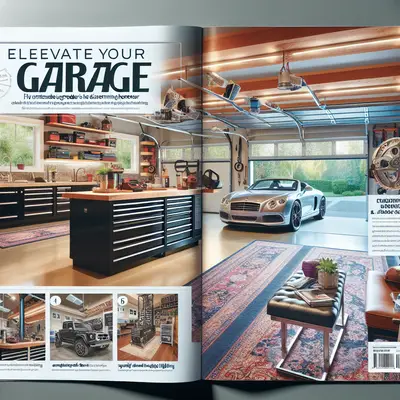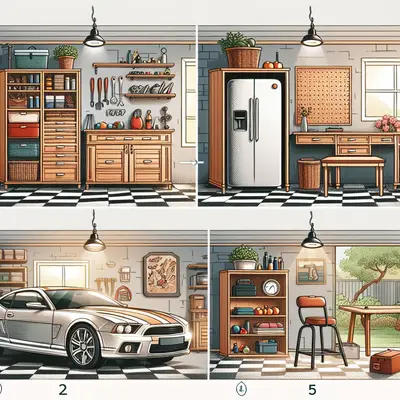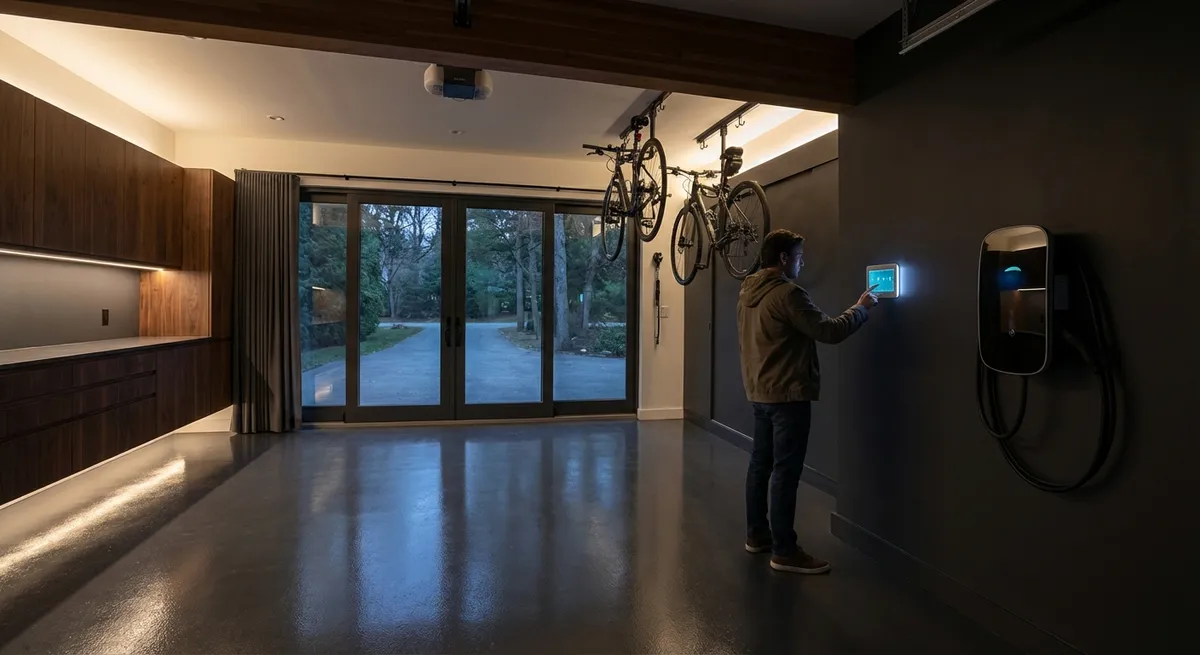
A garage should be more than a concrete afterthought. Executed well, it becomes a controlled environment that protects investments, simplifies daily routines, and quietly supports the entire home. Thoughtful upgrades—not merely cosmetic tweaks—can refine performance, reduce long‑term costs, and turn a problem‑prone garage into one of the most competent spaces on your property.
Below are five exclusive, strategy‑driven insights that move beyond generic advice and speak to homeowners who expect precision, longevity, and understated sophistication from their garage.
1. Design the Garage as a Micro‑Climate, Not Just a Storage Box
Most garage issues—peeling paint, rusted tools, musty odors, unpredictable door performance—can be traced back to one thing: unmanaged micro‑climate. Garages often sit between conditioned and unconditioned spaces, yet are treated as though they live outside. A premium upgrade approach starts by treating the garage as its own controllable environment.
Begin with the envelope. High‑performance weatherstripping along the bottom and vertical door edges limits drafts, dust, and moisture intrusion. Insulated garage doors and properly sealed wall penetrations help stabilize temperature swings that wear out mechanical components and ruin stored goods. If your region experiences high humidity, a dedicated dehumidifier on a smart plug can prevent condensation on metal surfaces, protecting tools, bicycles, and vehicles alike.
Ventilation should be engineered, not improvised. A quiet, wall‑mounted exhaust fan or a balanced supply‑and‑exhaust system can clear fumes and reduce moisture without creating harsh cross‑drafts. Together, these upgrades transform the garage from a damp, inconsistent zone into a controlled micro‑climate that supports everything you keep—and everything you do—inside it.
2. Align Door Performance With Vehicle and Lifestyle, Not Just Aesthetics
Most homeowners select garage doors for looks and basic insulation. A more elevated strategy starts with how you actually use the space and what you park inside it. A large SUV, low‑slung performance car, and an EV with frequent charging all place different demands on clearance, safety sensors, and operating speed.
For taller vehicles, consider a door track conversion to a high‑lift or side‑mounted jackshaft opener. This frees headroom for storage racks or car lifts and reduces the risk of contact with roof‑mounted cargo or open tailgates. For households with children or frequent visitors, upgrading to advanced safety sensors—photo eyes with wider detection zones, obstruction‑sensing motors, and soft‑start/soft‑stop openers—adds a level of refinement to security that feels subtle but meaningful.
Door speed and noise can also be tuned to lifestyle. Belt‑drive openers with DC motors and variable speed control deliver a smooth, nearly silent motion that feels markedly more premium than older chain‑drive units. Integrating smart controls allows precise scheduling and real‑time status checks—critical if your garage door is a primary entry to the home. Instead of treating the door like a passive barrier, these upgrades turn it into a calibrated, responsive interface tuned to your specific vehicles and routines.
3. Curate Lighting in Layers, Not Just Lumens
Traditional advice says “add brighter lights.” A refined approach asks: “What tasks must be performed here, and how should the space feel while doing them?” Lighting in a sophisticated garage is layered, intentional, and visually calm.
Start with high‑CRI (Color Rendering Index) LED fixtures for general ambient light. A CRI of 90+ reveals true color on paint, fluids, and tools—vital when inspecting finishes or diagnosing leaks. Aim for uniform, low‑glare illumination using linear fixtures along the perimeter rather than a single harsh central bulb.
Next, add task lighting where precision matters: above workbenches, along tool storage, and near detailing or charging stations. Under‑cabinet strips, adjustable track heads, or magnetic LED bars on metal shelving provide focused brightness without flooding the entire space. Finally, consider accent lighting: a soft wash over parked vehicles, dimmable sconces near entry doors, or toe‑kick lighting along steps. These touches elevate the atmosphere from utility to thoughtfully composed.
Pairing lighting with occupancy sensors or smart switches completes the upgrade. The result is not just a brighter garage, but one that adapts—subdued when entering from a dark driveway, crisp and clear at the workbench, and efficient when unoccupied.
4. Engineer Storage Around Movement, Not Just Capacity
Overstuffed shelving and wall hooks are common; elegantly engineered storage is rare. The difference lies in designing around how people actually move through the garage—on foot, with strollers, carrying groceries, or maneuvering bikes—rather than simply maximizing cubic footage.
Begin by defining clear “lanes” for movement from driveway to interior door and from vehicle doors to exits. No storage should intrude into these paths. Wall systems should be zoned: frequently used items (shoes, recycling, daily tools) at hand height near entries; seasonal items stored high; heavier gear anchored low and close to structural walls. The goal is to eliminate the small frictions that make garages feel chaotic: blocked car doors, tripping hazards, or awkwardly placed bins.
Ceiling storage should be treated as structural engineering, not decoration. Use properly rated overhead racks anchored into joists, with attention to weight distribution and clearances above vehicles and doors. If you regularly access overhead storage, consider a hoist‑style or motorized lift system that lowers bins or bikes rather than forcing you onto ladders.
When storage is orchestrated around movement, the garage becomes more than “less cluttered.” It feels composed, safe, and predictably easy to use—even when fully loaded.
5. Specify Materials for Garage Realities, Not Interior Habits
Many garages suffer because they’re finished with interior‑grade assumptions: standard drywall, basic trim, and flooring not chosen for hot tires, road salt, or occasional water intrusion. A sophisticated upgrade plan respects the garage’s harsher realities without sacrificing visual refinement.
On walls, moisture‑resistant drywall, fiber‑cement panels, or PVC wall systems stand up better to humidity, errant bumps, and chemical exposure. Painted finishes should be washable, with a slightly higher sheen in high‑contact zones. Where hooks, racks, or cabinets will be mounted, integrated backing boards or continuous plywood behind the surface allow secure fastening without a maze of visible anchors.
Underfoot, a premium approach goes beyond simple epoxy kits. Look for professionally installed, industrial‑grade coatings or modular tiles designed specifically for vehicle loads, chemical resistance, and thermal cycling. Slightly textured surfaces improve traction without becoming difficult to clean. Thoughtful floor design also anticipates water: a subtle slope toward the door or a drain, paired with coatings that resist road salt, oil, and de‑icing chemicals.
Finally, hardware and fasteners matter. Corrosion‑resistant screws and hinges, sealed baseboards, and properly flashed thresholds may never be noticed by guests—but they dramatically extend the life of every other upgrade. In a well‑designed garage, durability and elegance are not opposites; they’re the same specification, executed correctly.
Conclusion
An elevated garage is not defined by glossy finishes or gimmicks. It is defined by quiet competence: a micro‑climate that safeguards your investments, a door tailored to your vehicles and routines, lighting that respects your eyes and your work, storage that respects how you move, and materials that respect the environment they live in.
When you treat the garage as a critical, engineered component of the home rather than a leftover space, every upgrade becomes more strategic—and every day begins and ends in a space that feels composed, capable, and reassuringly well considered.
Sources
- U.S. Department of Energy – Insulation and Air Sealing - Guidance on building envelope, insulation, and air sealing principles that apply to garages as semi‑conditioned spaces
- ENERGY STAR – Residential Ventilation - Explains best practices for ventilation and moisture control, relevant to transforming garages into controlled micro‑climates
- Occupational Safety and Health Administration (OSHA) – Lighting Standards - Provides benchmarks for task and ambient lighting levels that inform layered lighting design in work‑oriented spaces
- University of Minnesota Extension – Garage Moisture and Ventilation - Discusses moisture, air quality, and building performance issues specific to garages
- CloroxPro – Guide to Garage Floor Coatings - Overview of chemical and durability considerations when selecting high‑performance garage floor systems
Key Takeaway
The most important thing to remember from this article is that this information can change how you think about Upgrades.