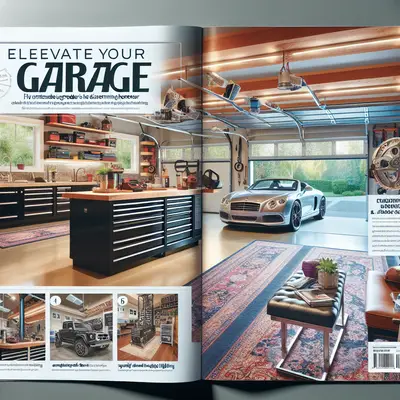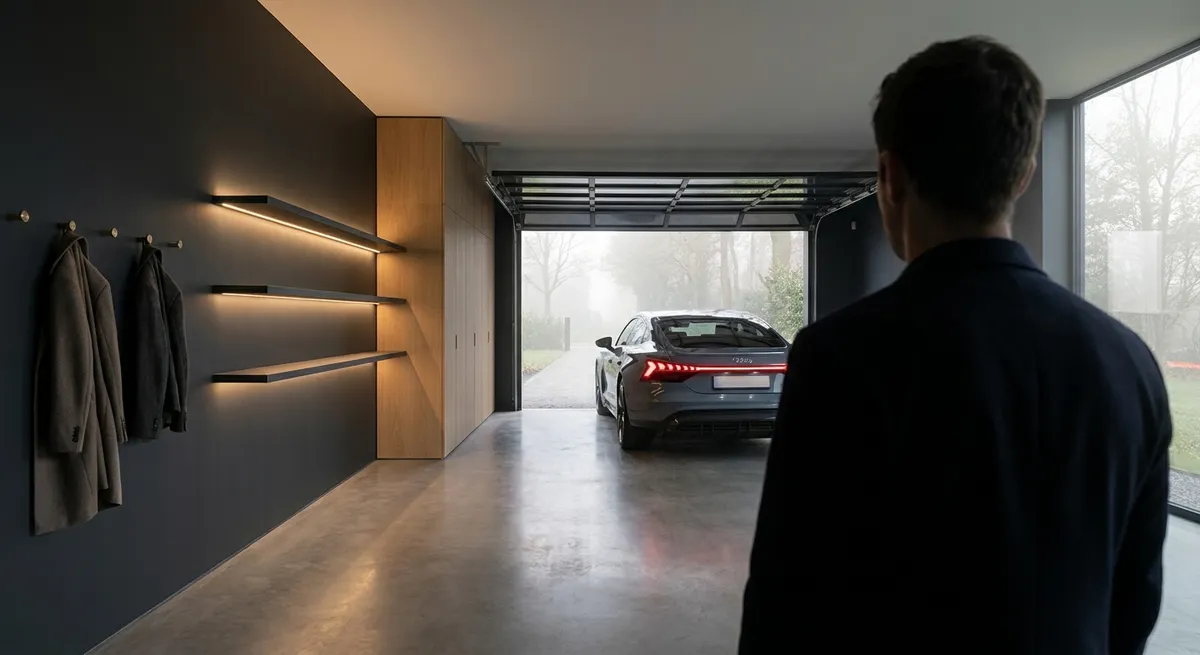
A refined home experience does not begin at the front door; it begins the moment your garage comes to life. The sound of the opener, the way the door glides, the lighting that guides you at 6 a.m.—these micro-moments quietly signal whether your garage is merely functional or genuinely elevated. Thoughtful upgrades transform this often-neglected space into a calm, controlled environment that supports your routines instead of disrupting them. For homeowners who expect precision from every corner of their property, the garage is no place for compromise.
Below are five exclusive, detail-driven upgrade insights that go far beyond basic “new door, new opener” advice—tailored for those who see the garage as an extension of the home’s overall standard.
Insight 1: Treat the Garage Door as Exterior Millwork, Not Hardware
Most garages are upgraded as if the door were just another mechanical component. In a premium setting, it should be treated more like exterior millwork or bespoke joinery—something that must visually align with the home’s architecture and endure years of exposure without visible fatigue.
Investing in insulated, high-tolerance panels with reinforced rails and concealed fasteners creates a cleaner façade and a more solid closing action. Specify door profiles that echo your home’s window muntins or entry door detailing for visual continuity. High-quality factory finishes with UV-resistant coatings help retain color depth and surface integrity, reducing chalking and fading. When planned this way, the garage door stops looking like a necessary intrusion and begins reading as part of a cohesive exterior composition.
Insight 2: Upgrade the Opener for Controlled Motion, Not Just Quiet Operation
Many homeowners think in terms of “quiet” versus “noisy” openers. The more meaningful distinction is between crude motion and controlled motion. A premium opener should manage acceleration, travel speed, and deceleration with the same consideration you’d expect from a high-end elevator.
Look for openers with variable-speed DC motors, soft-start/soft-stop technology, and precise travel calibration. These features reduce structural stress on the door, tracks, and mounting points—extending the life of the entire system. Battery backup and smart integration are valuable, but the true luxury lies in the dignified way the door moves: no shudder at the start, no slam at the bottom, just a measured, confident cycle that protects both components and decorum. This kind of motion tuning is an upgrade you feel every single day, even if guests never notice it explicitly.
Insight 3: Design the Light, Don’t Just Add Fixtures
In most garages, lighting is an afterthought—one ceiling fixture and perhaps a few task lights added later. For a space that handles vehicles, tools, storage, and frequent transitions between indoors and outdoors, the lighting plan deserves architectural-level intent.
Consider a layered approach: uniform ambient lighting to eliminate shadows near vehicle doors and steps; line-of-sight task lighting over workbenches and storage walls; and low-level perimeter or step lighting for safe late-night access without harsh glare. High-CRI LED fixtures render colors more accurately, making it easier to identify stains, leaks, or finish imperfections on vehicles and flooring. Integrating occupancy sensors with a short fade-in and fade-out makes entries and exits feel curated rather than abrupt. The result is a garage that feels composed, not improvised, every time you open the door.
Insight 4: Elevate the Floor as a Functional Surface, Not a Cosmetic Afterthought
Floor coatings are often sold as a decorative upgrade, but for a discerning homeowner, the more critical benefits are functional: chemical resistance, controlled traction, and ease of maintenance. A well-executed floor upgrade should operate like a performance surface, not a pretty shell.
Industrial-grade epoxy or polyaspartic systems—when installed with proper grinding, moisture assessment, and crack repair—create a dense, low-porosity surface that resists hot tire pickup, automotive fluids, and de-icing salts. Incorporating subtle, fine aggregate or flake blends improves both visual depth and slip resistance without looking aggressive. Slightly adjusting the floor slope toward a discreet drain ensures that meltwater and wash water move away from walls and stored items, protecting cabinetry and equipment. This is an upgrade you notice not in a single “wow” moment, but in how effortlessly the garage stays orderly over seasons.
Insight 5: Conceal Complexity with Integrated Storage and Service Access
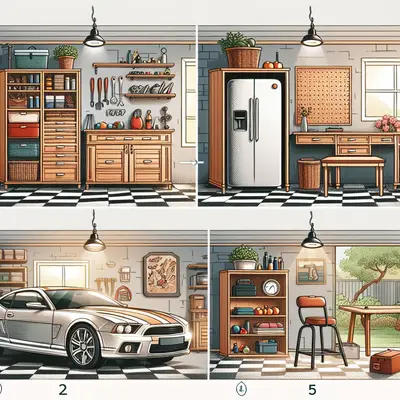
A truly elevated garage doesn’t merely hide clutter; it organizes complexity. Electrical panels, water shutoffs, EV chargers, air compressors, and seasonal equipment can easily overwhelm the space if they’re treated as separate additions rather than components of a cohesive system.
The most effective upgrade is an integrated storage wall or built-in system that anticipates these needs. Tall, flush-front cabinetry that incorporates vented compartments for compressors, concealed charging docks, and dedicated zones for emergency access points keeps the visual field calm while maintaining full serviceability. Cable management channels and recessed outlets prevent cords from breaking the sightline. When done well, maintenance remains simple—technicians have clear, labeled access—while day-to-day life is spared the visual noise of exposed utilities and improvised shelving. The garage becomes a quiet control center, not a visible workshop of chaos.
Conclusion
A garage upgrade at a higher standard is not about showy additions; it is about disciplined decisions that reshape how the space feels and functions every single day. When the door closes with composure, the lighting responds intuitively, the floor withstands real use, and storage conceals complexity without sacrificing access, your garage stops being a tolerated necessity and becomes a deliberate part of the home’s promise.
For homeowners who expect their environment to keep pace with their expectations, the garage is no longer allowed to be the exception. It becomes, instead, a proof point of how seriously you take every transition in and out of your home.
Sources
- U.S. Department of Energy – Insulated Garage Doors - Explains the performance benefits of insulated doors and their impact on comfort and efficiency
- LiftMaster Official Site – Garage Door Opener Features - Provides details on modern opener technologies such as soft start/stop, DC motors, and smart integration
- U.S. General Services Administration – Lighting Guide - Discusses principles of layered lighting, CRI, and visual comfort that can be adapted to garage environments
- Sherwin-Williams – Industrial Floor Coatings - Outlines performance characteristics of epoxy and high-performance floor systems relevant to garage applications
- National Institute of Standards and Technology (NIST) – Home Electrical Systems Safety - Provides context for safe integration and access planning for panels, outlets, and other utilities within the home
Key Takeaway
The most important thing to remember from this article is that this information can change how you think about Upgrades.