A garage door is often the largest moving element of a home, yet it’s frequently treated as an afterthought—until something goes wrong. For homeowners who expect quiet performance, reliable security, and an elevated aesthetic, the garage door is not a utility; it’s a critical interface between public street and private sanctuary. This is where refined engineering, precise repair strategy, and thoughtful upgrades converge to create a door that opens and closes with quiet authority—and almost never calls attention to itself.
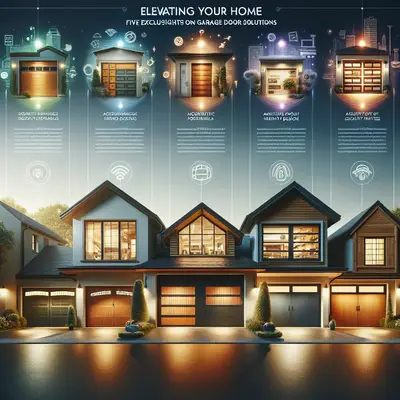
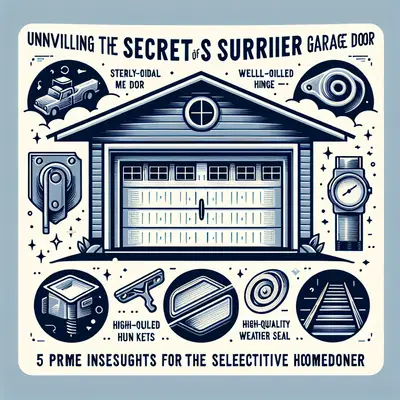
Below are five exclusive, practice-driven insights that go beyond basic maintenance, tailored for homeowners who demand more than “good enough” from their garage doors.
1. Decoding Door Behavior: Subtle Noises as Early Warning Signals
A sophisticated garage door does not suddenly “break.” It whispers its intent long before it fails—if you know how to listen.
Minor changes in sound profile are some of the earliest indicators of emerging issues. A door that once moved with a muted hum but now clicks, pops, or resonates at specific points in its travel may be signaling:
- Slight torsion spring imbalance, often heard as a rhythmic creak at the same spot on every cycle.
- Early roller degradation, producing a rolling rattle along the track rather than a smooth glide.
- Micro-misalignments in track or hinges that manifest as a sharp metallic ping when the door transitions panels over the radius.
- Opener strain, where the motor note deepens or labors, especially at the start or end of travel.
Homeowners who treat these tonal shifts as actionable data—not mere annoyances—can address alignment, lubrication, and spring calibration before components fatigue and fail. A premium repair approach includes documenting the “baseline” sound of a properly tuned door after service, so any new noise is clearly recognizable as a deviation, not background.
2. Quiet Power: Matching Opener Technology to Lifestyle, Not Just Door Weight
Many garages operate with openers that are technically sufficient but contextually wrong. For a refined home, the choice of opener type (chain, belt, or direct drive) should be calibrated not just to door size, but to how the space is used and where bedrooms, offices, or nurseries are located.
Key distinctions that often get overlooked:
- Chain-drive openers are durable workhorses but inherently less refined acoustically, transmitting vibration through both rail and mounting points. Appropriate for detached garages or utility-driven spaces—not ideal beneath a primary suite.
- Belt-drive openers, especially those with DC motors and soft-start/soft-stop functions, reduce both mechanical and structural noise. In multi-story homes where the garage sits under living spaces, this single upgrade can transform user experience.
- Direct-drive or wall-mounted (jackshaft) openers relocate the motor from overhead to the side, eliminating the long rail and dramatically reducing resonance. This configuration also frees ceiling space for storage systems or lifts, while minimizing vibration transfer into framing.
A truly premium installation pairs the right opener with isolation hardware: vibration-dampening brackets, correctly torqued fasteners, and, where appropriate, strategic use of rubber isolation pads at anchor points. The outcome is not just “quieter”—it’s controlled, composed movement that feels intentional every time the door cycles.
3. Precision Balancing: The Invisible Foundation of Longevity and Safety
Springs and counterbalance systems are the unsung heroes of garage door performance. When calibrated correctly, they reduce opener strain, improve safety, and make manual operation almost effortless. When neglected or crudely adjusted, they accelerate wear on every connected component.
A refined approach to balancing includes:
- True balance testing, not guesswork: With the opener disengaged, the door should remain in place at multiple heights—approximately 1/4, 1/2, and 3/4 open—without drifting more than an inch or two.
- Symmetry across the system: Uneven cable tension, subtle torsion spring mismatch, or misaligned end bearings may not prevent the door from operating, but they load components unevenly and invite premature failure.
- Performance under partial failure scenarios: In a high-caliber service, the technician considers how the door would behave if a single spring, roller, or hinge failed—ideally designing for controlled degradation, not catastrophic loss of support.
While spring adjustments are never a DIY endeavor due to stored energy and safety risks, knowledgeable homeowners should understand that a door that slams shut, surges upward, or requires significant effort to lift manually is not “just heavy”—it is out of balance, and it is quietly wearing out both hardware and opener.
4. Beyond Curb Appeal: Specifying Materials for Climate, Acoustics, and Security
For discerning homeowners, the garage door should align with the home’s architectural language and performance expectations in equal measure. The material choice is more than aesthetic; it sets the tone for insulation, sound control, and resilience.
Considerations for an elevated specification:
- Steel doors with high-quality galvanized skins and multi-layer construction offer strength and stability, especially when paired with polyurethane insulation (often yielding higher R-values and rigidity). They’re a strong candidate for urban environments where security and durability are paramount.
- Aluminum and glass doors deliver a sleek, contemporary aesthetic, but demand attention to glazing type (tempered, laminated, or insulated) if they face strong sun, street noise, or harsh weather. The right glass can simultaneously address thermal performance, acoustics, and privacy.
- Engineered wood or composite doors offer the warmth of a traditional façade with enhanced stability and lower maintenance than solid wood. When thoughtfully finished and periodically refinished, they can deliver a premium presence without excessive upkeep.
- Insulation as performance architecture: An insulated door does more than hold temperature. It can soften street noise, reduce mechanical noise reflection within the garage, and help stabilize adjacent conditioned spaces—particularly bonus rooms built above the garage bay.
A high-end solution considers not only the front elevation, but how the interior side of the door contributes to the garage environment as a workspace, gym, or secondary entry. The “inside face” of the door deserves as much attention to finish and durability as the exterior in homes where the garage is truly lived in.
5. Intelligent Safety and Access: Elevated Security Without Visual Noise
Modern garage door systems are increasingly the first line of access control for the home. Premium solutions prioritize not just convenience, but subtle, layered security that blends into daily life rather than shouting “technology.”
Key refinements that discerning homeowners increasingly expect:
- Rolling-code remotes and encrypted wireless controls, which severely limit the risk of code grabbing or signal replay.
- Smartphone integration that allows you to confirm door status, receive alerts when the door is left open, and grant temporary access windows to guests or service providers—without handing out physical remotes or keypad codes that linger indefinitely.
- Soft-close and controlled stop behavior that keeps the door from slamming at the threshold, protecting sensors, hardware, and the door itself while projecting an air of composure.
- Thoughtful placement and calibration of safety sensors, ensuring they are stable, aligned, and protected from casual kicks, storage interference, or landscaping. A refined install hides wiring, aligns housings perfectly, and avoids the “cluttered” look common in rushed jobs.
- Backup power solutions that maintain access during outages, especially significant in homes where the garage is the primary entry point. A battery backup or alternative manual-access strategy can transform a vulnerability into a gracefully managed event.
What distinguishes an elevated solution is not the mere presence of technology, but how seamlessly it recedes into the background—always available, rarely obtrusive, and dependable in unscripted moments.
Conclusion
A garage door that truly serves a premium home is neither loud nor dramatic. It is measured, predictable, and quietly capable—a blend of precise mechanics, understated aesthetics, and intelligent control. By tuning into subtle behavioral cues, selecting opener and door systems that respect the architecture of your life (not just your house), and demanding precision in balancing, materials, and safety integration, you transform the garage door from a vulnerable point of failure into a refined piece of everyday infrastructure.
In homes where details matter, the way your garage door moves, sounds, and feels is not incidental. It is part of the home’s character—and a daily expression of how seriously you take both comfort and control.
Sources
- U.S. Consumer Product Safety Commission – Garage Door Safety Guidelines - Official safety guidance on garage door openers, sensors, and injury prevention
- U.S. Department of Energy – Insulated Garage Doors and Energy Efficiency - Explains how insulated garage doors affect home comfort and energy performance
- International Association of Certified Home Inspectors – Garage Door Inspections - Detailed overview of common garage door defects, safety checks, and best practices
- LiftMaster – Garage Door Opener Types and Features - Manufacturer information on chain, belt, and wall-mounted openers, including noise and performance characteristics
- Clopay – Garage Door Material and Insulation Options - Comparative breakdown of steel, aluminum, wood, and composite garage doors and their performance profiles
Key Takeaway
The most important thing to remember from this article is that this information can change how you think about Garage Doors.