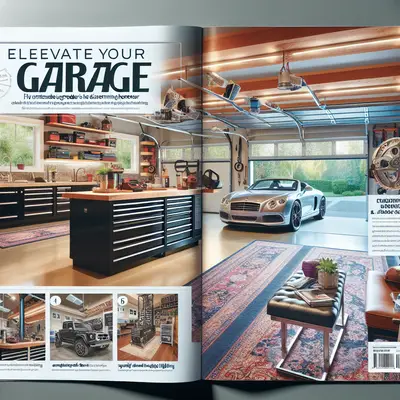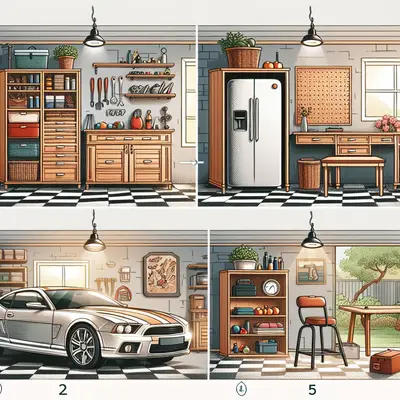
A truly elevated home does not announce its upgrades; it reveals them quietly, in the way spaces feel composed, responsive, and flawlessly functional. Nowhere is this more evident than in the garage—a zone that often bears the burden of daily life yet has the potential to operate with the polish of a well-run boutique hotel. When approached thoughtfully, garage upgrades become less about hardware swaps and more about orchestrating a seamless, intuitive experience every time you arrive or depart.
For homeowners who expect more than basic functionality, refinement lives in the details: how the door moves, how the space sounds, how technology integrates, and how the environment protects what you store. Below are five exclusive, detail-driven insights that reframe garage “fixes” as strategic, enduring enhancements.
Insight 1: Upgrade the Movement, Not Just the Motor
Many homeowners default to replacing the opener when the garage feels dated or unreliable. Yet the real transformation often lies in upgrading how the door moves along its track, not just the device that powers it.
A premium experience starts with a high-quality torsion spring system, balanced tracks, and low-friction rollers. Nylon or sealed-bearing rollers, precision-aligned tracks, and correctly tensioned springs reduce strain on the opener, extend lifespan, and radically smooth operation. The opener then becomes the conductor of a well-tuned mechanism, rather than a workhorse compensating for mechanical flaws.
For homes with heavier custom or insulated doors, consider an opener specifically rated for higher cycle use with soft-start and soft-stop features. This refines the motion profile—eliminating abrupt jolts at the start and end of travel—and helps preserve structural integrity over thousands of cycles. The result is a door that feels engineered, not improvised.
Insight 2: Treat Acoustic Comfort as a Primary Upgrade, Not a Bonus
Noise is one of the most overlooked quality markers in a garage. At a refined property, the expectation is that early departures, late arrivals, or frequent deliveries do not disturb the rest of the household—or neighboring properties.
Acoustic comfort begins with the opener choice. A belt-drive or direct-drive system typically offers quieter operation than traditional chain drives, particularly in homes where bedrooms sit above or adjacent to the garage. Pairing this with insulated doors not only improves thermal performance but also dampens sound reverberation from both inside and outside.
Beyond the obvious components, subtle interventions can dramatically affect perceived noise: vibration-isolation mounts for the opener, rubber isolation pads where the track anchors to framing, and weatherstripping that seals gently rather than slamming into place. When these details are tuned, the sound profile of the garage door shifts from clatter and echo to a controlled, low register—more akin to a luxury elevator than a warehouse bay.
Insight 3: Design the Garage as a Controlled Environment, Not Just a Storage Box
Many high-value items inevitably find their way into the garage: vehicles, tools, seasonal items, sports equipment, and in some cases, overflow from well-appointed interiors. Yet most garages are treated as semi-exposed spaces, vulnerable to temperature swings, humidity, and airborne pollutants.
A refined upgrade strategy treats the garage as a controlled environment. Insulated, properly sealed doors paired with upgraded side and top weatherstripping help stabilize temperature and reduce dust infiltration. For climates with extremes of heat or cold, modest insulation of walls and ceilings can significantly improve not only comfort but also energy efficiency—particularly when living spaces are directly above or adjacent.
Ventilation and air quality should be elevated beyond the minimum. Adding a quiet, high-efficiency exhaust fan, or integrating the garage into a whole-house ventilation strategy, can help clear vehicle exhaust more quickly and reduce lingering odors from solvents or paints. For homes that store high-end equipment or archival materials, monitoring humidity and temperature with smart sensors allows you to identify trends and intervene before they become a problem.
Insight 4: Integrate Technology as a Concierge, Not a Gadget
Smart garage technology is often marketed as convenience, but in a premium context, it’s about orchestration and assurance. The goal is not a proliferation of apps, but a curated system that behaves more like a discreet concierge than a novelty.
Advanced openers with built-in Wi-Fi and app control can be integrated with existing smart home platforms, allowing doors to be checked, closed, or scheduled remotely with minimal friction. The refined approach is to configure rules, not just manual control: automatic door closure after a set period, notifications only for unusual behavior (such as nighttime openings), and geo-fenced access for trusted family or staff.
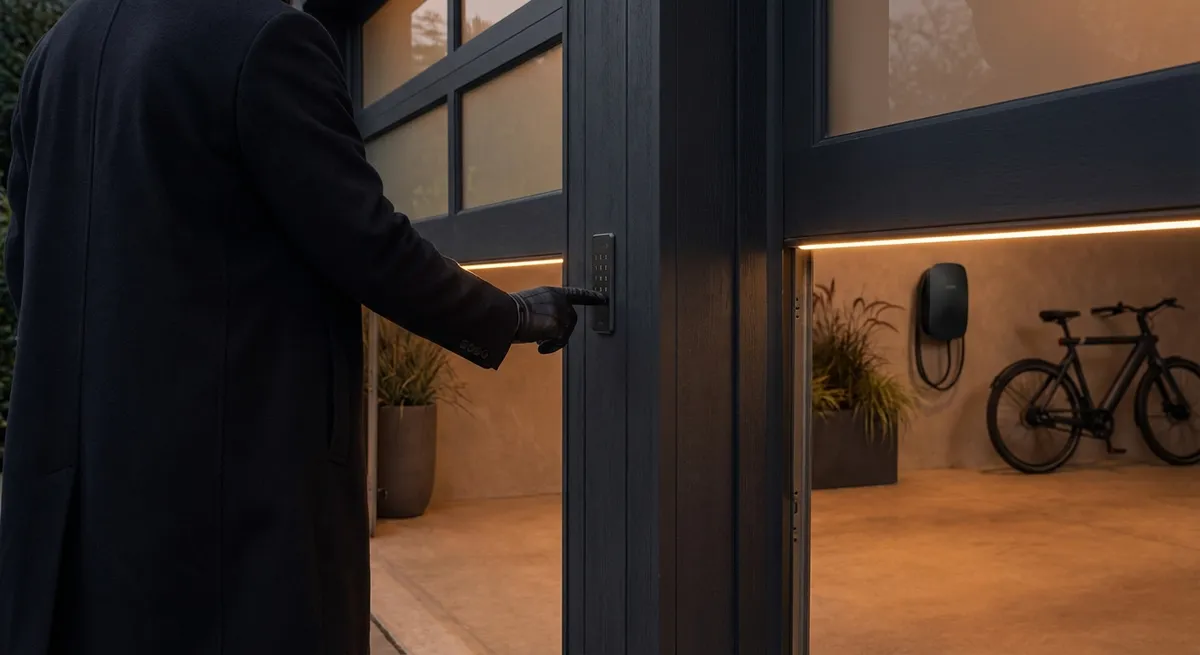
Entry management also deserves attention. Keypads with rolling codes, secure guest access codes, and integrated cameras near the main bay and side doors transform the garage from a weak point into a controlled, observable boundary. When combined with subtle, motion-activated, high-CRI LED lighting, the experience of arriving home becomes more like entering a private, well-lit porte cochère than a utilitarian storage area.
Insight 5: Specify Materials and Finishes That Age Gracefully, Not Just Impress Immediately
Many upgrades look impressive in their first season but fatigue quickly under real use. A premium garage strategy anticipates wear patterns and specifies materials that improve with age—or at least resist degradation gracefully.
On the floor, a well-prepared, professionally-installed coating system or high-performance sealer offers more than visual appeal; it creates a resilient, cleanable surface that resists staining from tires, oil, and de-icing chemicals. The subtle refinement here lies in finish selection: low-sheen or satin coatings tend to hide minor imperfections and dust better than glossy options, while still appearing deliberate and elevated.
For hardware and exterior components, corrosion resistance is non-negotiable. Opt for galvanized or powder-coated track and hardware in challenging climates, and pay attention to the quality of exterior trim, seals, and fasteners. Interior storage systems should favor steel or high-density composite materials with robust mounting hardware, designed to bear real-world loads over years.
Taken together, these choices communicate quiet confidence: the garage isn’t simply “done”—it’s been considered. Every operational and aesthetic decision supports long-term reliability, visual order, and a sense of calm, even under heavy daily use.
Conclusion
A garage that has been thoughtfully upgraded doesn’t call attention to itself; it simply works—silently, smoothly, and reliably—while aligning with the standards of the rest of the home. By focusing on movement quality, acoustic comfort, environmental control, intelligent technology, and materials that age well, you transform the garage from an afterthought into a genuinely elevated space.
For homeowners who notice the smallest imperfections, these upgrades deliver more than convenience. They create a composed threshold between the outside world and the sanctuary of the home—a transition that feels intentional every time the door opens and closes.
Sources
- U.S. Department of Energy – Insulation and Air Sealing – Guidance on insulation strategies, useful when treating the garage as a controlled environment
- International Association of Certified Home Inspectors – Garage Inspection Basics – Details on structural, safety, and mechanical considerations in garage spaces
- LiftMaster – Garage Door Opener Technology Overview – Insight into modern opener features, including smart integration and quiet operation
- Clopay – Insulated Garage Doors and Energy Efficiency – Information on insulated door construction and benefits for comfort and noise control
- U.S. Environmental Protection Agency – Indoor Air Quality Basics – Background on ventilation and air quality, relevant to garages connected to living spaces
Key Takeaway
The most important thing to remember from this article is that this information can change how you think about Upgrades.