A well‑kept garage is less a storage zone than a quiet reflection of how a household is managed. When this space operates without drama—doors gliding smoothly, lighting responding on cue, tools and vehicles living in harmony—it stops being a source of frustration and becomes a discreet asset. Thoughtful maintenance is what makes that possible. Not crisis-driven repair, but measured, intentional care that prevents the inconvenient, the noisy, and the unsafe from ever arriving at your door.
This guide explores a refined approach to garage maintenance, with five exclusive insights designed for homeowners who expect more than “good enough” from their space. Think of it as a long-term stewardship plan rather than a periodic chore list.
Reframing Maintenance as an Annual “Performance Audit”
Most homeowners treat garage maintenance as a reaction to failure: the door sticks, the opener groans, the rollers come off the track. A premium approach is the opposite—treat your garage like a system that deserves a yearly performance audit.
Once a year, schedule a dedicated two-hour session to evaluate your garage as if you were inspecting a high-end vehicle:
- Observe the door’s movement from inside and outside, noting any hesitation, lurching, or asymmetry.
- Listen for tonal changes in the opener: a refined system hums; it does not grind or rattle.
- Inspect sealing and weatherstripping in daylight; if you can see light at the edges, air and moisture are already winning.
- Run a simple tension test by disconnecting the opener and manually lifting the door halfway. A well-balanced door stays in place instead of dropping or rising.
Document everything in a simple log—date, observations, and small adjustments made. This transforms maintenance from guesswork into a measured progression, helping you notice subtle drift long before it becomes an emergency.
Exclusive Insight #1: Treat your garage like a precision device, not an afterthought. A brief, structured yearly audit catches early signs of imbalance, misalignment, and wear that usually go unnoticed until something fails.
Precision in the Small Things: Lubrication, Fasteners, and Door Balance
Premium performance is often the sum of mundane details perfectly executed. Nowhere is that more evident than with lubrication, fasteners, and balance.
A few refined practices elevate your maintenance routine:
- Use the right lubricant. Choose a silicone-based or garage-door-specific spray for hinges, rollers, and springs. Avoid heavy grease on tracks—it collects dust, binds movement, and creates the very friction you are trying to reduce.
- Tighten with restraint, not aggression. Inspect and gently snug lag screws at the opener bracket, track supports, and hinge points. Over-tightening can warp components, forcing the system to work harder and wear faster.
- Check balance as a safety check, not just a comfort check. An unbalanced door strains the opener motor, accelerates spring fatigue, and can create hazardous failure scenarios. Proper balance is fundamental to both longevity and safety.
- Replace worn rollers proactively. Nylon rollers with ball bearings run quieter and smoother than old metal rollers, and they often provide a noticeable refinement in door movement with very little investment.
Exclusive Insight #2: A garage door’s “feel” is engineered through friction management. Precision lubrication, disciplined tightening, and balance checks do more for refinement and longevity than almost any other routine task.
Climate Control as Protection, Not Luxury
Many homeowners see garage climate improvements as a comfort upgrade. In truth, they are a preservation strategy—for tools, vehicles, finishes, and the structure itself.
Thoughtful climate control doesn’t require turning your garage into a second living room. It requires targeted interventions:
- Weatherstripping as a first defense. Inspect the bottom seal, side seals, and top door stop for brittleness, cracks, or gaps. Proper sealing moderates temperature swings, keeps out pests, and prevents water from pooling where it can damage concrete and metal.
- Insulated doors and walls reduce mechanical stress. When the temperature difference between inside and outside is less severe, metal components expand and contract less dramatically, which helps maintain alignment and reduces noise.
- Humidity control protects investments. A simple dehumidifier or properly vented fan can dramatically reduce rust on tools, corrosion on door hardware, and mildew on stored items.
- Floor protection as climate armor. High-quality epoxy or polyaspartic coatings resist road salt, moisture, and chemicals, preserving your slab and minimizing dust that can infiltrate door tracks and opener components.
Exclusive Insight #3: The most elegant garages are designed around stability—of temperature, humidity, and materials. A stable microclimate quietly extends the life of your hardware, finishes, and stored assets.
Safety Systems as Part of Everyday Refinement
A sophisticated garage treats safety systems not as regulatory obligations, but as core components of a composed, faultless space. When safety features are properly calibrated and maintained, they work invisibly—until the one moment they are needed.
Key practices to build into your maintenance routine:
- Test auto-reverse mechanisms monthly. Place a sturdy object like a piece of wood under the door and close it; the door should reverse immediately on contact. Also test photo-eye sensors by passing an object through the beam while the door is closing.
- Clean and align photo-eye sensors. Dust, cobwebs, or slight misalignment can cause nuisance failures that homeowners often blame on the opener itself. A simple cleaning and alignment check eliminates many intermittent issues.
- Check emergency release function. Confirm that the manual release cord works smoothly and that you can operate the door manually. In a power outage or opener failure, this becomes essential, especially for homes where the garage is the primary entry.
- Audit fire and carbon monoxide protections. If your garage connects to the home, verify that doors to the interior are self-closing and properly sealed, and that nearby smoke and CO detectors are functional and within their service life.
Exclusive Insight #4: The true sign of a well-maintained garage is not absence of noise—it’s the certainty that in abnormal situations, the system still behaves predictably and safely. Regular testing of safety features safeguards both property and people.
Designing a Maintenance-Friendly Garage Layout
Most garage issues are aggravated—or quietly created—by poor layout. When access to panels, tracks, outlets, and storage is obstructed, maintenance becomes a nuisance, and neglected areas become breeding grounds for problems.
Reconsider your layout with maintenance in mind:
- Protect the “service corridor.” Maintain a clear path along door tracks, the opener head, and the wall where controls and electrical connections live. Avoid shelving or bulky storage that forces you to stretch or lean into moving components.
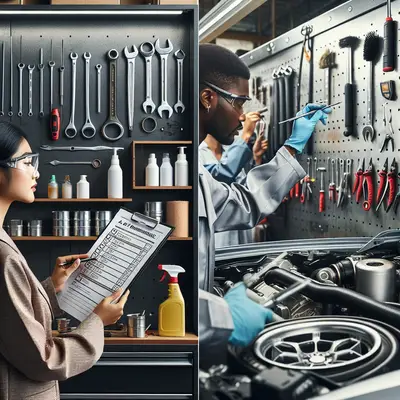
- Create a defined zone for tools and maintenance supplies. A small, curated kit—silicone spray, mild cleaner, microfiber cloths, hex keys, basic wrenches, and a step stool—kept in a single drawer or wall cabinet removes friction from performing small tasks.
- Avoid storing items near springs and cables. Anything that complicates visual inspection of high-tension components masks early indicators of fatigue or fraying. Visual clarity is part of preventive safety.
- Lighting as an inspection tool. Install bright, color-accurate LED lighting that reveals dust buildup, leaks, or rust in their early stages. Good lighting isn’t just about convenience; it’s about seeing problems before they escalate.
Exclusive Insight #5: A genuinely refined garage is engineered for maintenance as much as for storage. When the layout encourages quick inspection and easy access, you are far more likely to maintain the space with the consistency it deserves.
Conclusion
A garage that behaves flawlessly is never an accident. It is the result of deliberate, recurring choices: to inspect rather than guess, to fine-tune rather than wait for failure, and to design the space around stability, safety, and access.
By treating your garage as a performance system instead of a forgotten annex, you transform routine maintenance into a quiet ritual of stewardship. The payoff is subtle but unmistakable—fewer emergencies, less noise, smoother movement, and the confidence that this often-overlooked space is operating at the same standard as the rest of your home.
Sources
- U.S. Consumer Product Safety Commission – Garage Door Safety - Official safety guidance on automatic residential garage doors, including testing and maintenance tips
- International Association of Certified Home Inspectors – Garage Inspection Guide - Detailed overview of garage components, safety features, and common issues inspectors look for
- Clopay Garage Doors – Maintenance & Troubleshooting - Manufacturer-recommended maintenance steps for residential garage doors
- U.S. Department of Energy – Air Sealing Your Home - Guidance on weatherstripping and sealing strategies, relevant to garage doors and adjoining walls
- Minnesota Pollution Control Agency – Garage Ventilation and Air Quality - Discusses ventilation, pollutants, and best practices for maintaining healthier garage environments
Key Takeaway
The most important thing to remember from this article is that this information can change how you think about Maintenance.