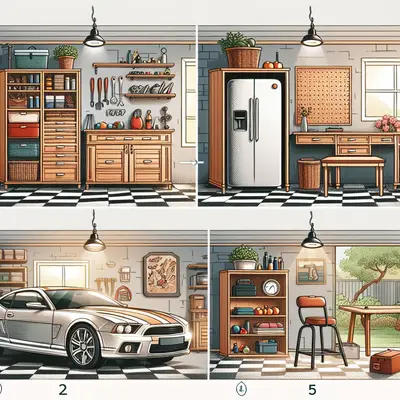
A garage can be either an afterthought or a quiet declaration of how seriously you take your home. For homeowners who expect more than basic function, the garage is an opportunity: to refine daily routines, discreetly elevate security, and introduce a level of composure that extends far beyond curb appeal. This guide explores how to upgrade your garage with intention—balancing engineering, aesthetics, and long‑term reliability—so every interaction feels quietly precise rather than merely convenient.
Below are five exclusive, often overlooked upgrade insights that sophisticated homeowners consistently value when addressing garage issues and planning meaningful improvements.
Reframing the Garage as a Performance System, Not a Single Door
Most repair conversations begin and end with the door: it squeaks, sticks, slams, or refuses to move. But refined upgrades start by treating the garage as an integrated performance system—door, track, opener, structure, insulation, lighting, and even flooring—all working in concert.
Instead of simply replacing a noisy opener, consider the entire load path: the weight and balance of the door, track alignment, spring calibration, and vibration transfer into surrounding walls. Each of these can be optimized to reduce stress on components, extend service life, and minimize sound transmission into living areas. Structural reinforcements at mounting points, upgraded fasteners into proper framing (not drywall or hollow masonry anchors), and vibration‑isolating brackets collectively transform the “feel” of the system. The result is not just a quieter door, but a garage that behaves like a well‑tuned machine rather than a collection of parts.
Insight 1: Precision Balancing Is the Hidden Luxury Your Door Has Never Had
Many homeowners will upgrade an opener or even the door panel, yet leave the most critical element—spring balance—ignored or guessed at. A poorly balanced door forces the opener to work harder, increases noise, and accelerates wear. Worse, it can create subtle safety risks if the door is unexpectedly heavy in manual mode.
A premium upgrade starts with a professional balance assessment: the door should remain nearly stationary at various lift points (¼ open, ½, ¾) with only light manual effort. This requires correctly sized torsion or extension springs, adjusted to match the door’s actual weight including glazing, insulation, and any added hardware. When done correctly, the opener’s job becomes guidance rather than brute force, resulting in smoother operation and less strain on gears, belts, and electronics. For homeowners considering high‑end doors—heavier, insulated, or custom wood—precision balancing moves from “nice to have” to indispensable, especially in regions with seasonal temperature swings that affect material behavior.
Insight 2: Silence Is Engineered—Not Purchased Off the Shelf
“Quiet” openers are often marketed as a feature, but truly silent operation is rarely achieved by the motor alone. Chain‑driven openers can be refined; belt‑driven units can still transmit unpleasant harmonics if the rest of the system is neglected. For a genuinely subdued experience, you need a layered approach.
Begin with a modern DC motor opener with soft‑start and soft‑stop profiles to eliminate jolts at the beginning and end of travel. Pair this with vibration‑damping mounting brackets and isolator pads where the opener interfaces with the ceiling joists. Next, upgrade to nylon rollers with sealed bearings—these significantly reduce rolling noise compared to steel rollers and are less prone to pitting and binding. Recalibrate track alignment to remove side‑loading, another common source of rattling and scraping. Finally, if your garage shares a wall or ceiling with bedrooms or living spaces, consider adding targeted acoustic insulation above that interface. The result is not just a “quiet opener,” but an upgraded acoustic environment where operation becomes nearly imperceptible from inside the home.
Insight 3: Thoughtful Climate Control Starts With the Envelope, Not the Gadget
Space heaters and portable air conditioners are often a reaction to an uncomfortable garage. Yet without an upgraded envelope—door, walls, and ceiling—these devices are inefficient at best and potentially unsafe at worst. Sophisticated upgrades prioritize passive performance first.
Insulated doors with a higher R‑value, especially steel or composite sandwich constructions with polyurethane foam, offer both thermal control and structural stiffness. But the real refinement lies in the periphery: upgraded perimeter seals, proper bottom seals aligned to a level floor, and well‑installed jamb weatherstripping to eliminate micro‑gaps. If the garage is attached, bringing walls adjacent to living spaces up to current insulation standards can meaningfully stabilize temperatures and reduce energy loss. From there, zoned mini‑split systems or radiant heating can be introduced intelligently, serving a better‑sealed space rather than fighting constant air leaks. The upgrade is not just comfort—it’s quieter operation, lower energy bills, and reduced condensation that can silently degrade tools, vehicles, and stored finishes over time.
Insight 4: Integrated Lighting and Power Planning Define How the Space Is Used
Most garages are built around a single ceiling fixture and a handful of outlets. For homeowners who expect more—whether for vehicle care, storage, or workshops—lighting and power layout are where pragmatic luxury resides.
Instead of simply adding brighter bulbs, think in layers: high‑CRI LED overhead lighting that renders colors accurately (ideal for paint correction and detailing), task lighting over benches and workstations, and softer perimeter lighting that can be used independently for late‑night arrivals. Position fixtures to minimize shadowing around vehicles and storage zones, and opt for fixtures rated for garage environments (temperature, humidity, and dust). In parallel, upgrade electrical circuits with sufficient capacity for EV chargers, compressors, or specialty tools. Dedicated circuits for high‑draw equipment and properly located outlets along walls avoid the visual and practical clutter of extension cords. Planning with a future‑ready mindset—EVs, battery storage, home backup integration—turns your garage into a flexible, high‑performance space rather than a static utility room.
Insight 5: Security and Access Should Feel Effortless, Not Intrusive
Security upgrades are often treated as visible deterrents: cameras, external keypads, or heavy deadbolts. A more refined approach prioritizes invisible control and seamless, secure access that doesn’t announce itself to the street.
Start by ensuring the door’s basic security posture is correct: reinforced top brackets, high‑quality track fasteners, and properly engaged locking mechanisms or opener arm brackets that resist forced lifting. From there, modern smart openers with rolling‑code technology and encrypted wireless protocols significantly reduce the risk of signal interception. Control can be routed through trusted platforms or standalone apps, with the ability to create digital guest access instead of hiding a key or sharing a keypad code. When cameras are desired, interior‑facing models that monitor valuables (vehicles, tools, storage) without broadcasting their presence externally maintain a discreet profile. The true upgrade is a system that you rarely think about—and that quietly protects your assets while integrating naturally into your daily patterns.
Conclusion
Upgrading a garage at a premium level has little to do with superficial embellishments and everything to do with how the space behaves—mechanically, acoustically, thermally, and functionally—over time. When you treat the garage as a performance system rather than a static door, each decision becomes more deliberate: precise spring balancing, engineered silence, measurable climate control, purposeful lighting and power, and security that operates in the background rather than on display.
For homeowners who expect their environment to reflect their standards, these upgrades move the garage from “necessary utility” to “quiet asset”—one that enhances every arrival, departure, and moment you choose to spend in the space. The result is not merely a better door, but a more composed home.
Sources
- U.S. Department of Energy – Insulation R-Values – Guidance on insulation performance and R‑values relevant to insulated garage doors and adjoining walls
- International Association of Certified Home Inspectors – Garage Door Safety – Technical overview of garage door components, balance, and safety considerations
- Door & Access Systems Manufacturers Association (DASMA) – Technical Data Sheets – Industry standards and recommendations for garage door hardware, springs, and performance
- U.S. Department of Energy – LED Lighting – Information on LED performance, efficiency, and quality of light for upgraded garage lighting plans
- National Renewable Energy Laboratory – Electric Vehicle Charging at Home – Considerations for residential electrical upgrades to support home EV charging in garages
Key Takeaway
The most important thing to remember from this article is that this information can change how you think about Upgrades.