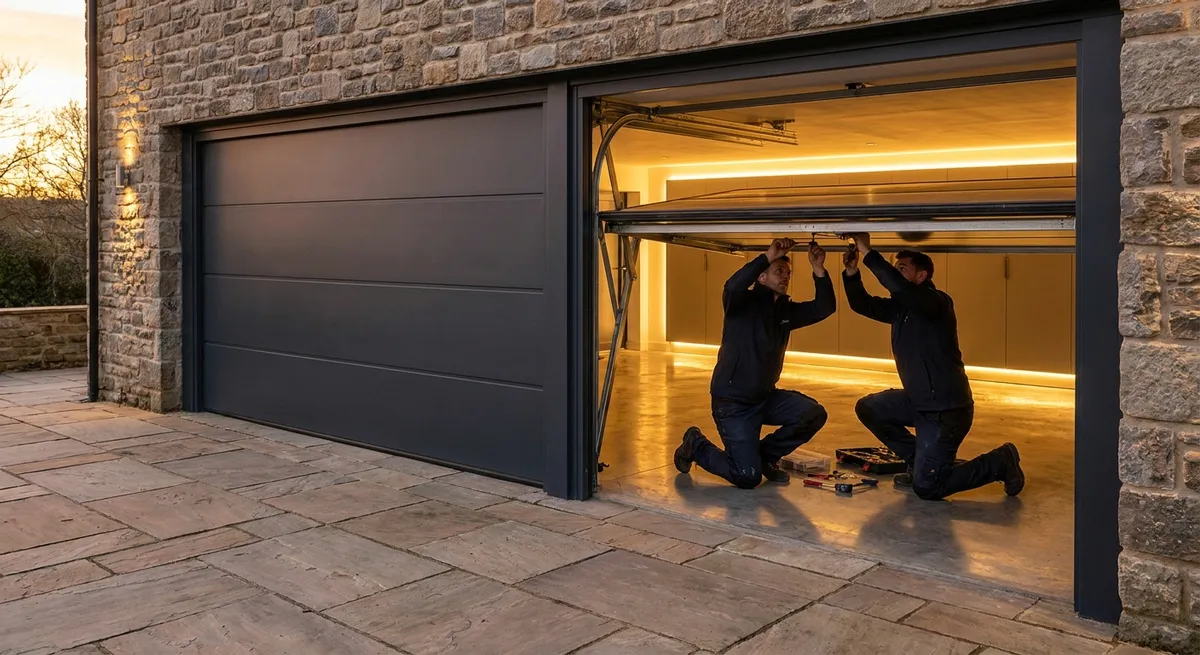
A well‑kept garage should never demand attention; it should simply work. For homeowners who value quiet reliability and understated craftsmanship, repair solutions are less about “quick fixes” and more about preserving a refined, seamless experience. This guide moves beyond basic troubleshooting and leans into the kind of nuanced decisions that protect your investment—and your peace of mind—over the long term.
Rethinking “Broken”: Why Symptoms Are Only Half the Story
Most homeowners react to a specific failure—a door that refuses to close, a motor that suddenly howls, a spring that snaps. But by the time a problem becomes obvious, underlying stresses have often been building for months or years.
A more sophisticated approach treats every visible symptom as a clue rather than an isolated issue. A jerky door might not just be a track alignment problem; it can signal subtle warping of the door panels, compromised rollers, or even structural movement in the framing. A “weak” opener may be compensating for deteriorated springs, not failing electronics.
Thinking in terms of systems instead of single components changes how you approve repairs. When a technician proposes replacing only the most visibly damaged part, it’s worth asking: what made this part fail now, and what else is close behind? The most elegant solutions correct the root load or alignment issue rather than merely quieting the latest noise.
Precision at the Edges: The Art of Seals, Thresholds, and Micro‑Gaps
In an upscale garage, refinement often reveals itself at the edges—literally. Weatherstripping, bottom seals, and side jamb seals are rarely glamorous, yet they shape everything from interior humidity to pest control and even how quiet your door sounds as it meets the floor.
Instead of defaulting to standard rubber seals, discerning homeowners consider material, profile, and fit. High‑quality EPDM or silicone seals maintain flexibility in both heat and deep cold, preserving performance and fit over many seasons. A well‑chosen threshold ramp not only blocks water intrusion but also subtly improves the line where concrete meets the door, reducing vibration and softening impact.
Tiny daylight leaks along the sides or bottom might appear cosmetic but can indicate torsion imbalance or frame movement. Allowing a technician to “shim it until it closes” is a missed opportunity: the refined solution is to re‑square the tracks, recalibrate spring tension, and then finish with a tailored seal that looks deliberate, not improvised. The result is a door that meets its frame with a quiet, confident closure instead of a hollow rattle.
Balancing Force and Grace: Springs, Openers, and Structural Harmony
Garage door springs and openers are often treated as brute power—strong enough or not. In practice, finesse matters more than sheer strength, especially when you expect your door to perform quietly and predictably over decades.
An elegantly tuned system allows the door to be lifted by hand with minimal effort and to hover when half open. When the opener is doing most of the lifting, the system is mis‑balanced, even if it still “works.” This imbalance stresses gears, rails, and mounting points, eventually telegraphing through the walls as vibration and noise.
Refined repair solutions include:
- Replacing springs in matched pairs, even if only one has failed, to preserve balanced lift and predictable performance.
- Calibrating opener force and travel limits conservatively—just enough to move the door reliably, no more.
- Inspecting the mounting structure above the door: a powerful opener attached to a flexing header or weak blocking creates a harsh, resonant sound, even if the mechanism itself is high‑end.
The payoff is not just durability but character: a heavy, insulated door that moves with the quiet authority of a well‑engineered component rather than the brute strain of overworked hardware.
Elevated Materials: Beyond “Replacement” to Thoughtful Upgrades
Not every repair needs to become an upgrade, but carefully chosen material improvements can transform how the entire garage feels and performs, without any ostentatious change in appearance.
When rollers crack or seize, swapping them like‑for‑like solves the immediate problem. Yet stepping up to sealed, precision ball‑bearing rollers dramatically cuts friction and noise, often more effectively than upgrading the opener itself. Similarly, replacing generic hinges with heavy‑gauge, corrosion‑resistant hardware preserves alignment and prevents the subtle sagging that can fatigue panels and tracks over time.
For coastal or high‑humidity environments, galvanized or stainless components are not indulgences; they are defenses against silent, gradual decay. The same applies to cables: specifying aircraft‑grade, corrosion‑resistant cables during a repair prevents fraying and uneven tension down the line.
The key is to treat each repair decision as a chance to raise the baseline quality of the system. You may not notice the difference day‑to‑day, but you will notice what doesn’t happen: fewer emergency visits, fewer unsettling noises, and no surprise failures when the weather is at its worst.
Intelligent Diagnostics: Using Data, Not Guesswork, to Guide Repairs
Modern garage systems offer more insight than many homeowners realize. Instead of relying purely on sound, feel, and visual inspection, the most refined repair strategies layer in measurement and monitoring.
Technicians can use simple tools—a laser level, torque gauges, and even vibration apps—to document how square your tracks are, how evenly your springs are loaded, and whether your opener is working harder than it should. Some smart openers log cycle counts and fault events, revealing patterns: a door that reverses more often in winter, for instance, might be fighting subtle contraction in the tracks or stiffening seals.
For the homeowner, intelligent diagnostics means asking for evidence, not just assurances. Before and after force readings, documented spring sizing, or a brief written note on load balance turn a repair invoice into a maintenance record that future technicians—and potential buyers—can trust.
Over time, these records allow you to anticipate replacements before they become emergencies. Springs, rollers, and opener components can be scheduled for proactive renewal after a known service life, keeping your garage in a state of quiet readiness instead of reactive triage.
Conclusion
A sophisticated garage repair is less about drama and more about discretion. It honors the structure of your home, the rhythm of your daily routines, and the long‑term integrity of every moving part. By looking past obvious symptoms, refining the details at the edges, balancing force with grace, choosing elevated materials, and leaning on intelligent diagnostics, you transform “fixing a problem” into curating a system.
The result is a garage that feels composed rather than merely functional—one that opens and closes with the quiet certainty you expect from every other carefully considered part of your home.
Sources
- U.S. Department of Energy – Insulation & Air Sealing in Garages - Discusses how gaps, seals, and attached garage details affect efficiency and comfort
- International Door Association (IDA) – Consumer Safety & Maintenance - Offers best practices for professional garage door service, balance, and safe operation
- Clopay Garage Doors – Torsion Spring & Hardware Basics - Explains the role of springs, balance, and hardware selection in garage door performance
- LiftMaster – Smart Opener Features and Diagnostics - Details capabilities of modern openers, including monitoring, force settings, and event logging
- Cornell University – Corrosion of Metals in Built Environments - Provides technical insight into material durability and corrosion, relevant to hardware and coastal installations
Key Takeaway
The most important thing to remember from this article is that this information can change how you think about Repair Solutions.