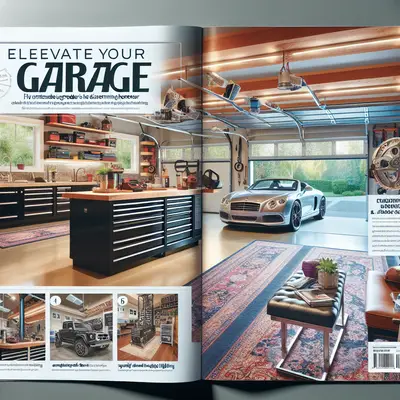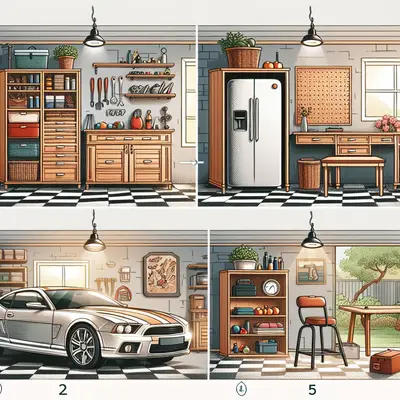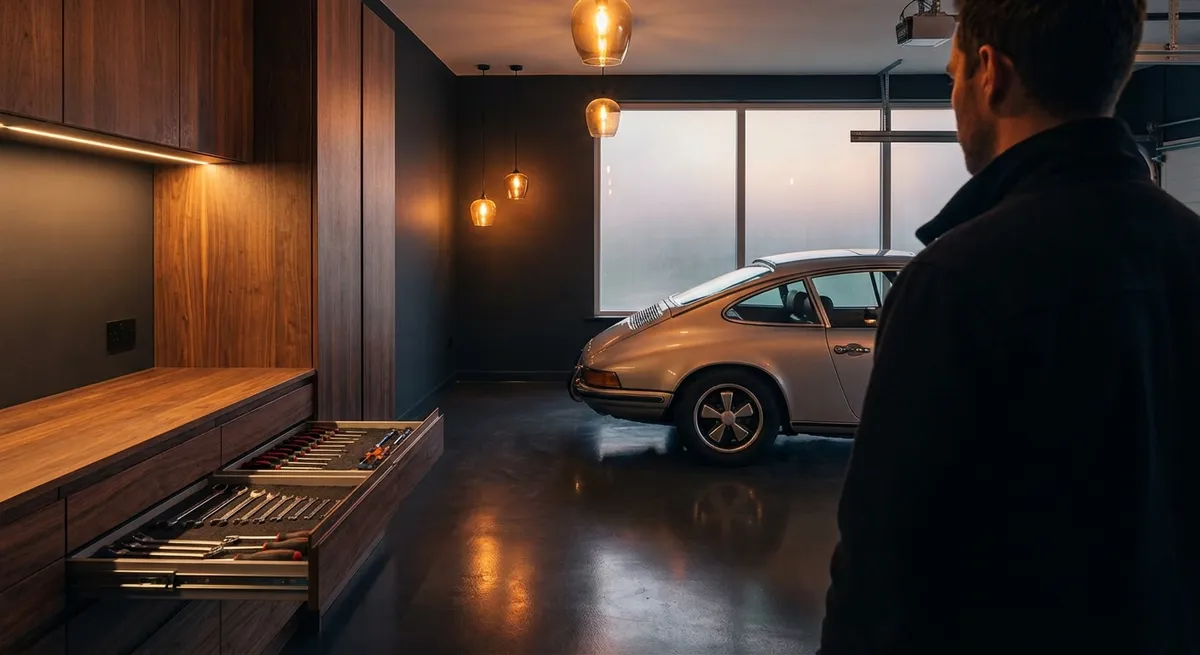
A well-resolved garage doesn’t announce itself with flashy hardware or trending gadgets. Its luxury is quieter: doors that move without protest, lighting that flatters both architecture and automobiles, storage that seems to anticipate your next reach. For homeowners who expect more from this often-overlooked space, the right upgrades can transform the garage from a utilitarian afterthought into a precisely tuned extension of the home. What follows is a curated approach to upgrades—less about spectacle, more about performance, longevity, and subtle refinement.
Rethinking the Garage as a Mechanical Ecosystem
The most successful garage upgrades start with a mindset shift: stop treating the garage as a singular “project” and instead see it as a mechanical ecosystem. Door, opener, track hardware, flooring, storage, electrical, ventilation—each component influences the others. Upgrading only one element, in isolation, often exposes the weaknesses of the rest.
Begin with a structured assessment. Note door balance (does it stay halfway open without support?), opener noise and vibration, track alignment, floor condition, moisture presence, and electrical capacity. This ecosystem view helps you avoid the common trap of adding “luxury” features—like high-end cabinetry or EV charging—onto a foundation of misaligned tracks or a fatigued torsion spring system. Sophisticated garages are not defined by how much is added, but by how elegantly everything works together.
Insight 1: Upgrade the Door as Architectural Equipment, Not Just Hardware
For many homes, the garage door commands more visual frontage than the entry door. Yet it is often specified as an afterthought. Treating the garage door as architectural equipment—rather than a commodity panel—changes the upgrade calculus substantially.
Premium insulated steel, aluminum, or composite doors with proper thermal breaks can significantly improve interior garage temperatures, reduce noise transmission to living spaces, and stabilize humidity. This matters for preserving vehicles, stored items, and any mechanical equipment located in the garage. A well-specified R-value, matched to your climate, is more impactful than decorative hardware.
Pay attention to panel construction and reinforcement. Doors designed for heavy-cycle use with proper struts, high-cycle torsion springs, and corrosion-resistant hardware are not just “nicer”—they maintain alignment longer, resist warping, and keep the opener from working beyond its design load. Quiet bearings, nylon rollers with sealed ball bearings, and properly sized tracks complete the system. The result is a door that glides rather than struggles, and does so consistently over years, not seasons.
Insight 2: Elevate the Opener from Convenience to Precision Instrument
The garage door opener is one of the most mis-specified devices in the home. Too often, the loudest element in the entire mechanical chain is simply tolerated. Upgrading with discernment can convert a crude, vibrating motor into a near-silent, precise instrument.
Consider direct-drive or wall-mounted (jackshaft) openers for a refined experience. A properly installed jackshaft opener, mounted at the side of the door and paired with torsion springs, removes the ceiling rail clutter, frees overhead space, and dramatically cuts vibration transfer into living areas. When ceiling-mount is preferred or required, a belt-drive unit with soft-start/soft-stop capability and DC motor is the minimum standard for a premium home.
Look for integrated safety and intelligence that genuinely improves reliability: real-time force monitoring, battery backup for power outages, and native compatibility with encrypted remote systems. Avoid cluttered add-on modules; instead, choose platforms with built-in connectivity that receive firmware updates and security enhancements over time. A well-chosen opener feels less like a gadget and more like a calibrated machine tool—subtle in operation, unwavering in performance.
Insight 3: Lighting That Treats the Garage as a Room, Not a Storage Shed
Most garages are underlit, both in quantity and quality of light. This is a quiet but constant annoyance: misreading labels, struggling with tasks, or simply enduring a dim, uninviting environment. Elevated lighting upgrades transform daily use and significantly improve safety.
Replace a single bare bulb or dated fluorescent strip with a layered lighting plan. High-CRI (90+), neutral white LED fixtures (around 4000K) provide color-accurate illumination that flatters both vehicles and materials, whether you are touching up paint, inspecting tires, or accessing storage. Linear LED fixtures or slim panel lights, evenly spaced, deliver diffuse light without harsh glare or aggressive shadows.
Introduce task lighting at the workbench and around storage zones—magnetic LED strips under shelves, adjustable arm lamps over the bench, or recessed downlights over entry doors. Add motion sensors or occupancy sensors tuned with a delay long enough to prevent nuisance shutoffs. A beautifully lit garage does not feel like an afterthought you rush through; it reads as a deliberate space you are willing to linger in, even for routine tasks.
Insight 4: Flooring as a Protective Surface, Not a Cosmetic Aftercare
Floor upgrades are often pursued for aesthetics—glossy coatings, elevated finishes, and showroom-like reflections. While appearance matters, the more sophisticated framing is to treat the floor as a protective, structural surface that determines how well everything else in the garage will age.
A properly prepared and coated concrete floor (professional-grade epoxy or polyaspartic system, not a thin DIY paint) resists oil, chemicals, and moisture intrusion. This reduces concrete spalling, delicately preserves slab integrity, and simplifies cleanup after mechanical work. Look for systems with a documented installation protocol: diamond grinding or shot-blasting, moisture testing, crack repair, then multiple layers of primer, build coats, and topcoats with appropriate anti-slip media. This isn’t indulgence; it’s a controlled environment for both your vehicles and stored equipment.
For colder climates or for garages used as hybrid spaces (gym, workshop, hobby room), consider modular tiles or rubberized zones layered over a well-sealed slab. These improve comfort underfoot, soften noise, and protect the underlying concrete from impact damage. The floor should be read as an engineered surface, not merely a “finished” one.
Insight 5: Storage That Anticipates Movement, Not Just Maximizes Volume
Most storage solutions focus on capacity: how much can be crammed onto shelves or into cabinets. A more refined approach asks how you move through the garage—where you stand, which doors open, where the vehicle doors swing, and how often certain items are accessed.
Wall-mounted, rail-based or slatwall systems keep the floor visibly clear, simplifying cleaning and making water intrusion or leaks obvious. Overhead racks should be located with exacting attention to door travel and future service access: leave proper clearance for spring assemblies, opener hardware, attic hatches, and lighting fixtures. Cabinet depth should be carefully chosen so vehicle doors can fully open without impact, even if parking is slightly imprecise.
Design access tiers: daily-use items at shoulder to eye level, seasonal items above, archive or rarely touched items at the highest zones. Ensure at least one “clean” wall or zone free of visual noise for tool layout or art—yes, art—instead of a chaotic collage of mismatched hooks and bins. The most successful garage storage solutions feel inevitable, as if they could not have been planned any other way.
Insight 6: Silent Performance Through Vibration and Sound Management
Noise in a garage is often accepted as inevitable: rattling doors, banging panels, openers that shake the ceiling joists. Addressing this with precision dramatically shifts the perceived quality of the space, especially when bedrooms or living areas are adjacent.
Begin by isolating vibration sources. Use rubber isolation pads under the opener and between its mounting brackets and framing. Ensure all opener rail connections and hanger brackets are properly tightened and braced, avoiding long, flexible spans that act as tuning forks. Upgrade metal door hinges and rollers with premium, sealed-bearing nylon rollers and properly lubricated pivot points—this alone can eliminate a surprising amount of harsh chatter.
Seal strategic gaps with appropriate weatherstripping: bottom seals, side and top seals, and, where appropriate, threshold seals. This not only reduces drafts and dust but also absorbs impact noise and softens the acoustic profile of the door in motion. For garages directly under living spaces, consider adding sound-attenuating insulation in the ceiling and ensuring the drywall is fully screwed and glued to minimize resonance. The transformation from clattering machinery to restrained, moderated movement is often one of the most noticeable “luxury” upgrades you can make.
Insight 7: Electrical and Future-Proofing as a Core Upgrade, Not an Afterthought
More and more, the garage is the convergence point for serious electrical demands: EV chargers, air compressors, power tools, storage freezers, and high-efficiency openers and lighting. Treating the electrical system as foundational ensures that future upgrades are plug-and-play, not invasive retrofits.
Begin with a licensed electrician’s evaluation of panel capacity, circuit loading, and grounding. Installing a dedicated 240V circuit for an EV charger or high-demand tools, even if you do not yet own an EV, is a strategic move. Adding additional outlets at appropriate heights along walls and near the workbench dramatically enhances usability; no more extension cords snaking under vehicle tires.
At the same time, consider low-voltage and data: a discrete access point for reliable Wi‑Fi coverage in the garage, properly routed cabling for cameras or smart controllers, and weather-protected housings for any electronics. The goal is an infrastructure that can gracefully accept new technology without exposing conduit, overloading circuits, or resorting to inelegant surface-mounted quick fixes.
Conclusion
A truly elevated garage upgrade is not defined by any single impressive feature; it is the sum of dozens of restrained, intentional decisions. The door moves in controlled silence. The opener works with precision, not force. Lighting allows you to inspect, maintain, and enjoy your vehicles and tools with clarity. The floor and storage protect both structure and contents, and the electrical backbone calmly supports the demands of modern living.
For the discerning homeowner, the garage becomes less a back-of-house utility zone and more a mechanical salon—a space where performance, longevity, and quiet refinement converge. Done well, these upgrades are not loud statements of luxury; they are the absence of friction, frustration, and fatigue every time you come home.
Sources
- U.S. Department of Energy – Insulated Garage Doors - Covers the impact of garage door insulation on energy efficiency and comfort
- International Door Association (IDA) – Garage Door Safety & Selection - Industry guidance on garage door systems, components, and best practices
- Consumer Reports – Guide to Garage Door Openers - Independent overview of opener types, features, and performance considerations
- Occupational Safety and Health Administration (OSHA) – Lighting Standards - Provides reference levels and considerations for safe, effective task lighting
- Concrete Network – Garage Floor Coatings - Technical information on concrete preparation, coating systems, and durability factors
Key Takeaway
The most important thing to remember from this article is that this information can change how you think about Upgrades.