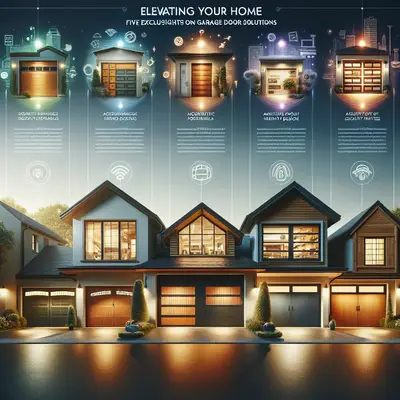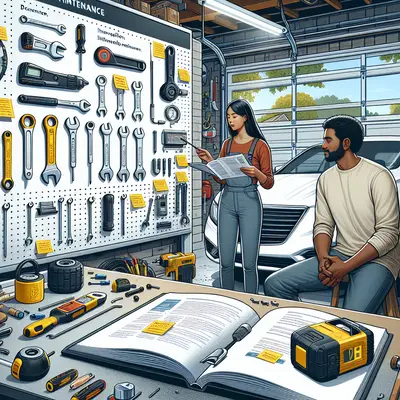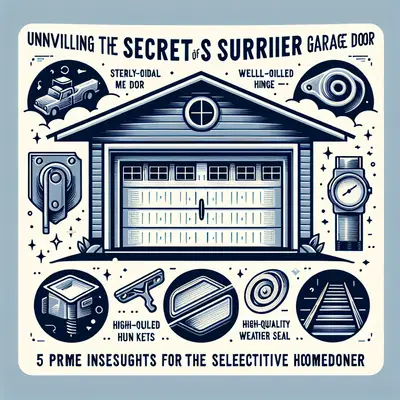
A well-resolved garage door is not simply a barrier; it is a moving façade, a daily performance that frames every arrival and departure. When it falters—stutters on the tracks, groans against the opener, leaks drafts or light—it quietly undermines both comfort and confidence. This guide is written for homeowners who expect more: quieter motion, smarter control, longer service life, and repairs that feel considered rather than improvised. Below, you’ll find five exclusive, often-overlooked insights that reframe garage door trouble from a series of nuisances into an opportunity for elevated performance.
Reading the Door as a System, Not a Set of Parts
Most repair conversations start with a single symptom: a broken spring, a frayed cable, a noisy opener. Sophisticated maintenance begins instead with the premise that the garage door is a balanced system—door weight, spring tension, track alignment, opener force, and weather seals all interacting.
A door that strains the opener may be slightly out of balance rather than “underpowered,” meaning a new motor alone will only mask the underlying issue. Subtle track misalignment can cause the rollers to bind, which in turn forces the opener to work harder and accelerates chain or belt wear. Even small changes in door weight—new insulation panels, decorative hardware, or waterlogged bottom sections—shift the load the springs were calibrated to handle. A premium service visit should therefore include a full balance test (with the opener disconnected), track plumb and level checks, and a review of how force and travel limits are set on the opener. When these elements are tuned together, the door moves with a kind of quiet assurance that piecemeal fixes simply never achieve.
Silence as a Performance Standard, Not a Luxury
Noise is not merely an annoyance; it is a diagnostic. Each sound corresponds to a mechanical behavior—metal-on-metal contact, insufficient lubrication, vibration resonance, or loose fasteners—that can be refined or eliminated with the right approach.
Roller noise often signals hardened metal rollers riding on slightly imperfect tracks, transmitting vibration through the framing of the house. Upgrading to nylon rollers with sealed bearings can radically change the acoustic character of the door, especially in homes with bedrooms over the garage. Chain-driven openers that clatter and hum may be operating with excessive slack or worn sprockets, but many homeowners accept the noise as “normal” and never consider a belt-drive or direct-drive upgrade. Even smaller touches matter: rubber isolation pads under the opener brackets, properly tightened track fasteners into solid backing, and high-quality, temperature-stable lubricants applied sparingly to hinges and torsion springs. Instead of aiming for “less noisy,” a premium repair strategy targets a benchmark: operation quiet enough that late-night arrivals do not announce themselves to the entire household.
Precision Tuning for Peak Safety and Smooth Operation
Modern garage doors are heavy, spring-loaded moving structures; when safety features are poorly calibrated, convenience is purchased at the cost of real risk. A refined repair approach pays as much attention to safety logic as to mechanical adjustment.
Photo-eye sensors should do more than merely “pass the red/green light test.” Their alignment, mounting height, and protection from accidental impact or debris all influence reliability. A misaligned sensor that intermittently reverses the door is often a sign that the mounting hardware is flimsy or too exposed, not simply a matter of bumping it back into place. Equally important is opener force calibration. Many units are left with factory force settings that allow the door to push too hard before reversing, compensating for a poorly balanced door rather than correcting it. A careful technician will first ensure the door is properly balanced manually, then reduce opener force to the lowest level that still permits smooth travel. The result is a door that stops decisively when it meets unexpected resistance, protecting children, pets, vehicles, and the door itself from avoidable damage.
Climate-Aware Detailing: Comfort, Efficiency, and Longevity
The garage door is often the largest movable surface in a home’s thermal envelope, yet it is frequently treated as a purely mechanical object. For discerning homeowners, climate-aware detailing can transform an underperforming garage into a responsive, seasonally stable space.
High-quality bottom seals, side and top weatherstripping, and properly adjusted thresholds do more than block drafts; they reduce condensation, mold potential, and dust infiltration that can damage stored items and corrode hardware. In cold climates, a poorly sealed door can create dramatic temperature swings that stress opener electronics and cause lubricants to thicken, leading to sluggish or incomplete door travel. In hot climates, radiant heat through a dark, uninsulated door can make the garage unusable for work or exercise. Insulated door panels, light-reflective finishes, and strategic ventilation upgrades help stabilize interior conditions, protecting both vehicles and high-value storage. A premium repair visit should include a perimeter seal audit and a discussion of how the door’s thermal performance aligns with how you actually use the garage: as a workshop, gym, mudroom extension, or simply as the first impression of your home.
Smart Controls, But with a Focus on Reliability First
Smart openers, app-based control, and integration with home automation systems have transformed the way many homeowners interact with their garage doors. Yet when problems arise—doors that won’t respond, intermittent Wi‑Fi connections, erratic operation—the temptation is to blame “the tech” instead of looking at the fundamentals.
A sophisticated approach treats smart features as a layer built on top of a fundamentally sound mechanical system. If the door is not balanced and the opener is straining, no software update will create reliability. Once the basics are correct, smart integration becomes genuinely valuable: event logs that show precisely when the door was opened or closed, remote alerts if the door is left open, and geofencing that auto-closes the door when all household phones have left the area. For high-end homes, integration with full-home security systems ensures the garage is monitored as carefully as primary entry doors. When specifying or troubleshooting smart garage control, prioritize hardware from reputable manufacturers, solid local Wi‑Fi coverage at the garage, and secure account practices (strong passwords, multi-factor authentication). This combination delivers the convenience of remote access while preserving the quiet reliability that defines a premium installation.
Five Exclusive Insights for Owners Facing Persistent Garage Issues
For homeowners who feel they have “tried everything” yet still live with a finicky or unsatisfying door, these five insights shift the conversation from quick fixes to lasting solutions:
- Balance Before Power: If your opener struggles, hesitates, or frequently goes into overload, insist on a proper balance test before approving a stronger motor. A correctly balanced door can often be lifted with two fingers; if that’s not possible, more horsepower is treating the symptom, not the cause.
- Upgrade Hidden Components, Not Just Visible Surfaces: Many door replacements reuse existing tracks, springs, or hardware to reduce cost. For a premium result, specify fresh, properly matched tracks, high-cycle springs, and nylon rollers. The difference in feel and longevity is substantial, even though most of these parts are barely seen.
- Specify High-Cycle Springs for High-Use Homes: Standard torsion springs are often rated for about 10,000 cycles—surprisingly easy to exhaust in busy households. If your garage is the primary entry, ask for high-cycle springs. Spreading the load over more steel means fewer surprise failures and a more predictable maintenance horizon.
- Demand a Written Service Baseline: After a major repair or new installation, request a written record of key settings: spring size and cycle rating, opener model and force limit settings, sensor placement, and balance test results. This “baseline specification” turns future troubleshooting into a precise exercise instead of guesswork.
- Treat Noise Changes as Early Warnings, Not Inevitable Aging: Any new or worsening noise—scraping, popping, grinding, or a sharper impact at open or close—is an invitation to investigate alignment, fasteners, or component wear. Addressing these sounds early often prevents track damage, opener failure, or panel cracking that would require far more invasive work later.
Conclusion
A garage door that simply moves up and down is fulfilling its minimum obligation. For homeowners who value refinement, the goal is more ambitious: a door that operates quietly, responds intelligently, seals effectively, and continues to do so season after season with minimal drama. Achieving this standard requires a shift in mindset—from reactive repairs to system-level tuning, from accepting noise to treating it as data, and from one-off fixes to a documented performance baseline.
When you approach your garage door with this level of intention, each adjustment becomes part of a coherent upgrade path rather than an isolated expense. The result is not only a more reliable entry, but a subtle elevation of daily life: departures that feel composed, arrivals that feel considered, and a piece of home infrastructure that finally matches the rest of your ambitions for the property.
Sources
- U.S. Consumer Product Safety Commission – Garage Door Safety - Guidance on safety features, entrapment protection, and standards for residential garage door openers
- International Association of Certified Home Inspectors – Garage Doors and Openers - Technical overview of garage door components, safety testing, and inspection best practices
- U.S. Department of Energy – Insulated Garage Doors - Discussion of energy efficiency, insulation considerations, and the impact of garage doors on home performance
- Cornell University – Residential Garage Door Spring Design Paper - Engineering analysis of torsion spring design, cycle life, and performance implications
- Chamberlain Group – Smart Garage Door Opener Features - Explanation of smart opener capabilities, remote access, and integration with connected-home ecosystems
Key Takeaway
The most important thing to remember from this article is that this information can change how you think about Garage Doors.