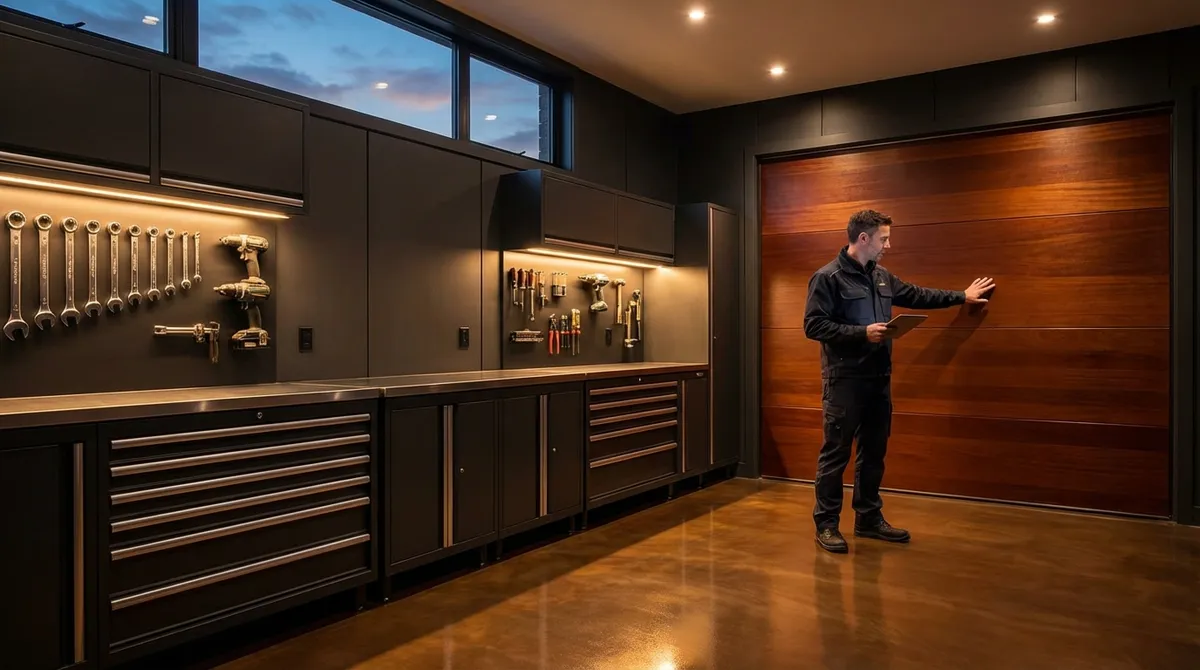
In many homes, the garage is both utility space and quiet threshold—a buffer between public street and private sanctuary. When it fails, the disruption is more than mechanical; it unsettles the sense of order that refined homes work hard to preserve. Repairing it well is not about patching what’s broken, but about returning the entire system to a standard of performance that feels seamless, safe, and reassuringly precise.
Below are five exclusive insights that elevate garage repairs from “good enough” to genuinely first‑class solutions—designed for homeowners who expect more than basic fixes.
Understanding the Garage as a System, Not Just a Door
Most repair visits focus narrowly on the obvious symptom: a broken spring, a noisy opener, a misaligned track. A more sophisticated approach treats the garage as an integrated system—door, hardware, opener, structure, and environment—each influencing the others.
A high‑quality repair begins with a system assessment: the weight of the door versus spring rating, opener capacity relative to usage patterns, track alignment versus framing, and the impact of temperature and humidity on operation. For example, a door that periodically reverses may not have a “bad sensor” at all—it may be flexing subtly because of warped panels or settling in the header, triggering safety reversals. Correcting only the sensor masks a deeper misalignment that will resurface.
Ask your technician to walk you through the system as a whole: which parts are near end‑of‑life, where safety margins are slim, and which components are over‑ or under‑specified for your door’s weight and usage. This holistic understanding turns a one‑off repair into a strategic reset.
Exclusive Insight #1:
Treat every repair visit as an opportunity for a system recalibration, not a single‑part swap. The best outcomes come from aligning door weight, spring strength, opener capacity, and structural framing as a balanced ensemble.
Precision in Motion: Calibrating for Quiet, Not Just Function
Many garages are technically “fixed” but still operate with a low‑grade clatter that becomes part of the background noise of the home. A premium repair standard doesn’t stop at “it opens and closes”—it pursues controlled, quiet, and predictable motion.
This starts with correct spring balance: with the opener disconnected, your door should stay in place when lifted halfway, neither drifting up nor slamming down. From there, a meticulous technician fine‑tunes track spacing, roller alignment, and hinge tension so the door glides consistently without binding. Small deviations—such as a track pulled slightly out of plumb to compensate for framing issues—often create the grinding and popping sounds many owners accept as normal.
Opener settings matter equally. Travel limits should be adjusted so the door seals firmly without crushing downward, and force settings should be minimized to protect both the mechanism and anything in the door’s path. When correct, the door starts, travels, and stops with a measured elegance that feels closer to high‑end architectural hardware than a utility door.
Exclusive Insight #2:
Ask for a “balance and acoustic optimization” check after structural repairs. A properly calibrated door doesn’t just work—it moves with a calm, controlled quiet that signals the entire system is under precise control.
Materials, Hardware, and the Cost of “Almost Right”
The fastest way to degrade a carefully designed garage door is to pair it with mediocre replacement parts. Springs that are technically compatible but not perfectly matched, generic rollers without sealed bearings, or mismatched hinges can collectively shorten the life of the entire system.
A refined repair strategy emphasizes materials and specifications, not just price or availability. High‑cycle torsion springs (rated for 20,000+ cycles instead of the standard 10,000) are a sensible choice for doors that see frequent use, especially in homes where the garage is the primary entry. Upgraded rollers—nylon with sealed bearings rather than bare steel—significantly reduce noise and wear on tracks. Heavy‑gauge hinges and brackets resist flexing, keeping the door aligned and protecting panels over time.
For insulated or custom architectural doors, correct spring sizing is non‑negotiable. Undersized springs force the opener to do the heavy lifting and can quietly stress both tracks and motor until a dramatic failure appears “out of nowhere.” A truly expert repair includes confirming the spring and hardware specifications against the door’s actual weight, not just its label.
Exclusive Insight #3:
Insist on documented part specifications—cycle rating for springs, material and bearing type for rollers, gauge for hinges. Premium components are not about indulgence; they are a form of insurance, extending the life of both the door and the opener.
Safety and Redundancy: Subtle Protections You’ll Rarely Notice
Modern garage systems are packed with safety features, but their effectiveness depends on precise setup and regular verification. A sophisticated repair doesn’t just “make the sensor light stop blinking”—it reestablishes multiple layers of protection and ensures they perform as designed.
Photoelectric sensors should be aligned, tested, and positioned at the correct height to protect children, pets, and low‑profile objects. Opener force and auto‑reverse settings must be tested both with a rigid object under the descending door and with modest manual resistance. The goal is a system that reacts decisively to obstruction without resorting to excessive downward pressure.
Beyond the opener itself, the structural frame deserves attention. Lag bolts securing tracks to framing, bracing for heavy doors, and reinforcement where openers attach to ceiling joists collectively determine how the system behaves during stress. In seismic or high‑wind regions, subtle structural upgrades—hurricane bracing, proper anchoring, and reinforced mounting points—quietly ensure the door is an asset in an emergency, not a point of failure.
Exclusive Insight #4:
Treat each repair as an audit of safety redundancies: photo eyes, force settings, structural fasteners, and emergency release function. A door that simply “goes up and down” is not enough; the real luxury is a system that fails safely if anything goes wrong.
Data‑Informed Maintenance: Turning Patterns into Prevention
Elegant repair solutions don’t only fix what has broken—they anticipate what will fail next. That level of foresight comes from paying attention to patterns: when issues occur, under which conditions, and in response to what use.
Start by noting symptoms with more specificity than “it’s acting weird.” Does the door struggle first thing on cold mornings but behave later in the day? Does it hesitate at a certain point in the track? Do remotes fail from specific angles or distances? These observations give a technician a starting point for diagnosing subtle issues such as motor wear, track warping, panel swelling, or interference in wireless signals.
From there, establish a discreet but consistent maintenance rhythm: annual or bi‑annual inspections that include hardware tightening, lubrication, balance checks, and a brief safety audit. In homes with heavy usage or complex custom doors, a log of service visits and replaced components can reveal patterns long before they turn into emergencies. Over time, your garage ceases to be a source of surprise repairs and becomes a predictable, well‑understood system.
Exclusive Insight #5:
Keep a simple “garage performance log”—dates, symptoms, service notes, and environmental conditions. Sharing this with your repair professional transforms each visit from guesswork into data‑guided refinement.
Conclusion
A garage that simply functions is common. A garage that moves with quiet authority, responds safely under stress, and ages gracefully alongside a refined home is the result of intentional choices: system‑level thinking, precise calibration, elevated hardware, rigorous safety, and data‑informed care.
When you approach repairs with that mindset, every service call becomes an upgrade—not only to the door and opener, but to the overall reliability and composure of your home’s daily rhythm.
Sources
- U.S. Consumer Product Safety Commission – Garage Door Safety - Federal guidance on garage door hazards, safety features, and testing recommendations
- International Door Association – Homeowner Garage Door Safety Tips - Industry association advice on safe operation, inspection, and professional service
- Clopay Garage Doors – How to Test and Maintain Your Garage Door - Manufacturer‑level guidance on balance checks, hardware inspection, and routine maintenance
- LiftMaster – Garage Door Opener Safety and Security Features - Details on modern opener safety systems, sensors, force settings, and secure operation
- University of Florida IFAS Extension – Wind and Garage Doors - Research on garage door performance in high‑wind events and the importance of structural reinforcement
Key Takeaway
The most important thing to remember from this article is that this information can change how you think about Repair Solutions.