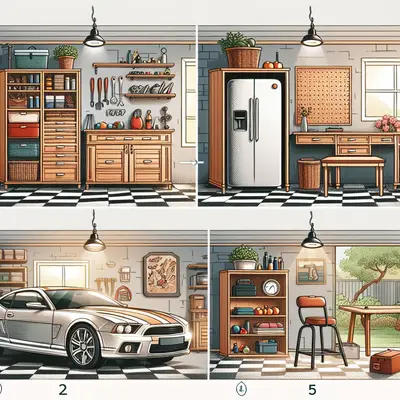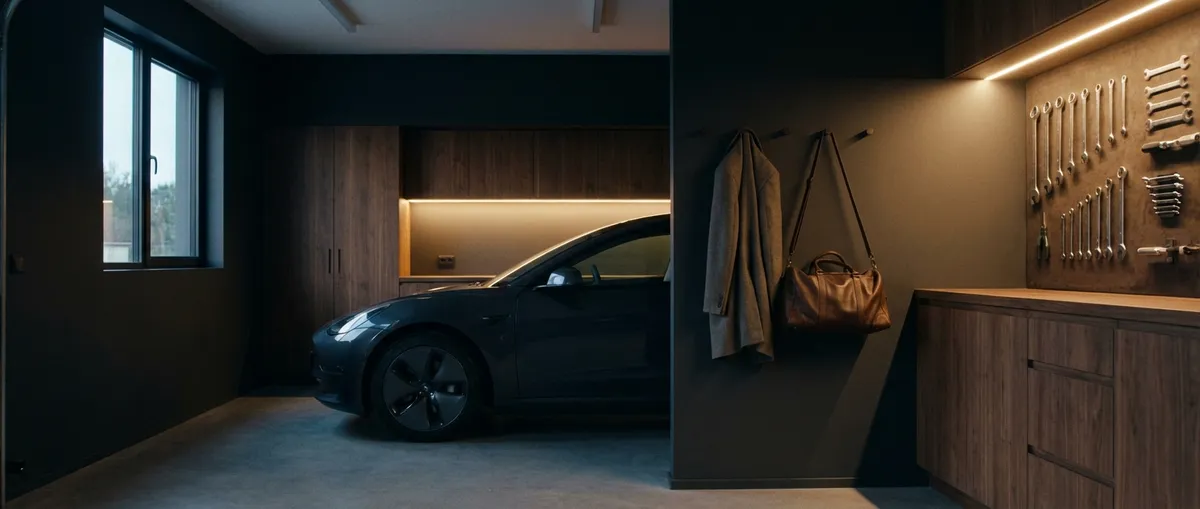
A well-resolved garage doesn’t announce itself; it simply works with a kind of quiet authority. For homeowners who expect their spaces to perform as precisely as they look, the garage becomes less a storage zone and more a finely tuned utility suite—where every upgrade earns its place. This is not about cosmetic overreach or trend-chasing renovations. It is about disciplined improvements that solve real issues, refine daily rituals, and subtly enhance the value and feel of the entire home.
Below are five exclusive, strategy-driven insights for homeowners ready to elevate their garage from “serviceable” to impeccably considered.
Insight 1: Treat the Garage as a Micro-Climate, Not a Leftover Room
Most garages are built as thermal afterthoughts—bare studs, thin doors, unsealed gaps. The result is a space that swings wildly with the weather, which quietly punishes everything inside: vehicles, tools, stored finishes, and even the adjacent rooms.
A premium-minded upgrade begins with rethinking the garage as its own micro-climate:
- Air sealing before insulation: Before adding insulation, address the perimeter—weatherstripping the garage door, sealing wall penetrations, and caulking base plates. This controls drafts and protects any subsequent insulation investment from under-performance.
- Insulation that respects use: For garages that double as workshops or gyms, wall and ceiling insulation (fiberglass batts or dense-pack cellulose) paired with an insulated garage door significantly stabilizes temperature and noise.
- Thermal breaks at shared walls: The wall between garage and living space deserves special attention—proper insulation, sealed electrical boxes, and a well-sealed fire-rated door reduce temperature bleed and improve comfort in adjacent rooms.
- Targeted conditioning: A modest ductless mini-split or high-efficiency electric heater can provide controlled comfort without tying into the main HVAC system, which also helps maintain better indoor air quality in the home.
The payoff is understated but substantial: quieter operation, more stable storage conditions, and a noticeable improvement in comfort in the rooms that share a wall with the garage.
Insight 2: Engineer the Floor as a Performance Surface, Not Just a Slab
Most homeowners tolerate stained, pitted concrete as the default garage floor. Yet this surface is responsible for how safely, cleanly, and even emotionally the space is perceived. A properly upgraded garage floor behaves more like a performance surface than a construction leftover.
Consider these refinements:
- Concrete assessment before coating: Before thinking epoxy or polyaspartic, evaluate moisture vapor transmission and existing cracks. Repairing spalls, filling expansion joints properly, and grinding the surface yields a coating that looks sharp and actually lasts.
- Coatings matched to lifestyle:
- High-solids epoxy with a topcoat offers chemical resistance and is ideal for automotive enthusiasts and frequent detailers.
- Polyaspartic systems cure quickly and resist UV yellowing—useful for garages with substantial natural light.
- Non-slip texture done intentionally: Lightly textured flakes or silica aggregate in topcoats prevent a “showroom finish” from becoming a hazard when wet. Think of this as specifying the tread on the sole of a dress shoe: refined but purposeful.
- Zoned floor strategy: A darker tone under vehicles, with a slightly lighter perimeter, hides tire marks while improving light reflection at the walls and benches. This subtle zoning elevates both function and visual clarity.
Upgrading the floor is one of the rare interventions that simultaneously improves safety, maintenance, appearance, and resale appeal—without broadcasting itself as “luxury” for its own sake.
Insight 3: Rethink Storage as Architecture, Not Add-On Hardware
The typical garage storage story is mismatched plastic bins, leaning metal shelves, and ad hoc hooks that gradually collapse under their own improvisation. A premium approach treats storage as a form of architecture—fixed, coherent, and quietly tailored to the way you live.
For a more architectural solution:
- Ceiling load as a deliberate decision: Overhead racks should be planned like structural elements, not impulse purchases. Confirm joist direction, load ratings, and anchoring methods so that seasonal or heavy storage does not compromise framing or safety.
- Wall systems with hierarchy: Instead of random hooks, consider track or slatwall systems, but design them with intentional zones: one for daily-use items, another for seasonal tools, another for sports or hobby gear. This eliminates the visual noise of everything fighting for attention at the same height.
- Cabinetry that respects the vehicle: Full-depth cabinets on the side walls should be selected with door-swing clearances in mind. Soft-close hardware, integrated lighting, and finished end panels give the space the calm of a well-appointed mudroom rather than a stockroom.
- Vertical reach measured, not guessed: The highest shelves should be set by the shortest regular user plus a safe step-stool reach, not simply the top of the wall. That small concession to human scale turns storage from theoretical to truly usable.
The result is not an over-styled showroom, but a garage where everything feels intentional—where tools, seasonal gear, and daily essentials have logical, almost inevitable places to live.
Insight 4: Upgrade Lighting as a Precision Tool, Not Just Brightness
Most garages live under a single bare bulb or a mismatched mix of shop lights. This doesn’t just look unfinished; it actively limits how well the garage can perform. A thoughtful lighting upgrade does more than increase lumens—it layers clarity, safety, and calm into the space.
Key considerations:
- Layered lighting instead of a single blast: Combine overhead ambient lighting (LED strip or panel fixtures) with task lighting over workbenches and accent lighting near storage or entry doors. The goal is even, shadow-minimized illumination where it’s needed most.
- Color temperature matched to purpose: A neutral white (around 4000K) is often ideal—cool enough for visual clarity on projects, warm enough not to feel clinical. Consistent color temperature across fixtures prevents the “patchwork” look.
- High CRI (Color Rendering Index): Choosing fixtures with high CRI (90+) makes color-critical tasks—paint touch-ups, detailing, staining—more accurate, and renders the space with a more refined, natural look.
- Control sophistication: Consider motion-activated entry lights near the door from the house, paired with manual controls for work zones. Smart switches or scenes can bring up “arrival” lighting, “project” lighting, or “evening low” lighting with a single command.
- Glare management: Well-positioned fixtures that avoid direct glare in the driver’s line of sight feel quieter and more composed, even at higher overall brightness levels.
With disciplined lighting, the garage shifts from being a harshly lit storage bay into a calm, clear workspace that supports precise tasks as comfortably as it accommodates daily parking.
Insight 5: Prioritize Quiet, Safety, and Air Quality as Core Performance Metrics
For many homeowners, garage issues show up as noise, fumes, and a vague sense that the space is “less safe” than the rest of the house. Refinement begins by treating quiet, safety, and air quality as primary specifications, not afterthoughts.
Attention to these elements transforms daily use:
- Acoustic discipline: A high-quality, belt-drive garage door opener with soft-start/soft-stop dramatically reduces operational noise. Adding vibration isolation mounts and properly tuned springs further minimizes mechanical harshness that travels into living spaces.
- Zoned safety upgrades:
- Anti-slip treatments at steps and thresholds.
- Clearly defined walking paths with adequate lighting.
- Secure storage for chemicals and sharp tools in lockable cabinets, especially in homes with children or frequent guests.
- Ventilation that actually moves air: A quiet, wall-mounted or ceiling exhaust fan can evacuate vehicle exhaust, paint fumes, and humidity from wet vehicles or equipment. Strategically placed intake vents work with the fan to create a controlled flow rather than random drafts.
- Fire and fume separation from the home: Confirm that the door to the house is fire-rated, self-closing, and properly sealed around the frame. This is not only code-aligned; it is a refined barrier that respects both safety and indoor air quality.
- Material choices that off-gas less: When selecting cabinetry, coatings, and sealants, low-VOC or no-VOC options reduce long-term chemical presence. This makes the garage feel less like a warehouse and more like a considered extension of the home.
In combination, these elements transform the garage from a tolerated “service zone” into a place that feels as composed and safe as any interior room—only with more power tools and better ventilation.
Conclusion
A truly elevated garage is not defined by how much you add, but by how intelligently every upgrade resolves a real-world issue: climate stability, floor performance, storage clarity, visual precision, and the invisible luxuries of quiet, safety, and clean air. When each intervention is measured against these standards, the garage evolves into a calm, high-functioning environment that enhances the daily experience of coming and going, working and storing, protecting and preserving.
In a home where every space is expected to perform with quiet excellence, the garage deserves nothing less than this level of intention.
Sources
- U.S. Department of Energy – “Insulation and Air Sealing” - Guidance on proper air sealing and insulation strategies, including garage-adjacent spaces
- U.S. Department of Energy – “LED Lighting” - Technical overview of LED lighting efficiency, color temperature, and selection criteria
- Garage Protect (ICRI / Concrete Industry Resources) – “Concrete Surface Preparation for Coatings” - Industry standards and best practices for preparing concrete slabs before applying coatings
- Consumer Product Safety Commission – “Garage Door Safety” - Safety considerations for garage door openers and mechanical systems
- U.S. Environmental Protection Agency – “Improving Indoor Air Quality” - Strategies for managing pollutants and ventilation, relevant to garage-to-home air transfer
Key Takeaway
The most important thing to remember from this article is that this information can change how you think about Upgrades.